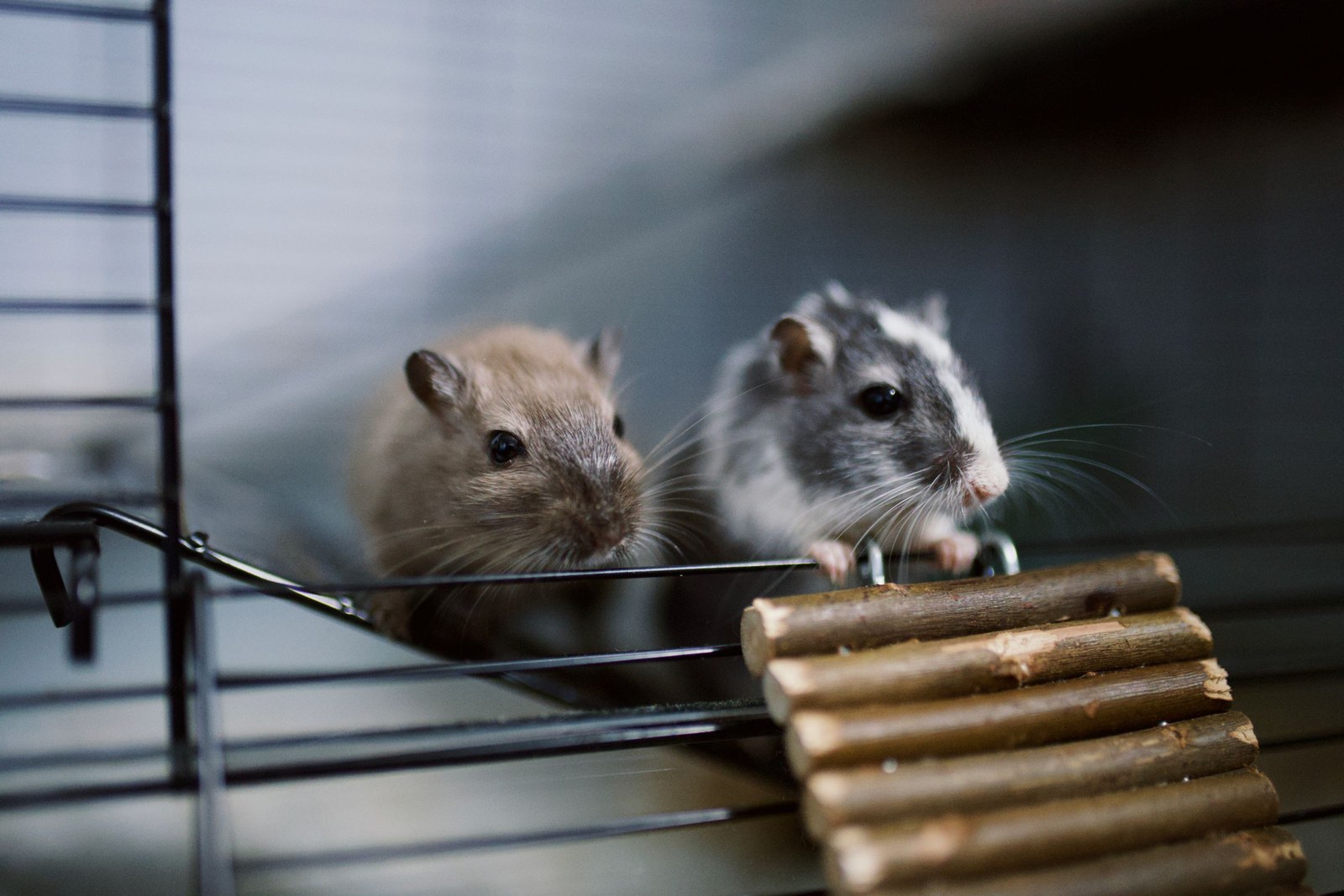
Yes — rats, mice, and gerbils are social animals who genuinely need a friend of their own kind. They sleep piled together, groom each other, communicate in ways we can only partly hear, and show measurable stress when kept alone. Human company, however devoted, is a supplement rather than a substitute: you cannot curl up in the nest at 3 a.m. or trade grooming sessions in ultrasonic squeaks. For these species, a same-sex pair or small group is not an upgrade to their care — it is a baseline requirement of it.
What companionship looks like in each species
Rats are the most visibly social of the three, forming real hierarchies and friendships; most keepers recommend groups of three or more where space allows, so the social world survives the loss of one member and no rat is ever left alone. A lone rat is often a noticeably quieter, less confident rat.
Mice do well in female groups — a trio is a common, stable arrangement — with the important exception that males are usually territorial and are typically kept singly or neutered under vet guidance, a nuance new owners must know before buying "two boys" who seemed fine in the shop tank.
Gerbils form tight pair bonds, usually same-sex pairs; they are monogamous in structure and can react badly to a stranger, which makes introductions a more delicate process than with rats. A bonded gerbil pair is a devoted unit — and a bereaved gerbil often needs a carefully arranged new bond rather than a lifetime alone.
Introductions: neutral ground, patience, no shortcuts
Never simply drop a new animal into an established resident's cage — that cage is defended territory. The standard approach starts with a neutral space neither animal owns: a clean playpen or empty bathtub with hides and scattered treats, short supervised sessions that lengthen as body language stays relaxed. For gerbils, keepers often use a split-cage method — a mesh divider in one tank so the pair can see, smell, and swap bedding for days before meeting face to face. Watch for the encouraging signs: eating side by side, shared naps, mutual grooming. Chase-and-squeak scuffles that resolve quickly are normal negotiation; drawn blood ends the session and resets the timeline.
The sexing trap, and planning for numbers
The single most important practical skill is telling sexes apart reliably, because the most common small-mammal disaster is the "two females" who produce a litter five weeks later. Have a vet or experienced keeper confirm sexes, and re-check young animals as they mature — mistakes happen even in good shops. Plan cage space, budget, and your own time for the group size you are committing to, remembering that bonded animals who lose a partner may need a new companion, which starts the introduction process again. Keeping each animal's individual record — sex, age, vet notes, personality — stops being optional once you have four near-identical gerbils.
When a group member moves on
Sometimes a group changes: a friend takes one of your rats, or you adopt out a youngster from an accidental litter. KinsLe's Transferrable Profiles are built for exactly that moment — the pet's profile and records move to the new owner, so their vet history, quirks, and care notes travel with them instead of starting from zero in their new home. A rat arriving with a known history settles faster and gets safer care. Transferrable Profiles through KinsLe hands a rehomed gerbil's sex, age, and vet notes directly to the adopter taking over that animal's care.