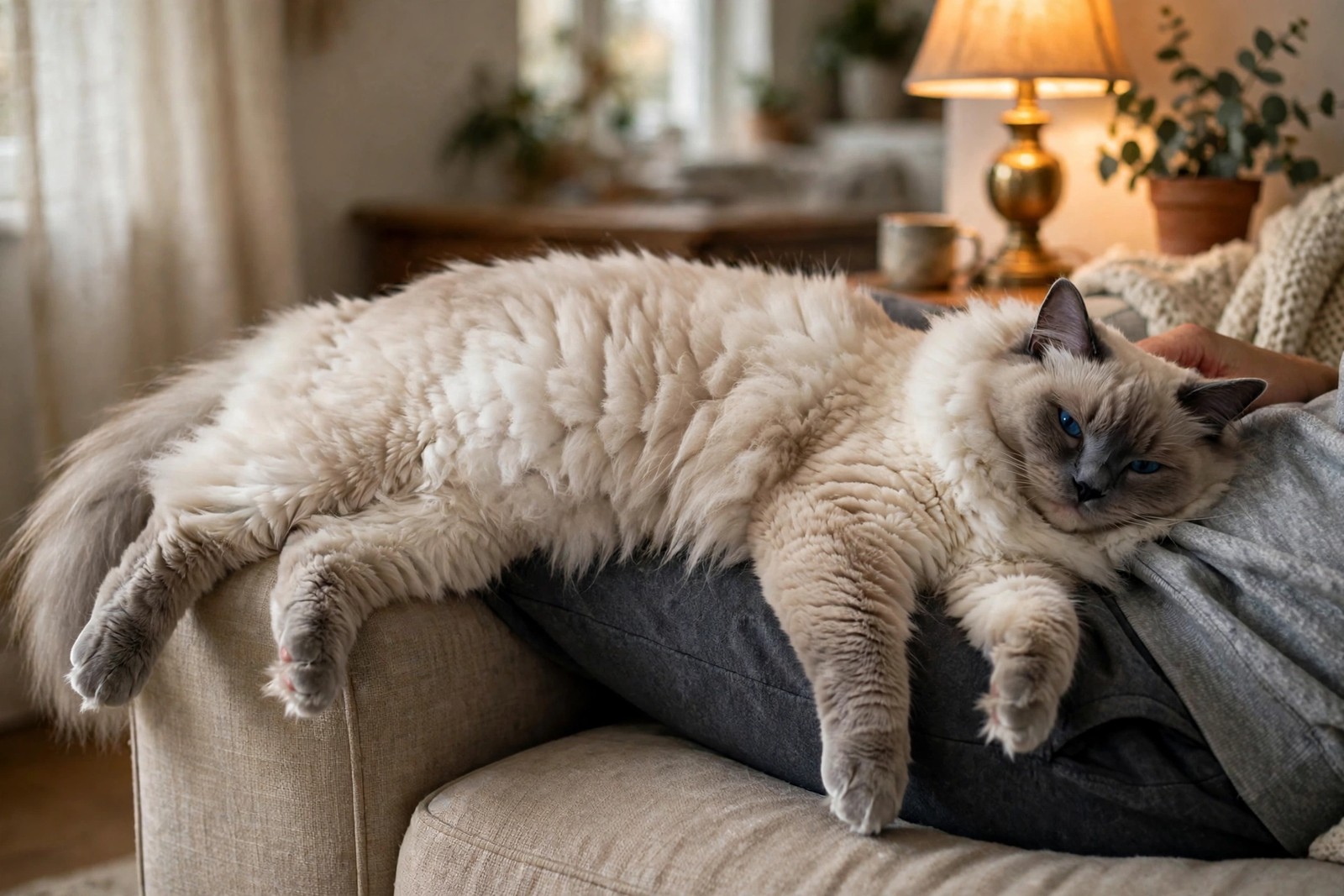
A Ragdoll is a big cat. Adult males typically weigh 15 to 20 pounds; females usually weigh 10 to 15 pounds. The body is long and muscular with a broad chest, a fat pad on the lower abdomen that is normal for the breed, and legs of medium length with notably large paws. That combination — genuine size plus the breed's habit of relaxing completely when held — makes a Ragdoll feel like an armload in a way few other cats do. If you want a small, portable cat, this breed is not it.
Four Years to Full Size
Ragdolls mature slowly. Height and length come first, during the initial eighteen months or so, but the cat keeps filling out, gaining breadth and weight, until around three to four years of age. Coat color follows the same unhurried schedule: a pointed Ragdoll's pattern deepens over the first years, so the adult looks noticeably darker than the kitten you brought home. Two expectations to set accordingly:
- A one-year-old Ragdoll who looks lanky is unfinished, not undersized — do not chase the adult numbers with extra food
- Portion needs change across the whole growth period, so reassess amounts at each vet visit rather than fixing them at six months
Because the growth window is so long, steady tracking matters more with this breed than most. A smooth curve over four years is healthy; sudden jumps usually mean condition, not frame.
Big Does Not Mean Unlimited
The breed's easygoing, indoor temperament and enthusiastic appetite make weight management the main size issue in adulthood. A healthy Ragdoll's 18 pounds is muscle over a large frame, with ribs you can feel under a soft covering and strength you notice when the cat pushes off your lap. An overweight Ragdoll at the same number is a different animal, and only hands-on checks and the scale can tell them apart. Interactive play in short daily sessions suits this breed well — most Ragdolls prefer games near their people, and following you from room to room, to high-intensity exercise.
Gear and Handling for a Large, Relaxed Cat
- Choose a carrier rated for at least 20 pounds, ideally top-loading; lifting a fully relaxed Ragdoll in and out at arm's length is harder than lifting a tense cat of the same weight
- Support the hindquarters when you pick one up — letting a heavy cat dangle by its front end is uncomfortable and can strain it
- Pick cat trees with wide platforms and heavy bases; a Ragdoll landing at full stretch delivers serious force
- Buy the large litter box from the start, since a long-bodied cat needs room to turn
Children should be taught the two-handed, supported lift from the beginning, both for the cat's comfort and because a dropped 18-pound cat can injure itself and the child.
Four years of growth is a long story to keep in your head. With KinsLe's Pet Passport holding your Ragdoll's weights, vaccinations, and visit notes together, that story stays readable — for you, your vet, or anyone who cares for your cat.