
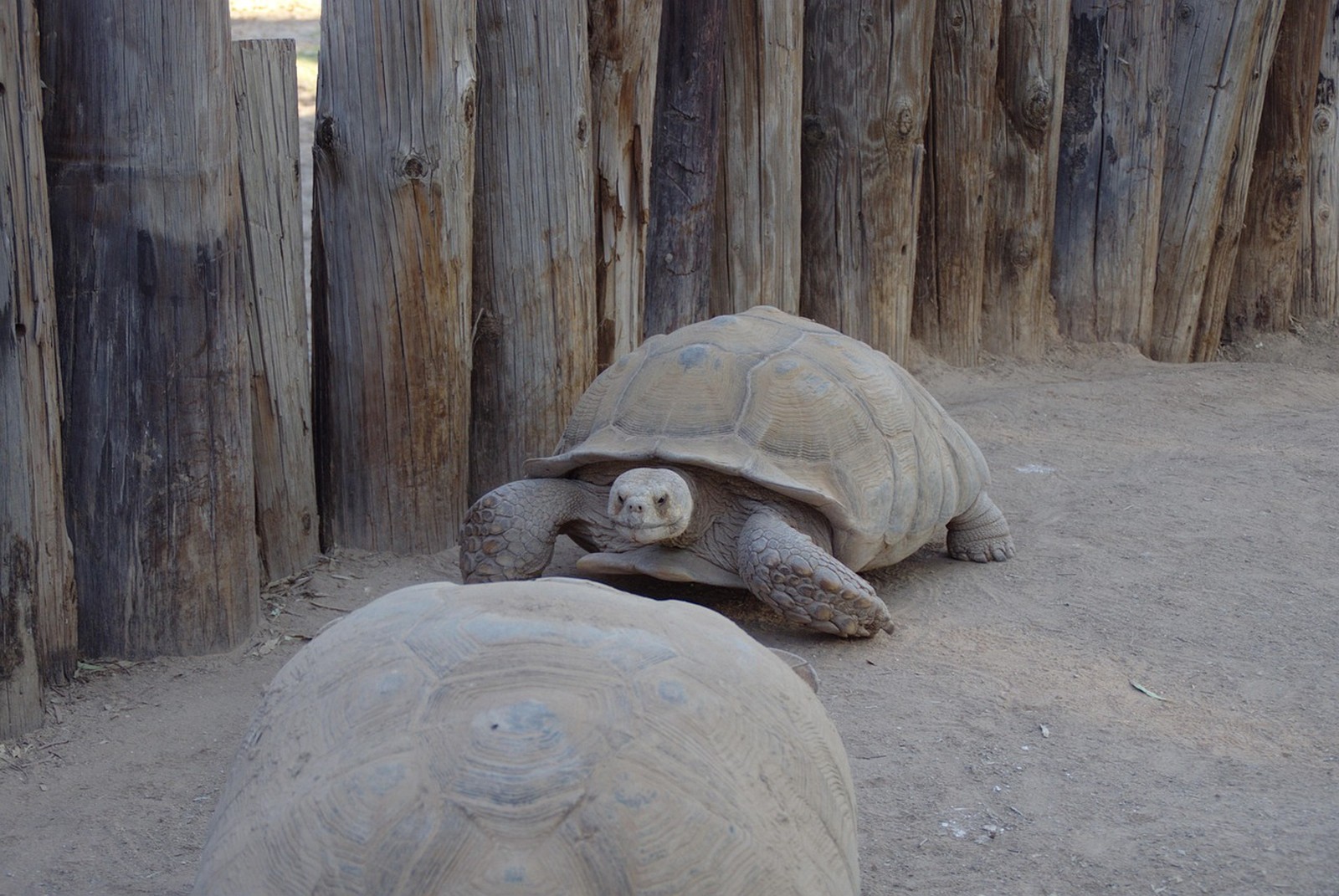
Prevent repeat escapes by building your pen with solid walls your tortoise cannot see through, sinking the base underground or flaring it outward to stop digging, and reinforcing the corners — then checking the whole pen after storms or garden work. Tortoises escape through persistence, not speed: they push against barriers they can see through, dig at edges, and use corners like ladders. Design against those three habits and most escapes simply stop happening.
Solid Walls Beat See-Through Barriers
A chain-link fence or open slat pen is an invitation. When a tortoise can see the world beyond the barrier, it will pace and push at that barrier for hours; when the wall is solid and opaque — wood, block, or solid panels — most tortoises settle and graze instead. Make the walls taller than the tortoise is long, and then some: a determined tortoise standing against a wall gains surprising height, and remember they grow, so build for the adult size of your species.
Stop the Digging
Many species dig instinctively, and a wall that simply sits on the ground can be undermined in a single afternoon. Either:
- Sink the barrier into the ground, buried below the surface around the whole perimeter
- Or flare a skirt of sturdy mesh or boards outward underground from the base, so digging at the wall quickly meets an impassable floor
Fill and tamp any tunnels you find rather than just covering them — a started tunnel is a project your tortoise will return to.
Corners Are Ladders
Corners are the classic escape route: a tortoise braces against both walls and walks itself upward, especially where objects, rocks, or plants give it a boost. Cap corners with an overhanging lip or a triangular cover, and keep climbable furniture, hides, and stacked rocks well away from all walls — a hide placed against the fence is a step stool.
Also check gates and latches. A gate that settles and gaps at the bottom, or a latch a heavy tortoise can bump open, undoes all the rest.
Inspect Like You Mean It
Walk the perimeter weekly and after any storm, landscaping, or digging by other animals — dogs in particular can open a breach from outside. Look for shifted boards, new gaps at ground level, and accumulated soil ramped against a wall.
Your Second Line of Defense
Even the best pen deserves a backup plan. Every pet on KinsLe has a unique QR ID on its profile — so if your tortoise ever does wander, a finder who spots it can scan and reach you quickly instead of guessing who it belongs to. Pair the strong pen with the QR ID, keep your contact details current on the profile, and you have covered both prevention and recovery. Verified QR ID Pet Profiles give that backup its working form on KinsLe: a scan of your tortoise's code by a finder pulls up its identity and your contact route, tying the animal in hand to its owner.