
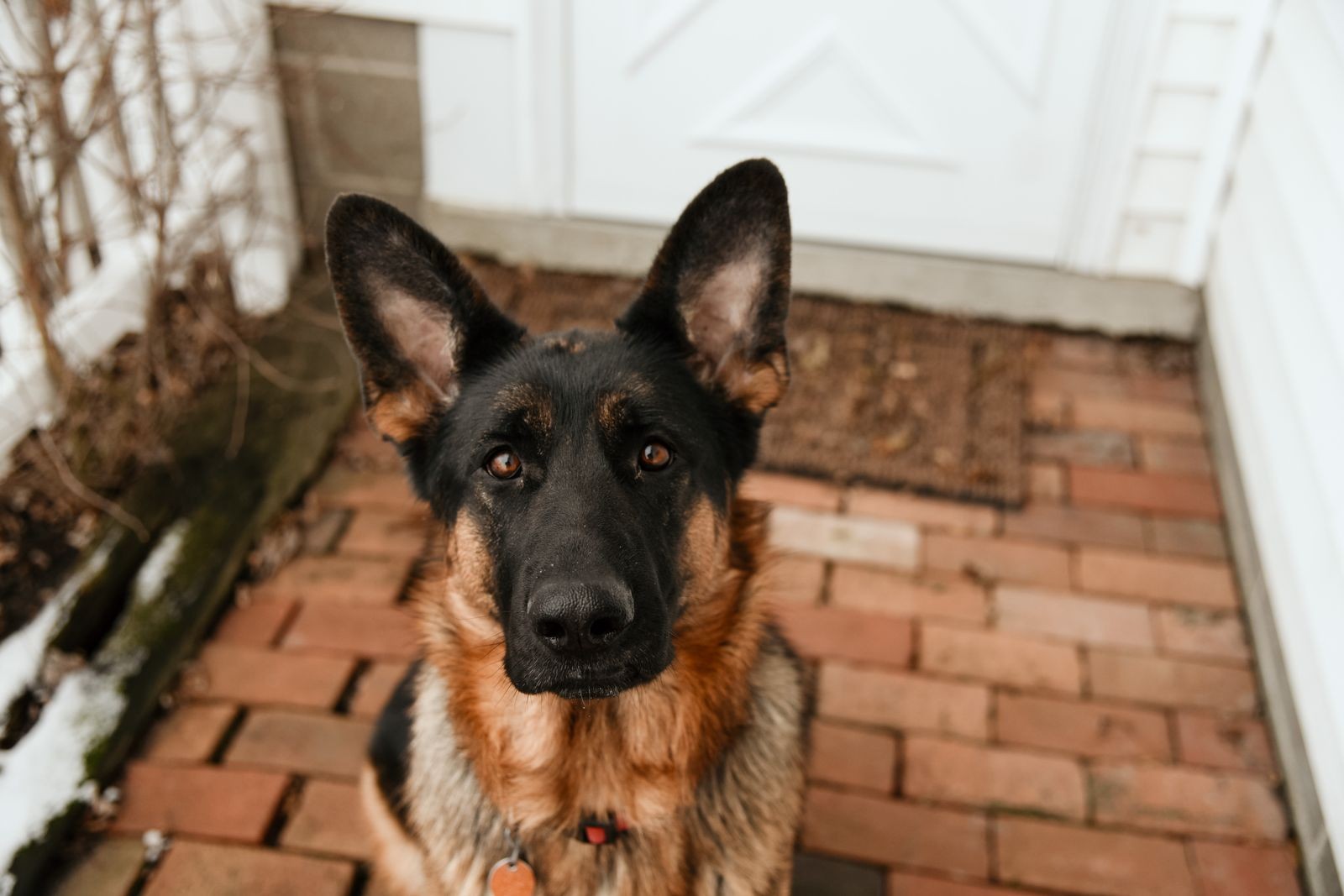
You can start to tell by looking at timing and targets: pacing, drooling, whining or barking that begins soon after you leave, destruction aimed at doors and windows, and accidents in a fully housetrained dog all point toward separation anxiety rather than ordinary mischief. A dog who raids the trash two hours into your workday is probably bored; a dog who is frantic within minutes of the door closing is likely panicking. Recording the first half hour alone tells you more than any guesswork.
What separation anxiety actually looks like
Anxious dogs tend to show a cluster of signs, not just one:
- Vocalizing that starts shortly after departure and continues in waves.
- Pacing a fixed route, panting, drooling, or trembling despite comfortable temperatures.
- Scratching or chewing at exit points — door frames, window sills, crate doors — sometimes injuring paws or teeth.
- House soiling by a dog who is reliably housetrained when you are home.
- A greeting so frantic and prolonged it goes well beyond normal happiness.
Some dogs also refuse food when alone, then eat normally the moment you return — a useful clue, because a merely bored dog usually still enjoys a stuffed food toy.
Film it before you label it
Set up a phone or camera and record your next few departures. Watch what happens in the first five, fifteen, and thirty minutes. Note whether the behavior starts before you even leave — some dogs learn the pre-departure routine of keys, shoes, and coat and begin stressing during it. Save a couple of representative clips, because showing your veterinarian actual footage is far more useful than describing "he gets upset."
Also check the pattern across different situations. Is he fine when left with another person or dog but distressed fully alone? Does it happen on workday departures but not weekend ones? Those details help a professional separate true isolation distress from confinement frustration, noise sensitivity, or an unmet exercise need.
Rule out medical and ordinary causes first
Not every stressed-looking dog has separation anxiety. Pain, cognitive changes in senior dogs, incomplete housetraining in young dogs, and some medical conditions can produce restlessness, vocalizing, or accidents. A dog who has recently started these behaviors out of character deserves a veterinary check before a behavior label. Bring your notes and video to that appointment, and be honest about schedule changes, moves, losses, or new household members, since anxiety often follows disruption.
What not to do
Avoid punishment entirely — a dog who destroyed a door frame while panicking will not connect your anger hours later with the act, and scolding tends to deepen anxiety. Be cautious with well-meant quick fixes too: getting a second dog sometimes helps and sometimes simply gives you two anxious dogs, and crating a dog who is panicking about confinement can cause injury. A veterinarian or qualified behavior professional can help you build a gradual plan suited to your dog's severity.
Keep the whole picture in one shareable packet
The KinsLe Pet Passport is designed for exactly this kind of detective work. It is your dog's records packet — vaccines, medications, allergies, and documents — and you can keep your behavior notes and vet visit summaries with it, ready to share with your veterinarian or a behavior professional instead of hunting through camera rolls and email threads. A tidy, shareable history helps professionals spot patterns faster and advise you better.
Start the camera, gather what you see into the Pet Passport, and explore more pet answers on KinsLe for calmer departures and happier dogs.