
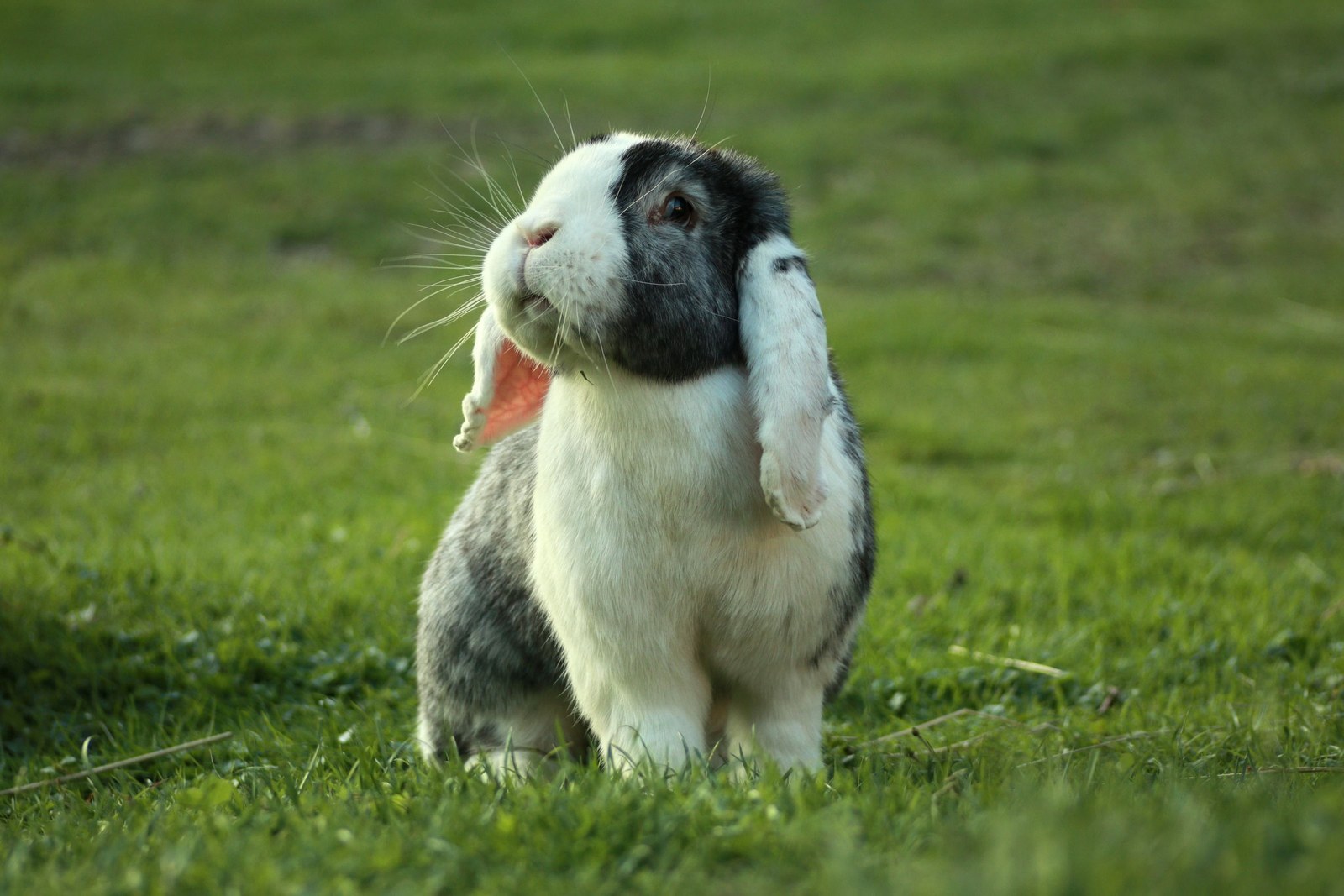
You cannot fully check a rabbit's teeth at home — the back molars sit too deep to see — but your rabbit's behaviour gives you early clues. Drooling or a persistently wet chin, dropping food that was just picked up, eating more slowly, leaving pellets in favour of soft foods, smaller droppings, or unexplained weight loss can all be general signs that the teeth need a veterinarian's attention. Any of those changes is a reason to book an exotics-savvy vet rather than wait and watch.
Why Rabbit Teeth Go Wrong
A rabbit's teeth grow continuously throughout life — front incisors and the cheek teeth behind them — and they stay the right length only when chewing wears them down at the same pace. Long-stem hay and grass force the wide, side-to-side grinding motion that does that wearing. A diet built mostly on pellets or muesli lets a rabbit fill up on food that needs little grinding, so teeth can overgrow, develop sharp spurs on their edges, or grow unevenly.
Genetics plays a part too. Short-faced and lop breeds are commonly over-represented in dental cases because their skull shape crowds the teeth, so owners of those rabbits should be especially alert to subtle eating changes.
What You Can Check at Home
Gently lift your rabbit's lips once a week and look at the front incisors. They should meet evenly, with smooth edges — not slanted, crossed, overlong, or curling. Run a hand along the jawline feeling for unusual lumps, and note whether the chin and dewlap are dry. Watch your rabbit actually eat hay: a rabbit who grabs a strand, chews twice, and drops it is telling you something.
Write down what you notice and when. A rabbit who has quietly shifted from hay to mostly soft vegetables over three weeks has given you a timeline that is genuinely useful at the appointment.
What Only a Vet Can See
The cheek teeth — where most painful spurs form — can only be examined properly with instruments, sometimes under sedation, because a conscious rabbit's mouth does not open far enough for a full view. A vet can also assess jaw movement, check for mouth ulcers where spurs rub the tongue or cheek, and take skull X-rays if root problems are suspected. This is general information, not a diagnosis: the same drooling or appetite change can come from other causes entirely, which is exactly why an in-person exam matters.
Never attempt to trim a rabbit's teeth yourself at home. Clipping can split a tooth lengthwise down to the root, causing pain and abscesses; corrective work belongs to your vet, who has the right equipment.
Acting on What You Find
If eating has stopped altogether, treat that as urgent and call the same day — a rabbit who is not eating is an emergency in its own right. If the signs are mild, still book promptly rather than at the next annual visit, keep hay available in several spots, and weigh weekly so you can show the vet a trend instead of a guess.
Keeping the Dental Story Together
Dental problems in rabbits tend to recur, so the history is half the value of every visit. KinsLe's Pet Passport is the records packet for vaccines, medications, allergies, and documents, and keeping your rabbit's dental notes and vet reports in it means the full story travels with you to every appointment — including an emergency clinic that has never met your rabbit. Because spurs often return, file each molar examination result inside the Pet Passport record on KinsLe, building a dated sequence a new clinic can read before treatment begins.