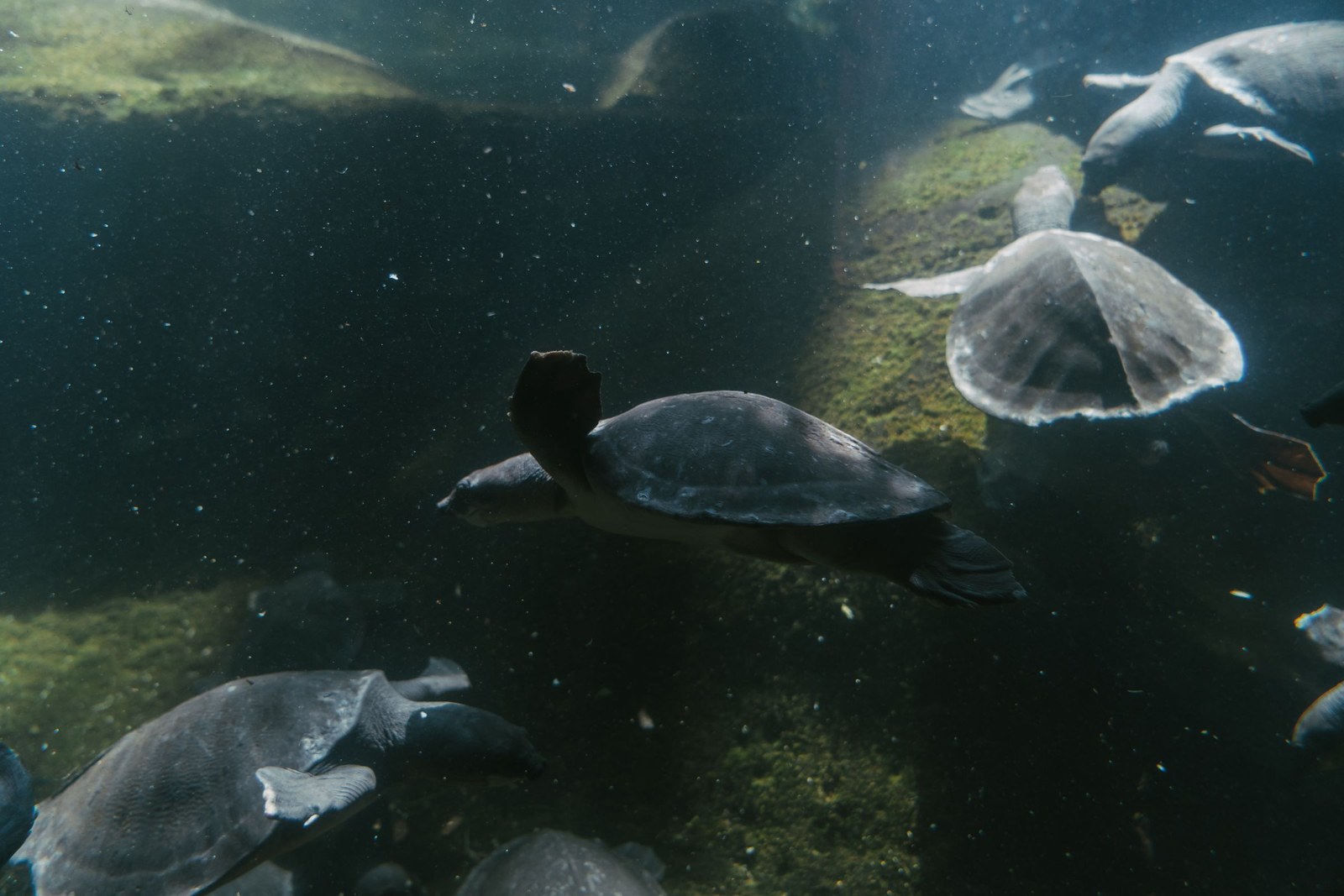
Start from the shell itself: the water should reach at least its width, giving your turtle room to swim comfortably and roll back upright when it overturns. Strong swimmers can enjoy deeper water with resting spots near the surface, while babies and weaker swimmers need shallower water with easy exits. Depth is about safety and exercise, not filling the tank to the brim.
Why the Flip Test Matters
A turtle that overturns in water too shallow or too awkward to right itself can get into real trouble. In adequate depth, a healthy turtle uses its neck and limbs against the water and tank floor to roll back over. Test the logic with your own setup in mind: if your turtle flipped near a corner or decor, could it push, paddle, and recover, or would it be wedged?
Depth also unlocks natural swimming. Species like red-eared sliders, painted turtles, and cooters are active swimmers that benefit from real vertical space — diving, surfacing, and resting at different levels. A tank that is long but filled only a few inches deep limits exercise and makes the footprint effectively smaller. As a starting point, many keepers use a depth of one and a half to two times shell width for confident adult swimmers, provided resting options exist.
Adjusting for Age, Species, and Strength
Babies are not just small adults. Hatchlings tire faster, are weaker swimmers, and need shallower water, abundant resting spots just below the surface, and a basking ramp they can reach without a long climb. Weak, recovering, or elderly turtles need the same consideration — shallower zones and easy exits matter more than maximum swimming depth.
Species habits differ too. Bottom-walking species such as musk turtles use depth differently from strong mid-water swimmers and appreciate floor space, hides, and surfaces to climb toward the surface. Research your exact species rather than copying a slider setup for every turtle. When you increase depth, do it gradually over several days and observe: a turtle that struggles to reach the surface calmly needs adjustments, not more time to figure it out.
Making Deep Water Safe and Usable
Deeper water works best with structure. Add resting ledges, sturdy plants or decor that reach near the surface, and a basking platform that is easy to mount from the water. Ensure filters and heaters are rated for the actual water volume, not the tank's maximum capacity if you fill it lower. Remember that deeper water is heavier and dilutes waste better, but it does not reduce the need for filtration rated for turtles or for weekly partial changes.
Leave enough space at the top, or use a secure cover, so a climbing turtle cannot exit over the rim — sliders in particular are capable climbers when decor reaches high.
When More Than One Person Tops Up the Tank
Water depth often drifts when different people top up the tank after cleaning — one person fills to the old line, another fills higher. KinsLe's Family Sharing is how you share this turtle's profile with the family members you choose, giving a relative who refills the tank access to that profile instead of a secondhand description of the swimmer in it. That consistency is real care for a small swimmer. And when the tank needs topping up after a water change, KinsLe Family Sharing lets you grant profile access to a relative, so the person refilling it is looking at the turtle's own profile.