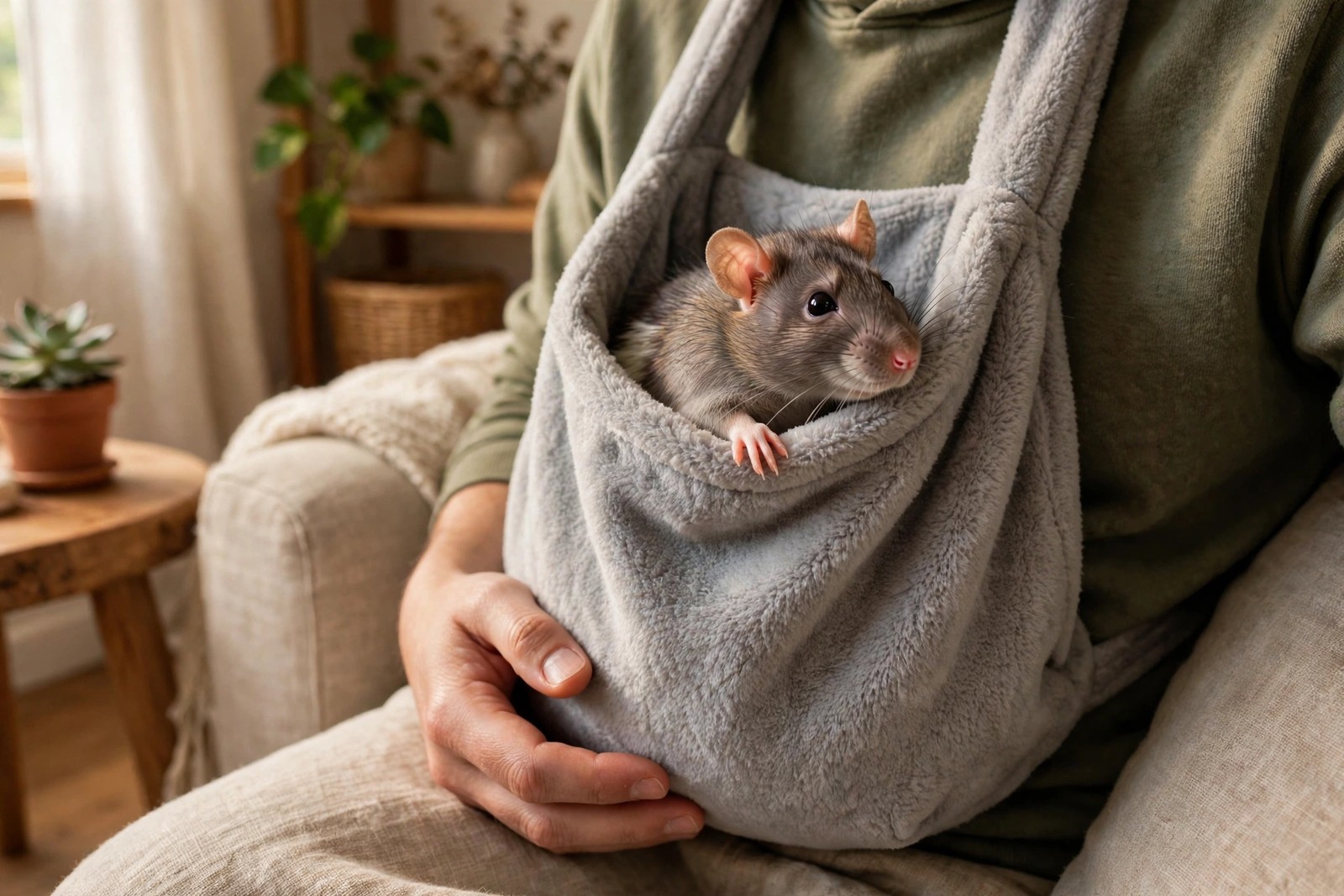
A rescue rat who seems shy is not being difficult; it is being a prey animal with an unknown past. Rats are intelligent, social, and quick learners, but a rescue may have been under-handled, roughly grabbed, or kept alone, so your first job is to prove, repeatedly and predictably, that you are safe and that the rat controls how close things get. Forced cuddles set that project back. Chosen contact builds it surprisingly fast.
Stage One: Be Boring and Generous Near the Cage
For the first several days, sit beside the cage reading or talking quietly for twenty to thirty minutes at a time, so your voice and smell become ordinary background. Offer soft, high-value food, such as a pea-sized smear of mashed banana or a small piece of cooked egg, first on a spoon pushed gently through the bars, then held in your fingers at the open door. The spoon stage matters: a rat too frightened to approach a hand can still lick food at a distance, and each calm feed links your scent to something good. Keep cage cleaning gentle and predictable, avoid rearranging the layout daily, and make sure hides and hammocks stay in place so the rat always has a retreat it trusts.
Stage Two: Contact the Rat Walks Into
Open the door and rest your hand, palm up and still, just inside, letting the rat sniff, nibble-test, and retreat as often as it wants. Never reach in and lift a rat from above: a shadow and grip descending from overhead matches how predators strike, and even tame rats startle at it. Instead, invite the rat to walk onto your flat hand or into a fleece pouch or the sleeve of a worn hoodie. Pouch and hoodie time is the rescue rat shortcut: let the rat ride in a bonding pouch or your hood while you sit still, so it spends relaxed time in your warmth and scent with a fabric hide to dive into. Short trips of fifteen to twenty minutes, ending before the rat gets restless, beat one long session.
Stage Three: A Small World to Explore With You
Move, pouch and all, to a contained space such as a dry bathtub lined with a towel, a bed with a washable cover, or a playpen. Sit in it, place hides around you, and let the rat venture out and return to you as its safe base. Hand-feed some of its normal food here, play gentle pea-fishing in a shallow tray of water in warm weather, and let climbing over you be the rat's idea. Watching for softening signals helps you pace this: relaxed exploration, tooth-grinding bruxing, and the pop-eyed boggling that comes with deep contentment are green lights, while freezing, fleeing to one hide, or squeaking when touched says slow down.
Household Rules That Protect Progress
Rats learn people individually, so every household member should follow the same stages rather than one person doing pouch time while another grabs the rat out for a quick cuddle. Children should offer food through the stages and let the rat climb onto a lap, rather than picking it up. If your rescue is alone, ask the rescue about a same-sex companion once it settles, because confident rat company often teaches a shy rat that people are safe faster than people alone can. Sudden weight loss, sneezing fits, or a rat becoming less active rather than more confident over two or three weeks deserves a vet visit, since illness often hides behind shyness. KinsLe's Family Sharing lets you grant the relatives you pick access to its profile, so the family member offering food at the cage door is looking at the rat's own page, not a summary of its stage.