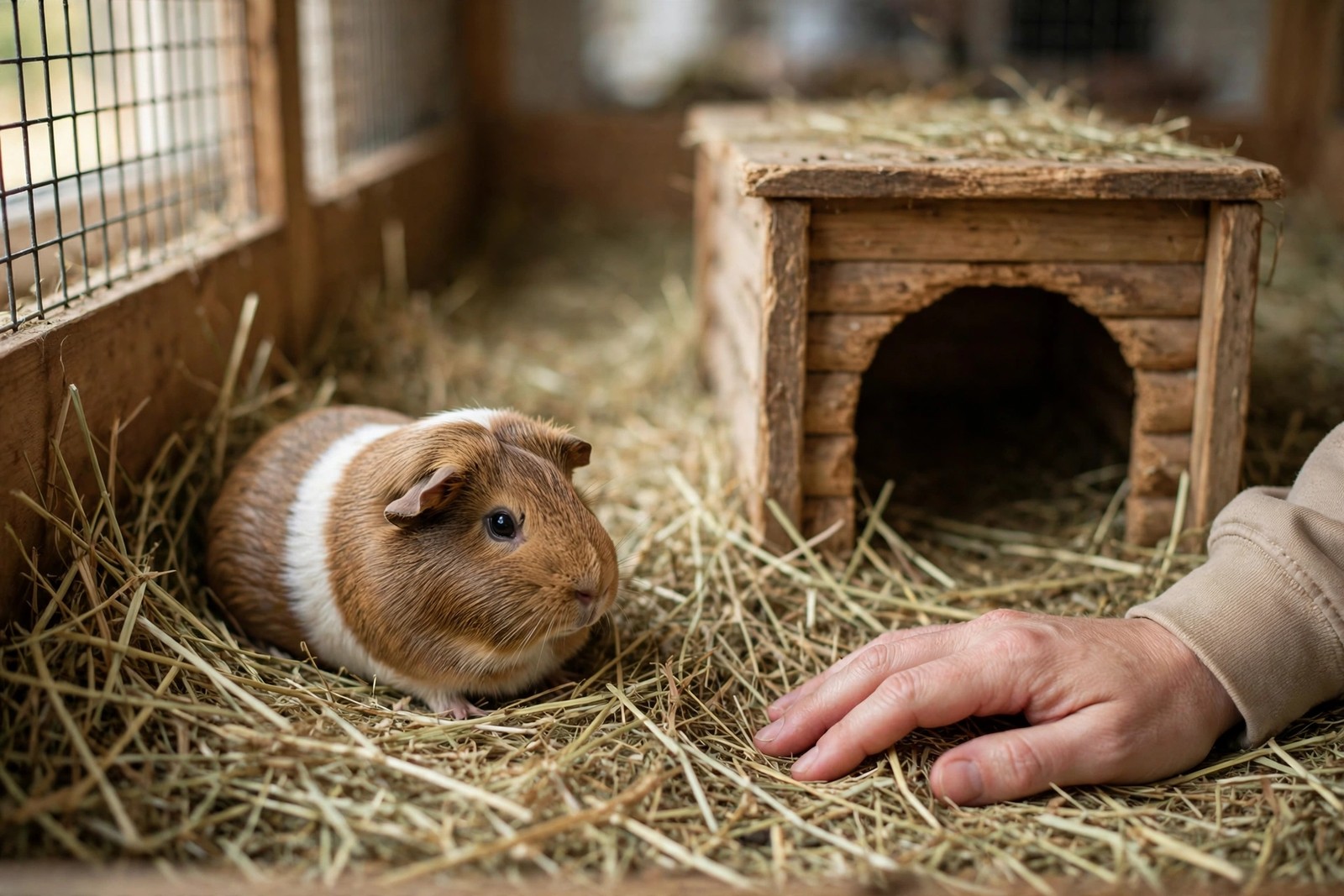
A guinea pig who has lost a companion has lost the center of its social world. Guinea pigs live in herds, and a bonded partner provides constant company, shared warmth, and the confidence to come out and eat. When that partner dies, the remaining pig often goes quiet in ways owners describe plainly: it hides more, sits hunched in one corner, eats less, and stops wheeking, the loud call it once aimed at footsteps and rustling food bags. That silence is grief and loneliness in a social animal, and it deserves to be read as both.
The First Need Is Company Again
Solitude is not a long-term answer for a guinea pig, however much human attention it receives. People are a bridge, not a replacement, because a person cannot share the enclosure at night, graze alongside the pig, or speak its own body language. Most owners therefore look for a new companion, and a rescue is a good place to start, since rescues usually know each pig's temperament and can suggest a pairing likely to settle. A same-sex companion or a neutered pairing avoids litters while giving the grieving pig a partner of its own kind.
Introductions go best on neutral ground, in a space that smells of neither pig, with hay and vegetables scattered so the first meeting has food at its center. Keep a quarantine period apart first, so a newcomer is not bringing illness into the home, and let a vet confirm both animals are healthy before they meet. Humping, chattering, and cautious circling are ordinary early negotiation. Chasing that prevents one pig from eating or resting, or any bite that draws blood, means separate and try again more slowly.
The Bridge Until a Companion Arrives
While the search and quarantine run their course, the surviving pig needs more from its people. Sit with it daily, hand-feed favorite vegetables, and keep floor time regular, since movement supports appetite and gives the day a shape. Keep everything else steady: the same feeding times, the same enclosure layout, and the same hideaways in the same places. A grieving pig has already lost its biggest constant, and small changes that seem minor to a person can read as further upheaval. This is also where assigning the checks matters. Through the Care Teams schedule on KinsLe, one person can own the morning appetite check, another the evening floor-time session, and another the weekly feel of the pig's weight by hand, with droppings and eating noted each day. A shared written plan means a quiet day is noticed by everyone, not explained away by each person assuming someone else saw the pig eat well.
The Health Line That Overrides Everything
A guinea pig's digestive system is built to keep moving, with hay passing through almost constantly. A pig eating notably less is therefore never just a sad pig to watch for another week. Reduced appetite, fewer or smaller droppings, and weight you can feel dropping under your hands all point the same way: call a vet promptly, and describe how much less the pig is eating. Illness and grief can look alike at first, and teeth problems or gut slowdown are possibilities a vet investigates rather than guesses an owner makes at home. Keep hay available at all times, keep fresh water checked, and do not wait for the new companion to arrive before making that call.
Settling Into the New Pairing
Once a companion is home, expect the older pig's voice to return in stages. Wheeking at food sounds, coming out to graze beside the newcomer, and choosing to rest near the other pig are the signs owners usually see first. Keep two of everything important at the start, including bowls, bottles, and hideaways with more than one exit, so neither pig has to compete while the bond forms. Assigning those daily checks through the Care Teams schedule on KinsLe keeps the grieving pig's appetite, droppings, and weight notes visible to everyone helping.