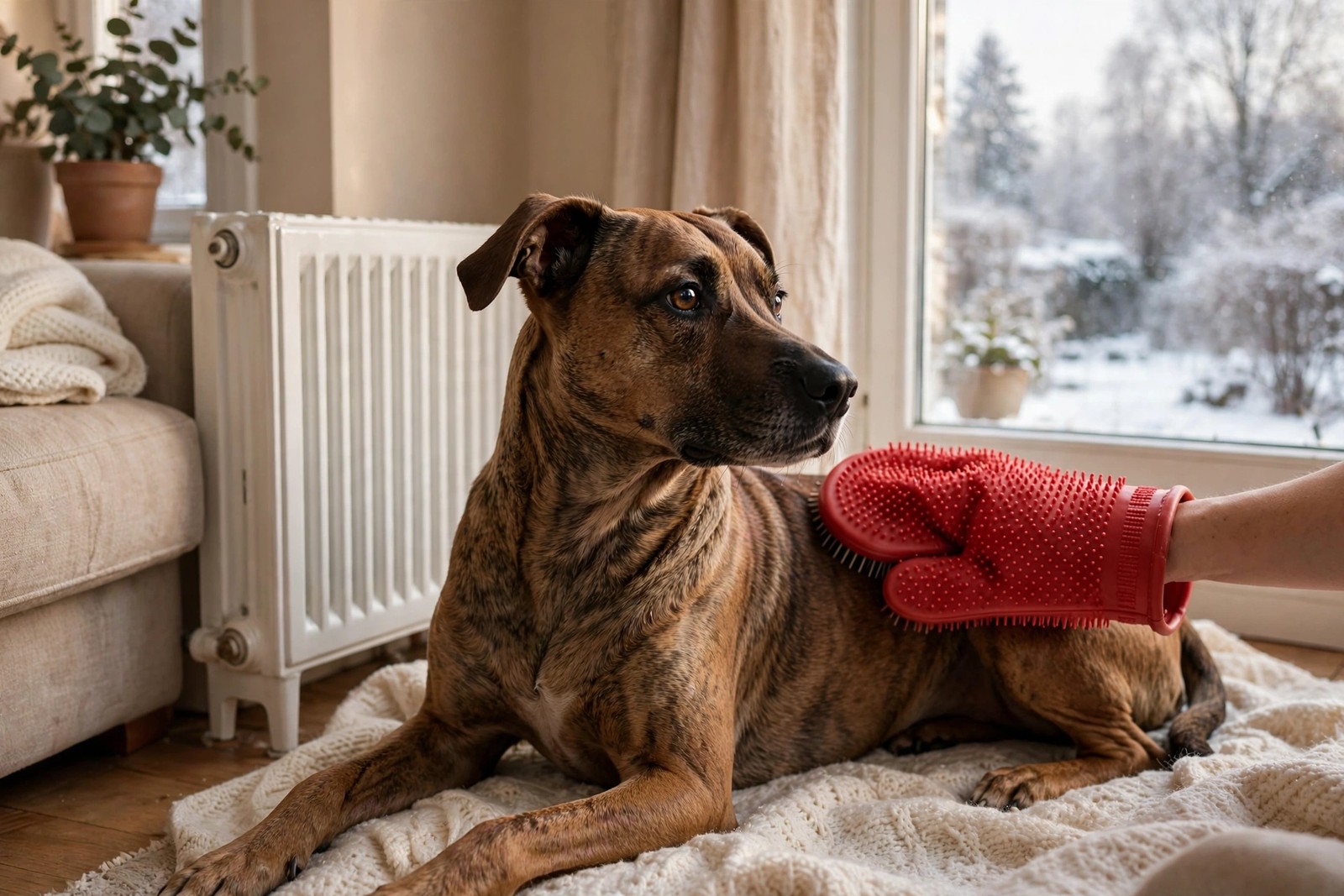
A short coat looks maintenance-free and is not. There is little hair to hide behind, so dry skin shows quickly as pale flakes along the back and flanks, and the constant warm, dry air of a heated house through winter draws moisture from skin that a longer coat would shield. The care that works is modest and regular: lift what is loose, wash less than instinct suggests, dry properly, and know which changes in the flaking pattern deserve a vet rather than another bath.
Brush Weekly With a Mitt and Look While You Work
The owner brushes once a week with a rubber grooming mitt or a soft bristle brush, using unhurried strokes in the direction of the coat to carry away loose hair, surface flakes and the dust a short coat collects from carpets and bedding. Weekly is a rhythm, not a ceiling to exceed; daily hard brushing irritates the skin you are trying to calm. The mitt pass doubles as an inspection, with the owner's free hand feeling for dry patches, small scabs, thinning areas and any spot the dog flinches at or turns to lick afterwards. Bedding is washed regularly through the season, since a dog sleeping nightly on dusty blankets re-coats the skin you have just cleaned, and the bed is moved out of the direct blast of a radiator or heater vent where that is practical, since hours of hot dry air on one sleeping side does the skin no favours. Coat condition also reflects the bowl: steady feeding of a complete dog food and a stable weight support the skin from underneath, and sudden changes of food mid-season make flakes harder to read, since the owner can no longer tell whether a change came from the air or from the diet.
Rinse With Plain Water and Shampoo Rarely
The owner rinses mud from legs, belly and chest with plain lukewarm water after wet winter walks, then towels the coat fully dry, since a short coat left damp in a warm house can still feel cold at the skin and encourages licking. Shampoo is kept for a dog that is genuinely dirty or smelly, not used as a weekly habit, since frequent shampooing strips the oils a dry coat is already short of and can turn mild flaking into an itchy cycle of washing and scratching. When a bath does happen, the owner uses a dog-appropriate shampoo, rinses longer than feels necessary so no residue dries in the coat, and dries the dog thoroughly before a rest in a warm room. Indoor air can be made less harsh in simple ways that need no gadgets or figures: a bowl of water near a heat source, the dog's bed away from a dry corner, and a house that is warm rather than fiercely overheated all help at the margins.
Separate Plain Flaking From a Vet Problem
The owner reads flaking as a pattern over weeks, not as a verdict on a single day. Plain light flaking with no itching, no hair loss and a dog that is comfortable in its skin is a matter for watching and brushing: keep the mitt rhythm, keep shampoo rare, and note whether the flakes ease as the weeks pass. Flaking that arrives with persistent itching, bald patches, redness, or a stale musty odour from the coat is different, and that combination goes to the vet rather than being bathed, brushed or supplemented away at home. A dog that starts scratching through the night or chewing at its flanks has also crossed that line, whatever the flakes look like. Put both jobs, the brushing and the rinsing, on the weekly rota inside Care Teams, and KinsLe will record which helper handled each one, keeping the rhythm visible.