
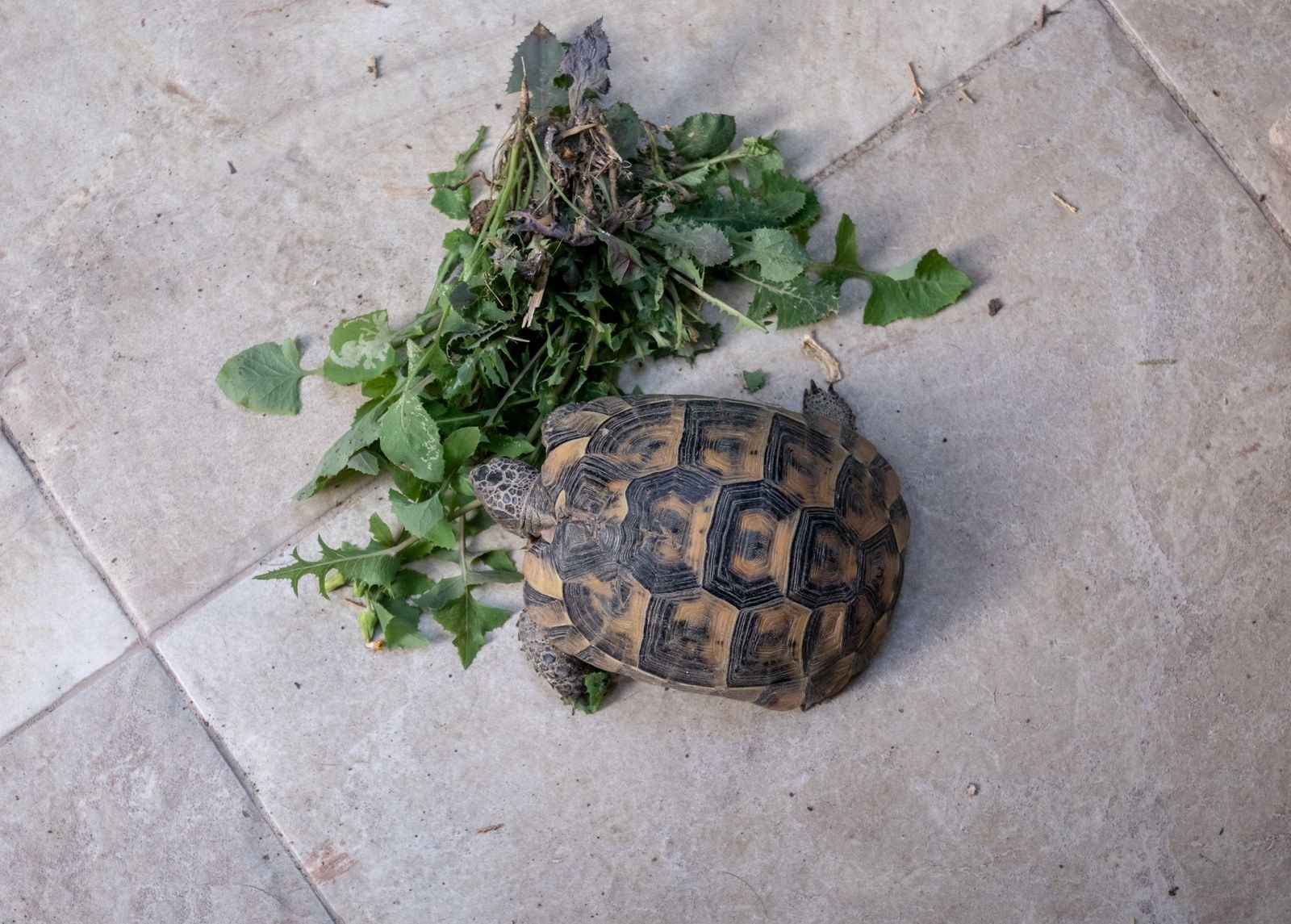
You keep a tortoise's beak and nails in good shape mostly by letting daily life wear them down: feed on a flat slate or stone, offer a cuttlebone to chew, and provide rough, varied ground to walk on — and leave actual trimming of anything overgrown to a reptile veterinarian.
How a Healthy Beak Wears Itself Down
A tortoise's beak is keratin, like your fingernails, and it grows continuously. Tearing at fibrous grasses, weeds, and hay, and biting against a hard feeding surface, files it down naturally at the same pace. Problems start in enclosures where food arrives pre-chopped in a smooth bowl on soft substrate: nothing does the filing, and the beak overgrows into a hooked or uneven edge that makes biting off food genuinely difficult. A flat piece of slate or terracotta tile as a feeding station is a small change with an outsized effect, and a cuttlebone — the same kind sold for birds — gives many tortoises something satisfying to gnaw between meals.
Nails, Ground, and Honest Exercise
Nails wear through walking, digging, and climbing over varied terrain. Tortoises kept only on smooth or very soft surfaces, or in enclosures too small to encourage real walking, commonly develop long, curling nails that alter how the foot lands. Help by:
- Mixing substrate textures and adding flat stones, logs, and gentle slopes outdoors
- Giving the largest enclosure you can, so daily steps actually add up
- Letting your tortoise graze and roam a safe outdoor pen in suitable weather
- Checking feet regularly for caught debris, swelling, or a nail that has torn
What Overgrowth Looks Like — and What Not to Do
Watch for a beak that extends past the lower jaw, cracks, grows asymmetrically, or leaves your tortoise dropping food it clearly wants. Nails that curl under, splay the toes, or click and catch as the tortoise walks also need attention. Do not clip an overgrown beak at home, and be cautious even with nails: the living quick inside is hard to judge on a tortoise, cutting too far causes pain and bleeding, and reshaping a beak takes training and the right tools. A tortoise that cannot eat properly loses condition quickly, so treat beak problems as promptly as you would a refusal to feed.
Supportive care you can safely do at home is environmental: fix the feeding surface, add abrasion and exercise, and keep a simple log of what you see changing month to month.
Finding the Right Professional Help With KinsLe
Not every clinic sees tortoises regularly, and beak work is exactly the job where species experience counts. KinsLe's Pet Services Directory helps you find local vets, groomers, sitters, and trainers, so you can locate a veterinarian experienced with tortoises near you before an overgrown beak becomes an emergency, and ask at booking whether they trim beaks in-house. The Pet Services Directory results on KinsLe can point you toward a nearby clinic that regularly treats tortoises, so beak reshaping stays with a veterinarian who does that work often.