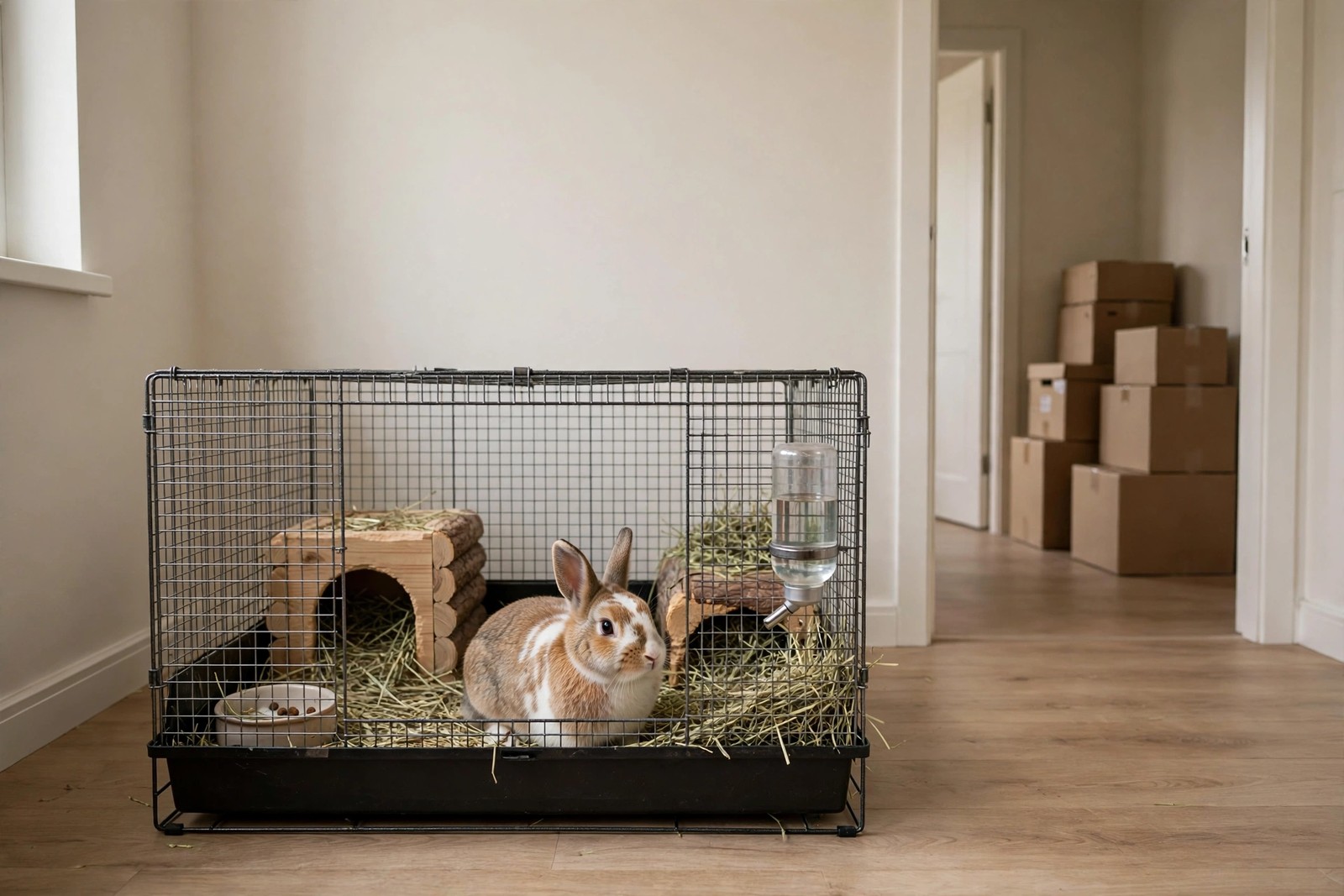
Small pets experience a house move as a world of alarming noise, vanishing furniture, and strangers carrying things past their cage. Rabbits, guinea pigs, rats, hamsters, and ferrets are prey animals or highly routine-driven, and stress shows up as hiding, refusing food, or gut slowdown rather than obvious panic. The strategy that works is to shrink the change: their cage, smells, and routine stay untouched until the last possible moment, and their new setup is ready before anything else is unpacked.
Before Moving Day: Pack Around the Cage
Leave the cage fully set up in its usual place while you pack the rest of the home over preceding days. Do not deep clean it just before the move — familiar bedding and the animal's own scent in the hide are calming anchors you will want intact on the other side. Resist upgrading to a new cage at the same time; a move plus a strange cage doubles the disruption. Gather a move kit for each pet: a secure, ventilated travel carrier, a portion of used bedding, familiar hay or food, a water bottle or bowl they already know, and any medication notes, kept in your car rather than in the moving van.
Moving Day: Cage Out Last, Travel Short and Steady
Transport the pets yourself in your own vehicle, never in a removals van. Small pets can travel in their cage only if it is small, secure, and cannot slide or tip; most do better in a sturdy carrier lined with their familiar bedding and a hide, placed on a flat surface where it will not shift under braking. Keep the car at a comfortable, steady temperature, never leave the pets in a parked car, and drive as directly as the day allows. Offer water at stops on longer journeys, and keep the carrier covered with a light cloth if passing movement seems to unsettle them, while keeping airflow clear.
Time the trip so the pets leave the old home after the loudest loading is done and arrive once the new room is ready for them. Being carried through a half-emptied house full of strangers at both ends is the worst version of the day; being lifted quietly from one calm room to another is the best.
Arrival: Their Room First, Everything Else Later
Set the cage up before you unpack a single box for yourself, in the quietest room of the new home, laid out exactly as it was: hide in the same corner, food and water in the same positions, the same bedding transferred across. Place the pets in, close the door, and leave them to decompress with hay, water, and dim quiet for the first hours. Keep the first day's feeding and handling times identical to the old home's, and let curious pets explore the one room under supervision only when they are venturing out of the hide on their own — watch first explorations closely for cables, gaps behind appliances, skirting gaps, and cleaning-product residues before any floor time.
Watch Eating Closely for the First Few Days
The key health signal after a move is appetite. Rabbits and guinea pigs must keep eating hay almost continuously to keep their digestion moving, so check hay piles are shrinking, droppings are normal in size and quantity, and water is going down. A rabbit or guinea pig who has not eaten for many hours, produces far fewer droppings, or sits hunched and withdrawn needs a vet promptly — do not wait to see whether the new house cheers them up. Rats, hamsters, and ferrets usually bounce back within a day or two once routine returns; a pet of any species still hiding and off food after two days deserves a vet call describing the move.
On a day when you cannot be in two houses at once, KinsLe Care Pass gives the friend settling your pets into the quiet room temporary, scoped access to their feeding, hay, and handling notes, so their routine survives even when you are still supervising the van.