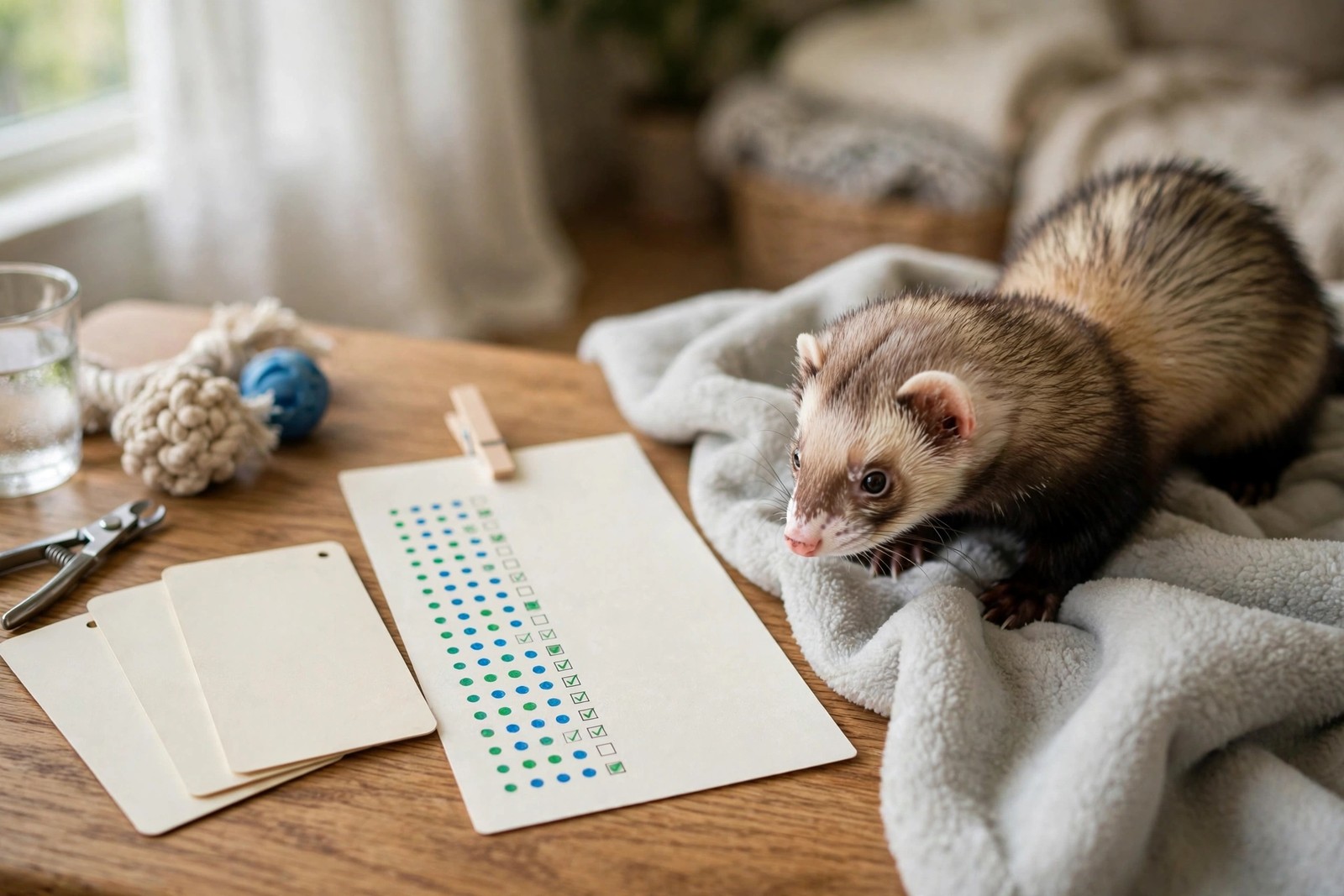
Ferret vaccinations are easy to lose track of because they happen rarely — usually one appointment covers the year — and because many owners keep several ferrets whose dates quietly drift apart. The system that works is two-layered: a complete vaccination record for each individual ferret, and a single household due-date list that surfaces whoever is due next, so no ferret's booster slips by because their card was at the bottom of the pile.
The Two Vaccines That Matter
Ferrets are typically vaccinated against two diseases. Rabies vaccination protects the ferret and is a legal requirement for ferrets in some places and for travel or boarding in many more. Canine distemper vaccination is the other core one: ferrets are highly susceptible to canine distemper, and the disease is almost always fatal in ferrets, which is why vets treat keeping this cover current as essential rather than optional. Your vet sets the actual schedule — a kit's first course, then boosters that are commonly annual — and the schedule can differ between ferrets and change with age or health, so the dates to track are always the ones your own vet confirms, never dates copied from another owner's ferret.
What to Record at Every Appointment
For each vaccination, record five things the same day: the ferret's name, the date given, which vaccine it was, the clinic that gave it, and the next due date the vet states. Ask for the due date in words before you leave — vets will happily confirm when they want to see the ferret again — because calculating it yourself later from a half-remembered interval is how errors start. Keep the clinic's own vaccination certificate or card with the record; boarding kennels, ferret shows, and new vets ask to see the clinic document, not your notes about it.
Add one more field most owners wish they had: a short note of how the ferret was afterwards. Ferrets are among the small pets more likely to react to a vaccination, and clinics commonly ask you to wait nearby for a short while after the appointment for exactly that reason. Note any reaction your vet observes or asks you to monitor, and tell the clinic about it before the next vaccination, because it can change how they schedule and supervise that visit.
The Due-Date List and the Reminder
Keep a separate single list — on paper inside the record folder or as a note on your phone — with one line per ferret per vaccine, sorted by due date, earliest first. When a booster is given, cross off the old line and add the new due date in its sorted place. Set a phone reminder roughly a month before each due date, because ferret-savvy vet appointments can book up and a reminder on the due date itself leaves no slack. Two ferrets whose dates fall close together can often be booked into the same trip, which the sorted list makes obvious at a glance.
If you take in a ferret with an unknown or lapsed history, do not guess or restart dates from assumption: book a vet visit, take whatever paperwork came with the ferret, and let the vet set a fresh schedule from that appointment, which then becomes the first line of that ferret's record.
Keep the Records With the Ferret's Other Papers
File vaccination cards alongside each ferret's microchip details if they are chipped, health notes, weight records, and your vet's contact details, and share a copy with whoever boards or sits for your ferrets — a boarder may need to prove cover quickly if a ferret is unwell in their care. Review the whole file whenever a new ferret arrives or one is rehomed, so records leave with the ferret they belong to.
A vaccination history that is complete, dated, and easy to produce is exactly what vets and boarders ask for, and KinsLe Pet Passport keeps each ferret's vaccination record together with the rest of their health papers in one portable packet for appointments, boarding, and travel.