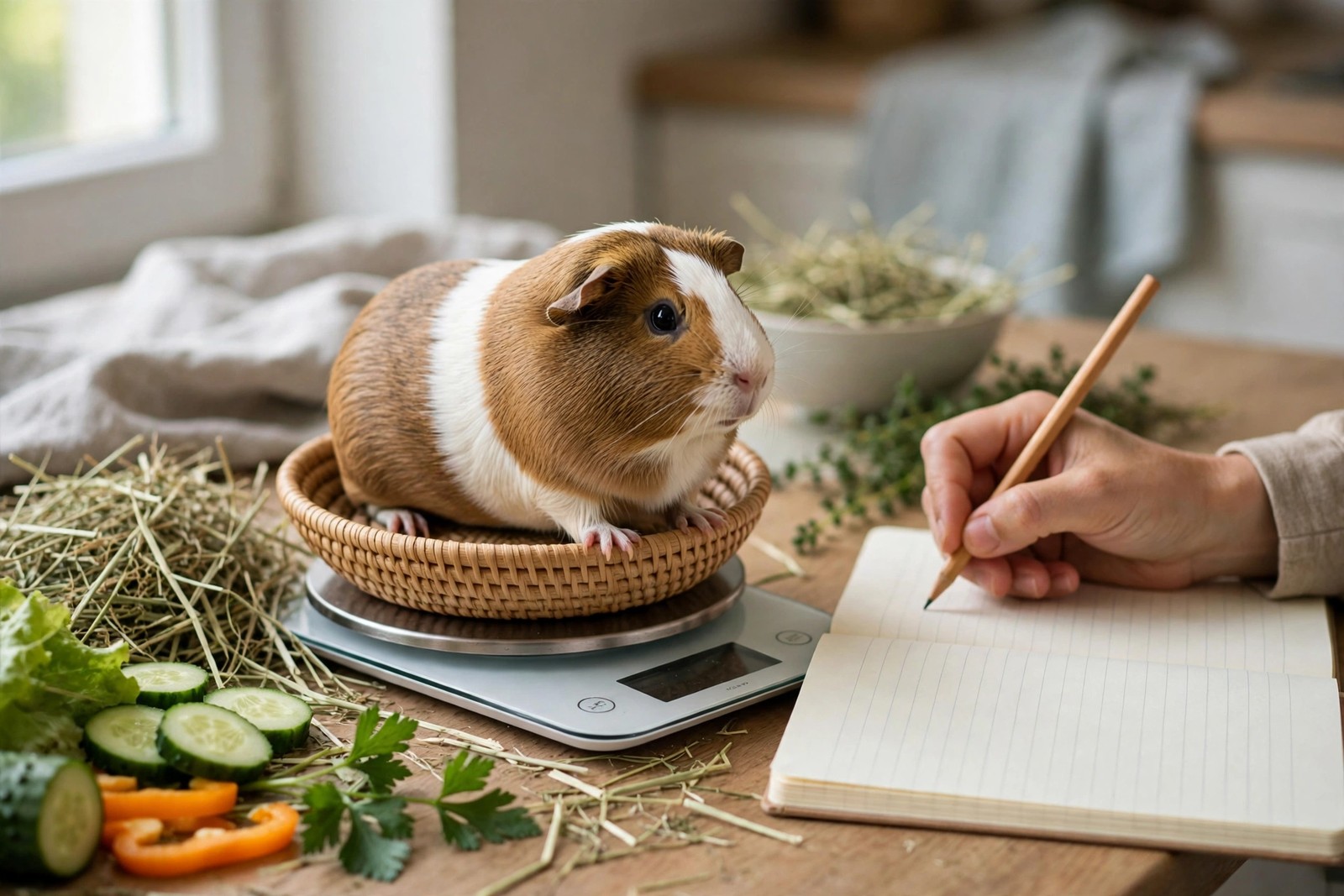
Guinea pigs are prey animals, and prey animals conceal weakness until they no longer can. A pig can eat poorly and lose condition for days while looking completely normal at a glance. Home tracking replaces glances with measurements: a weekly weight that cannot lie, a short daily check of inputs and outputs, and a written log that turns a vague feeling that something is off into a trend you can act on and show a vet.
The Weekly Weigh-In
Weigh each pig on the same day and at roughly the same time each week, using kitchen scales that read in grams. A small box or bowl keeps the pig still; zero the scales with the container first, then write the weight straight into the log. Adult weights vary widely by breed and build, so direction matters more than the number itself. A stable weight is the sign of a pig whose eating and digestion are working. Treat a sudden drop, or a steady slide over two or three weeks, as a reason to book a vet even if the pig seems lively — weight loss is frequently the first visible sign of dental trouble, pain, or internal illness.
The Daily Once-Over: Hay In, Droppings Out
Spend a minute on each pig every day while you feed. Check that hay is actually being eaten — the pile should visibly shrink between mornings, and you should see the pig chewing it, because hay wear keeps the continuously growing teeth in check and drives gut movement. Look at droppings during spot cleaning: healthy output is plentiful, evenly sized, and firm. Far fewer, much smaller, or soft and misshapen droppings are early digestive warnings worth logging with the date.
Check eyes for discharge or cloudiness, the nose for wetness or crusting, and listen for breathing that clicks, wheezes, or sounds laboured at rest. Watch each pig move: stopping popcorning or exploring is not proof of illness, but combined with a weight dip or reduced droppings it completes a picture worth a vet call. Note water intake too — a bottle suddenly emptying fast, or barely touched, is information.
The Weekly Hands-On Check
Work through the same order each week at the weigh-in, with the pig calm on your lap. Lift the lip gently and check the front teeth: the upper and lower pairs should meet evenly, not slant or cross, and neither tooth should be much longer than its partner. Turn each foot over and check the pads and toes for sores or swelling, and check older pigs' hocks for redness. Run both hands over the back, sides, belly, and neck, feeling through the coat for lumps, scabs, flakes, hair loss, or parasites, and look again at the eyes and nose while listening to breathing at rest. Record a brief line for each area — teeth even, feet clear, coat smooth, no lumps — noting any lump's size and place, and when everything looks fine, write that plainly. That is how you tell a lump that stays pea-sized for months from one that has doubled.
What Belongs in the Log, and When to Call the Vet
Keep the log simple: date, weight in grams, a line for appetite and droppings, and a line for anything noticed. Put it where the weighing happens, not in a drawer.
Contact a vet promptly — the same day — if a pig stops eating, produces few or no droppings, has laboured breathing, loses weight suddenly, or becomes hunched and withdrawn. Guinea pigs also cannot make their own vitamin C, so keep their diet's fresh component consistent and log any appetite change around it rather than experimenting when a pig is already off colour. Home tracking never replaces the vet; it makes the vet visit far more effective, because you arrive with dates and numbers instead of a worry.
Keeping the rhythm going in a household where several people feed the pigs takes a shared system, and KinsLe Care Teams lets you set the weekly weigh-in and daily check as recurring assigned duties, each timestamped, with the log visible to everyone who cares for the pigs.