
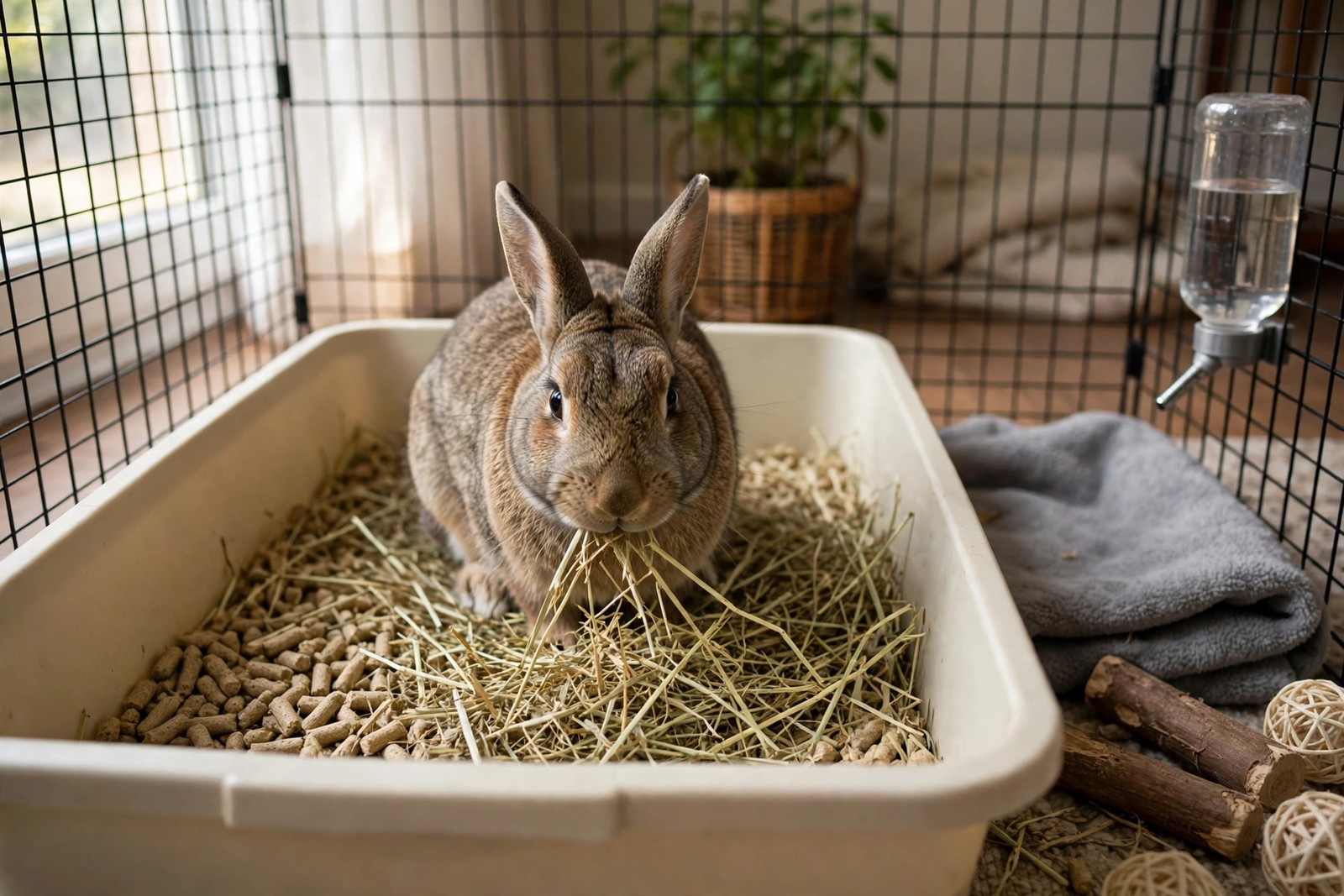
To litter train your rabbit, place a roomy litter box in the corner your rabbit already chooses for a toilet, fill it with paper-based litter, and put a generous pile of hay at one end — rabbits love to graze while they go, and that habit does half the training for you. Most rabbits take to a box within one to three weeks when the setup matches their instincts.
Start where your rabbit already goes
Rabbits naturally pick one or two toilet corners. Watch for a day or two: where do droppings and puddles collect in the pen? That corner, not the one that looks tidy to you, is where the first box belongs. For rabbits with a large pen or free-roam space, start with two boxes in the two most-used spots and remove the extra later if one wins clearly.
Choose a box big enough for your rabbit to sit in fully and turn around — a standard cat litter tray without a hood works well for most, with a low entry cut or a ramp for older or smaller rabbits.
Set up the box so it invites use
Line the bottom with newspaper if you like, add a layer of paper-based litter, and place fresh hay at one end or in a rack directly above the box. Avoid clumping clay litter and strongly scented products, which are not suitable for rabbits who nibble as they sit.
Sweep stray droppings into the box daily so it smells like the toilet spot, and clean up accidents elsewhere promptly with a pet-safe cleaner to remove the scent cue. Keep the rest of the pen clean and dry — rabbits are tidy animals and prefer a clear distinction between living space and toilet.
Build the habit day by day
- Confine training to the pen or one room at first; too much freedom too soon means too many corners to choose from.
- Reward calm box use with gentle praise or a small favorite herb — never punish misses, which only adds stress.
- Change litter regularly, but leave a tiny amount of soiled litter at first so the scent reminder remains.
- Expand roaming space gradually as box habits stay reliable, adding a box in the new area if needed.
Young rabbits and unneutered rabbits may mark more, so expect slower progress and a few territorial droppings even after the basics click. Neutering, discussed with your vet, often improves litter habits noticeably.
Troubleshooting common setbacks
If your rabbit sits in the box but misses over the edge, the box is probably too small or the litter too shallow. If they dig everything out, try a heavier layer of hay on top. If habits collapse suddenly in a previously trained rabbit, think health as well as behavior — pain, urinary issues, or a change in the household can all show up as missed boxes, and a vet check is the sensible next step.
Also check placement: a box next to loud appliances, in a draft, or in full view of a household dog may simply feel unsafe to a prey animal.
Keeping everyone consistent with Care Teams
Litter training unravels when three people clean three different ways. With KinsLe's Care Teams, everyone helping with your rabbit follows the same routine — litter changes, hay refills, and pen cleaning can be assigned as duties, and completions are marked with a timestamp so you can see what was actually done and when. Consistency is what turns a good week into a permanent habit. For a rabbit, consistency means the hay end stays filled and the litter stays fresh, which is why the Care Teams duty list on KinsLe names who changes the box, who tops up the hay rack, and who sweeps stray droppings back in each day.