
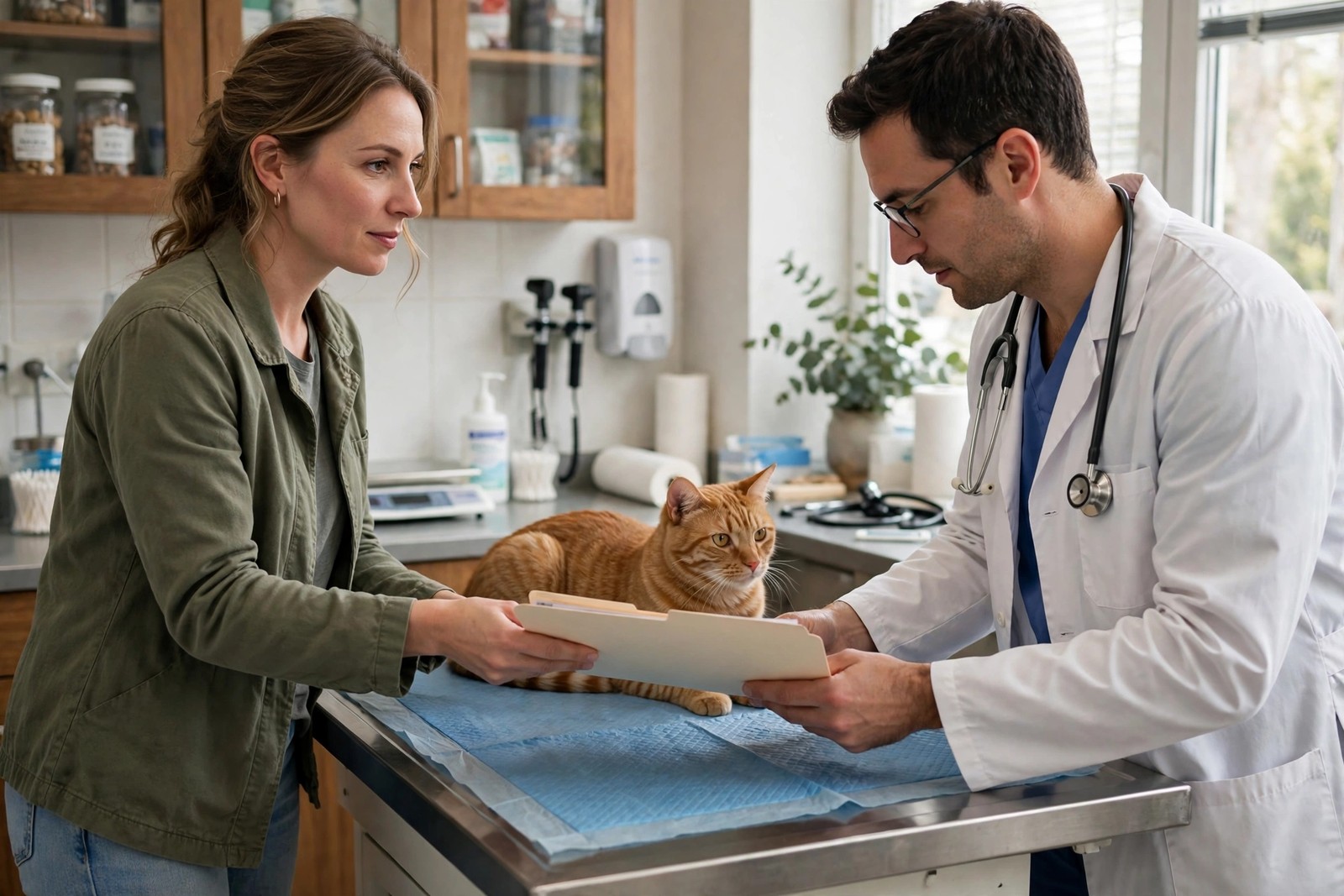
Ask your previous clinic to send records directly to the new one, and also bring your own copies — vaccine certificates, recent test results, a list of current medications, and a short timeline of major events. Clinics transfer records every day and it is a normal, expected request, but your own backup copies mean your cat's first appointment never depends on a fax machine, a full inbox, or a busy front desk.
What a New Vet Actually Needs
A new veterinarian is building a picture of your cat from zero. The most useful pieces are her vaccination history with dates, any chronic conditions and how they have been managed, current medications and supplements, allergies or past reactions, recent bloodwork and imaging, surgical history, and her weight trend over time. Behavior notes help more than owners expect: if your cat needs a towel wrap, hates the carrier scale, or does better with a particular handling approach, say so. It makes the first visit calmer and tells the new team you know your cat well.
Clinical notes, results, and certificates carry the value; old invoices are mostly clutter.
Making the Request Without the Awkwardness
Owners sometimes feel disloyal asking for records, especially when the switch is about moving house, cost, or hours rather than dissatisfaction. Put that worry aside — requesting records is a routine part of pet care, and clinics cannot withhold your cat's history. A simple approach works:
- Call or email the old clinic with the new clinic's name and contact details, and ask for the complete file to be sent over.
- Give it a few days, then confirm with the new clinic that the records actually arrived.
- Request your own copies too, for your files — you are entitled to them.
- If you are mid-treatment for something, mention it to both clinics so nothing stalls during the handoff.
Build a One-Page Timeline
Alongside the official file, write a short timeline in your own words: when you adopted her, major illnesses or injuries, surgeries, when a chronic condition was diagnosed, and anything you are currently watching — a slight limp, a picky appetite, a lump your old vet said to monitor. Vets read these. A timeline turns a stack of disconnected visit notes into a story with a shape, and it often surfaces the detail that matters: "the itching started right after we moved" is in no lab report, but it might be the clue.
At the First Appointment
Arrive a few minutes early, certificates in hand, and use the visit to establish the plan: what is due and when, what needs monitoring, and how the clinic handles reminders and refills. Ask how they prefer records and updates to be shared going forward.
Sharing in Seconds With KinsLe
KinsLe's Pet Passport is your cat's records packet — vaccines, medications, allergies, and documents gathered in one place and shareable with vets and sitters. When you switch clinics, the packet goes to the new vet without a scavenger hunt through old emails, portals, and glove compartments. Keep it updated after each visit and it becomes the version of your cat's history that is always complete and always in your pocket. Before that first appointment, send the new clinic the Pet Passport packet on KinsLe, so her vaccines, medications, allergies, and visit documents arrive as one complete history rather than scattered attachments.