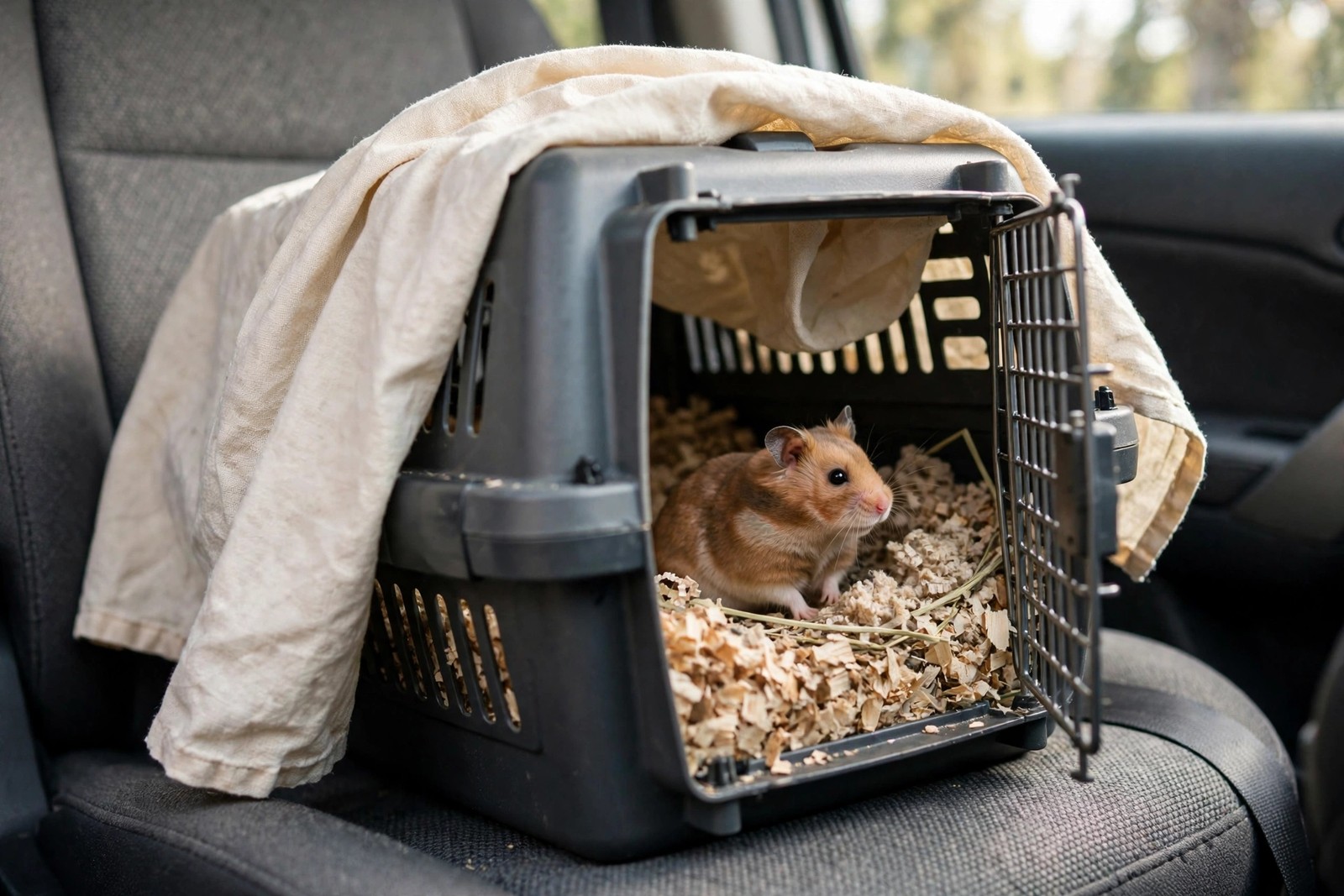
A hamster's cage is its home, but it makes a poor vehicle. Wheels, bottles, ceramic houses, and loose toys all become projectiles the first time the car brakes, and cage bars let in noise, light, and draughts from every direction. A short vet trip goes far better in a small travel carrier set up specifically for the journey.
Choose and Prepare the Carrier
Use a small, hard-sided carrier with a secure, chew-resistant lid and ventilation holes or mesh that a hamster cannot squeeze through or gnaw wider. Small is genuinely safer here: in a snug space the hamster cannot be thrown far if the car stops suddenly, and the darkness feels like a burrow rather than exposure. Line the base deeply with bedding lifted straight from the hamster's own cage, including material from its nest corner if you can manage it, because familiar smell is the strongest calming tool you have. Add a lightweight hide, such as a small cardboard house or a bendable grass shelter, that it can retreat into without any risk of the hide crushing it. Line the carrier before the appointment day and let the hamster explore it briefly at home if time allows, so the box itself is not brand new on the morning it is already unwell.
What Goes In, and What Stays Out
Scatter a small handful of its usual food in the bedding so it can forage, and tuck in a chunk of cucumber or another watery vegetable as a moisture source. Leave out the water bottle, which will leak steadily over the bedding with every bump, and leave out every hard or heavy object: no exercise wheel, no ceramic bowl, no wooden block heavy enough to slide into the hamster. If the hamster is being taken because it is unwell or injured, keep handling to the bare minimum needed to settle it in, moving it inside its hide or in a mug rather than chasing it around the cage with your hands.
The Journey Itself
Cover the carrier with a light cloth or towel so the inside stays dim and visual movement stops, while leaving airflow around the ventilation. Set the carrier flat on the car floor behind a front seat, or wedged firmly on a seat so it cannot slide or tip, never in the boot where air, temperature, and noise are worst and you cannot hear anything wrong. Keep the car at a comfortable, moderate temperature for the whole trip, warm it or cool it before the hamster comes out of the house, and never leave the hamster sitting in a parked car, which heats and chills far faster than people expect. Drive directly to the practice, keep voices and music low, and carry the carrier with both hands, level and close to your body, rather than swinging it by a handle.
At the Practice and Back Home
Bring written notes: when appetite or droppings changed, what the hamster normally eats, and anything it may have chewed or fallen from, since a concise timeline genuinely helps the examination. Ask the team to handle the hamster over a surface inside its carrier where possible, and keep other patients, especially dogs and cats, at a distance in the waiting room by holding the covered carrier on your lap. Afterward, return the hamster straight to its familiar cage with fresh water, let it burrow and sleep undisturbed, and skip handling for the rest of the day. KinsLe's Pet Passport brings the diet notes, symptom timeline, and vet details together in one packet you can hand over at reception, so the account of a small patient who cannot speak for itself arrives complete.