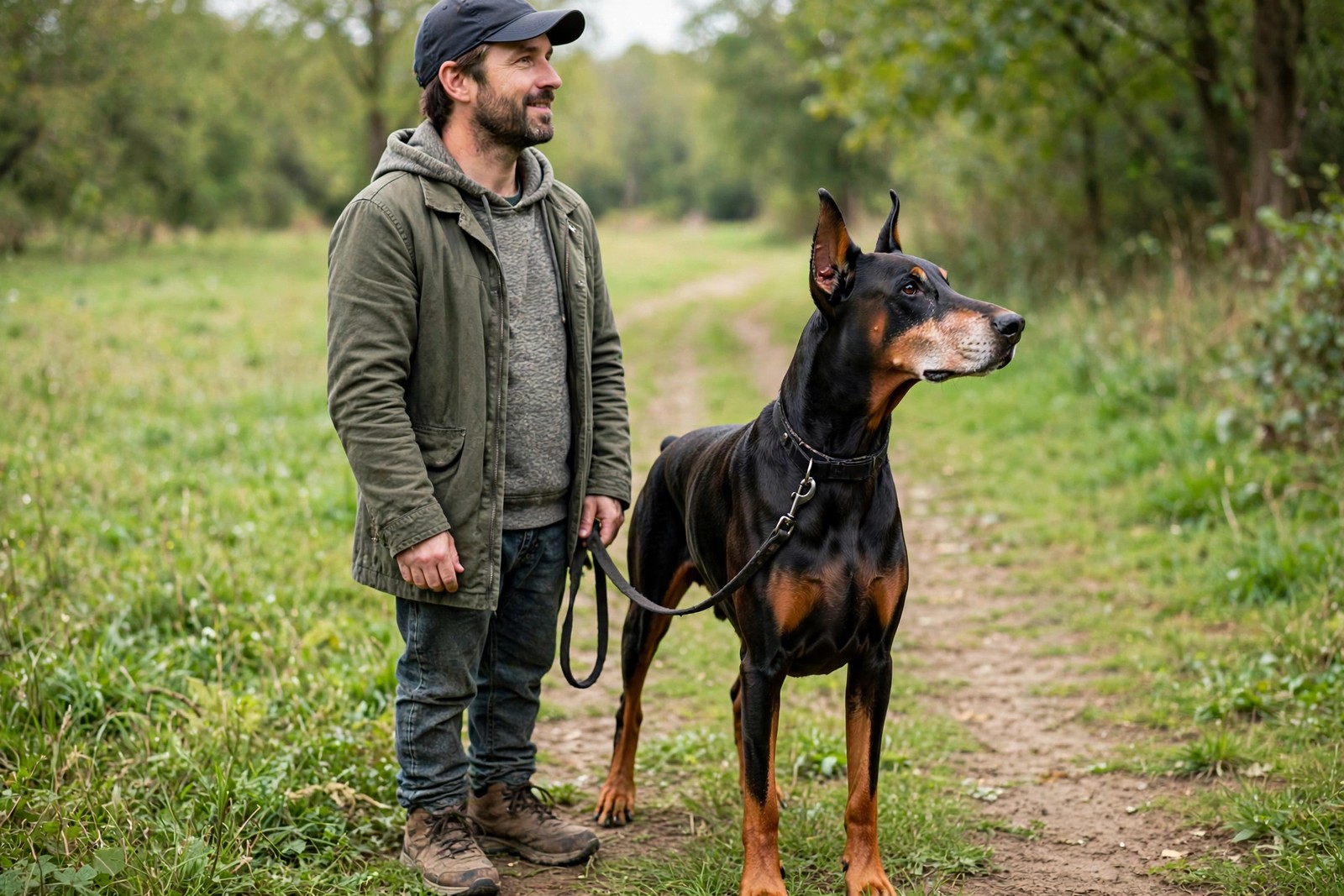
A Doberman's expected lifespan is commonly about 10 to 12 years. That range is a planning guide, not a promise for any one dog: lineage, body weight, heart health, and how quickly changes get veterinary attention can move an individual dog to either side of it. Understanding where those years go, and what protects them, helps an owner care for the dog in front of them.
What Shapes a Doberman's Years
Weight carries real weight in this breed. A Doberman kept lean moves more comfortably, puts less strain on joints and heart, and often stays active deeper into senior years than a heavy dog of the same age. Feed measured meals, keep ribs easy to feel under a thin cover of muscle, and treat steady weight gain in a middle-aged dog as a topic for the vet rather than a sign of a dog filling out.
Daily life matters alongside food. Dobermans are athletic, people-focused dogs who need genuine exercise and company, and a dog who trains, walks, and works its mind daily tends to stay sounder in body and calmer at home. Dental care belongs in the same picture, because mouth pain and gum disease quietly reduce appetite and comfort in older dogs of every large breed.
Heart Screening, the Central Conversation
For Dobermans, heart screening is the monitoring conversation to have with your vet and keep having. The breed carries a predisposition to heart disease, and a vet can screen for it, listen carefully at routine checks, and advise whether further testing or closer intervals make sense for your dog. This is a screening conversation, not a diagnosis in advance, and many Dobermans screened on schedule live their full expected span.
Know the changes that should shorten the wait for an appointment at any age: reduced stamina on familiar walks, coughing, restlessness at night, fainting or collapse, and a belly that looks swollen. Any of those signs in a Doberman deserves a prompt vet visit rather than watchful waiting at home. Alongside heart health, a vet will typically keep an eye on hips, thyroid function, and general senior bloodwork as the dog ages, building a picture over years rather than reacting to single results.
Making Senior Years Count, and Keeping Records Whole
From about seven or eight years onward, treat your Doberman as a senior in planning even while it still acts young. Shorter, more frequent walks, a bed that supports large joints, ramps or help with car loading, and twice-yearly vet visits in many cases help an owner catch change early. Note appetite, stamina, sleep, and mood in plain terms, because a trend written down over months is far more useful to a vet than a memory of a dog seeming a bit slower lately.
Choosing a puppy or an adult with the lifespan in mind also means asking the breeder or rescue direct questions: what health screening the parents had, what the older relatives died of and at what ages, and whether the dog in front of you has any known heart, hip, or thyroid history already on file. Those answers do not guarantee years, and a seller who treats them as guarantees should worry you, but they move your planning from hope to information, and a dog adopted with records in hand starts life with you a step ahead of one whose history is a shrug.
A long life also means records that outlast any one home or clinic. Screening results, vaccination history, weight history, and daily routines hold their value only if they travel with the dog. If a Doberman is ever rehomed, that full history should go with it complete, so the new owner and vet continue care rather than reconstructing it. In KinsLe, the Transferrable Profiles handoff sends the screening record and daily routines along with the dog on rehoming day.