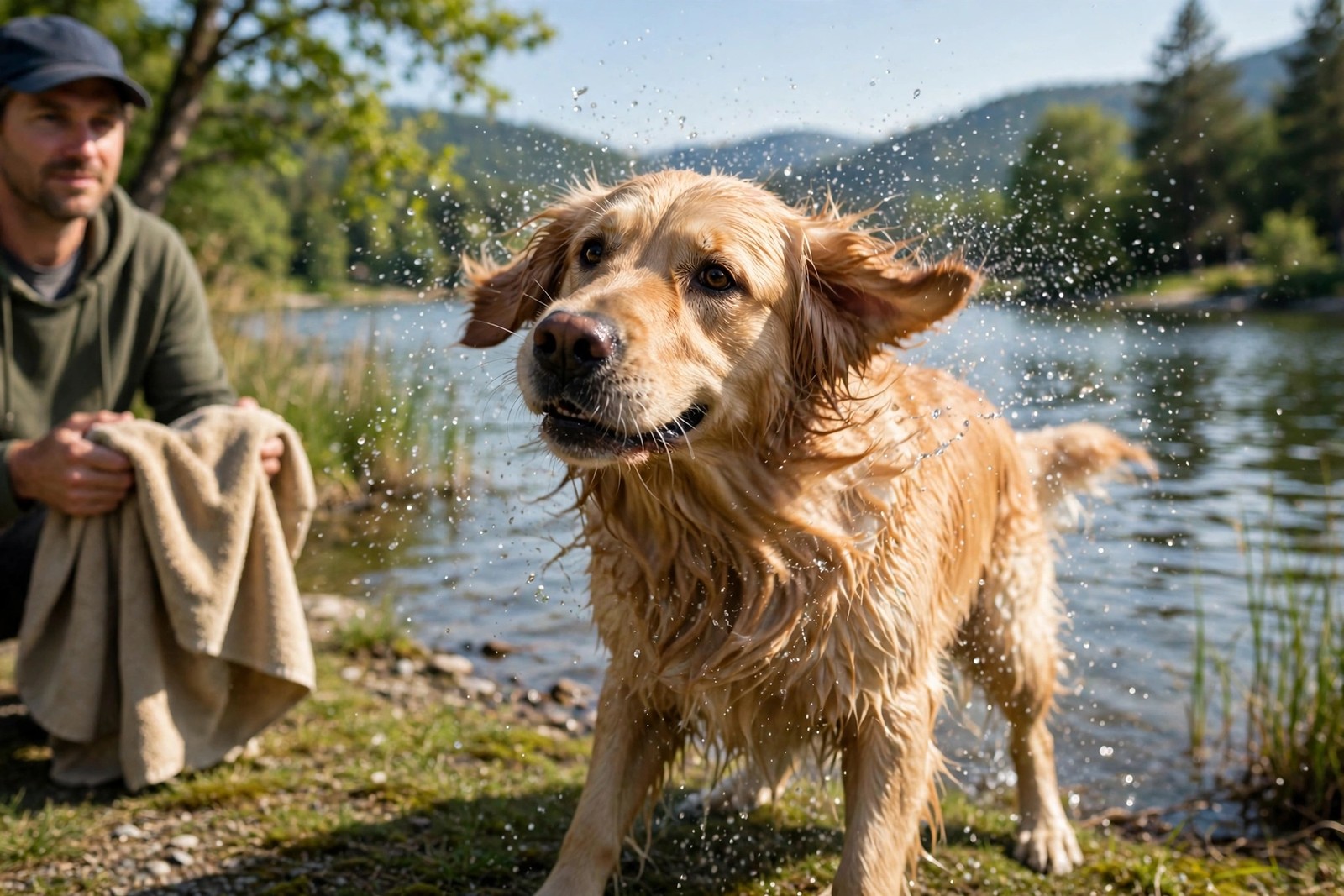
Golden Retrievers usually live 10 to 12 years. Goldens are famously good-natured, active family dogs, and that temperament can hide the breed's practical health agenda: joints that need lean weight, ears that flare after water, a coat that conceals lumps, and a notable tendency in the breed toward developing lumps and growths as they age. None of that should put you off the breed. It should shape your routine, because the owners who support the upper end of 10 to 12 years are usually the ones checking methodically rather than hoping generally.
Joints and the Weight That Loads Them
Hips and elbows are the standing joint concerns in Goldens, so ask a breeder what joint evaluation both parents have had and keep the results. Weight is the daily lever you control: Goldens are enthusiastic eaters who gain readily, and every spare kilogram loads hips and elbows through years of retrieving, stairs and car jumps. Feed measured meals, count treats within the daily total, check ribs monthly under that forgiving coat, and weigh your dog regularly so drift is caught early. Build exercise as steady daily activity, warm up before intense retrieving games, and report stiffness after rest, reluctance to jump into the car or lagging on walks to a vet rather than quietly reducing activity without advice.
Ears, Coat and the Weekly Lump Check
Floppy ears plus a love of water make ear problems a recurring Golden theme: dry ears carefully after swimming and baths, check weekly for redness, odour or head shaking, and take persistent signs to a vet. The dense double coat needs regular brushing, which doubles as your lump check: once a week, run your hands slowly over the whole body, including chest, belly, armpits and tail, feeling for any new lump or thickening under the coat. Note the size and location of anything you find with a date, and have new or changing lumps examined by a vet promptly rather than watching them indefinitely. A dated lump map across several checks is genuinely useful information at the surgery.
Senior Goldens
From about eight years old, treat your Golden as a senior: keep daily walks but judge distance by recovery, watch for slower rising, grey hairs arriving alongside reduced stamina, and report appetite changes, increased thirst, coughing or new lumps without waiting for the annual visit. Many senior Goldens stay cheerful and engaged for years when joint discomfort, weight and lumps are managed early, and adapted games, scent work and swimming where your vet approves can keep fitness without punishing joints. Keep the social life too: this breed's mental health is tied to company and involvement, and a senior Golden included in family routines usually eats, moves and rests better.
Ten to 12 years of joint results, lump notes, ear history and feeding routines is a record worth protecting, especially across vet changes or any change of home. KinsLe's Transferrable Profiles keeps that full history attached to your Golden Retriever's profile, so a new owner or carer inherits the knowledge rather than starting the decade over.