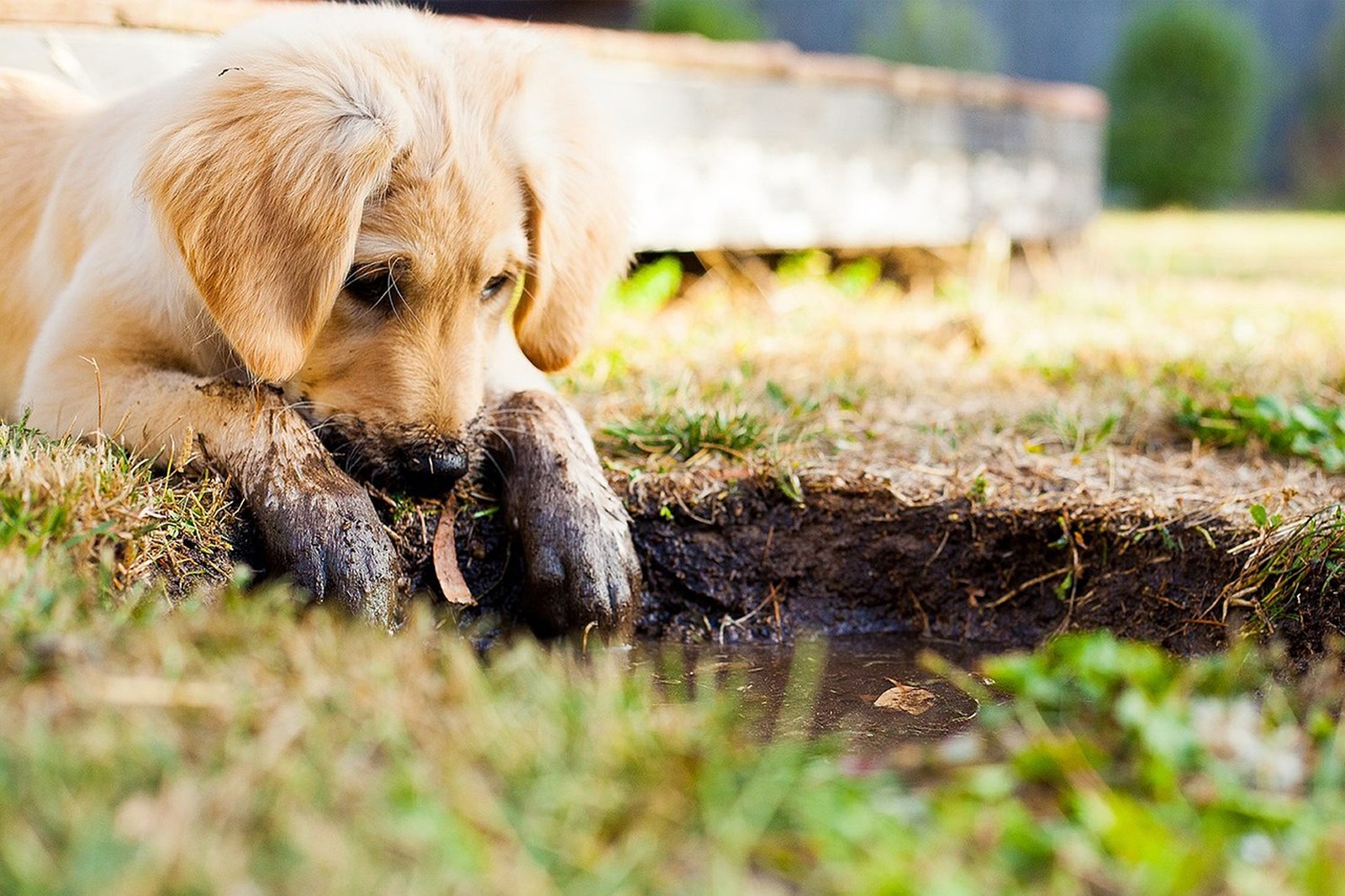
The friendliest puppy in the room
Golden Retrievers earn their reputation honestly. Your puppy will likely greet family, visitors, delivery drivers, and passing strangers with the same whole-body enthusiasm, tail sweeping anything at its height off nearby surfaces. That openness is the breed's great gift, and much of your first year is spent teaching it manners: four paws on the floor, calm greetings, and the ability to settle while exciting things happen nearby.
Beneath the friendliness sits a true working retriever. Goldens were built to find and carry game gently, work in cold water, and stay cheerful through a long day, so your puppy's energy and intelligence are greater than the soft expression suggests.
Everything goes in the mouth
Mouthiness defines the early months. A Golden puppy explores the world orally, carries shoes and socks like trophies, and chews with dedication while teething. Management beats confrontation: trade don't chase, keep treasured items behind doors, provide legal things to carry and chew, and praise the puppy who proudly delivers a toy instead of your slipper. Retrieving games channel the instinct beautifully, and many owners teach a reliable 'give' early because this dog will present them with found objects for life.
That same mouth finds hazards, so garden stones, socks, corn cobs, and children's toys need genuine vigilance. A Golden who vomits repeatedly, stops eating, or strains without producing anything after a known swallowing incident needs veterinary care promptly, not home monitoring.
Coat, water, and the mud agreement
The glorious double coat sheds steadily and heavily at seasonal changes, mats behind ears and in feathering if neglected, and holds water and mud with real commitment. Weekly brushing, more during a coat blow, keeps it manageable, and a rinse after swims protects skin. Goldens are prone to hot spots and ear infections, especially enthusiastic swimmers, so drying ears after water and checking itchy, damp patches early will save your puppy discomfort. A skin patch that spreads, smells, or makes your dog miserable chewing at it belongs in front of a veterinarian.
Exercise needs are moderate-to-high and grow through adolescence. Sniffy walks, retrieving in short sessions, swimming, and training games suit far better than repetitive ball launching, which winds this breed up and stresses young joints. Keep your growing puppy lean, because Goldens gain weight readily and extra pounds burden joints that are already a breed weak point.
Training a dog who loves everyone
Goldens usually learn cues quickly, respond beautifully to food and praise, and wilt under harsh handling, so kind, consistent training produces fast results. The real curriculum is impulse control: waiting at doors, settling during meals, walking past other dogs without dragging you over, and recalling away from the people your puppy is certain want to meet it. Adolescence brings a deaf phase in many Goldens, when known cues apparently evaporate outdoors; shortening distances, raising rewards, and using a long line carry you through without a battle.
Sensitive and social, Goldens dislike long isolation. Arrange company, dog walkers, or family cover for long absences, and build alone-time tolerance gradually from puppyhood.
Ending the year well covered
By twelve months most owners have a joyful, muddy, deeply attached companion and a house permanently dusted with golden hair. The journey deserves keeping intact, and KinsLe offers Transferrable Profiles, meaning your Golden Retriever's health record, routines, and first-year notes remain bound to the profile if ownership ever passes to someone new.