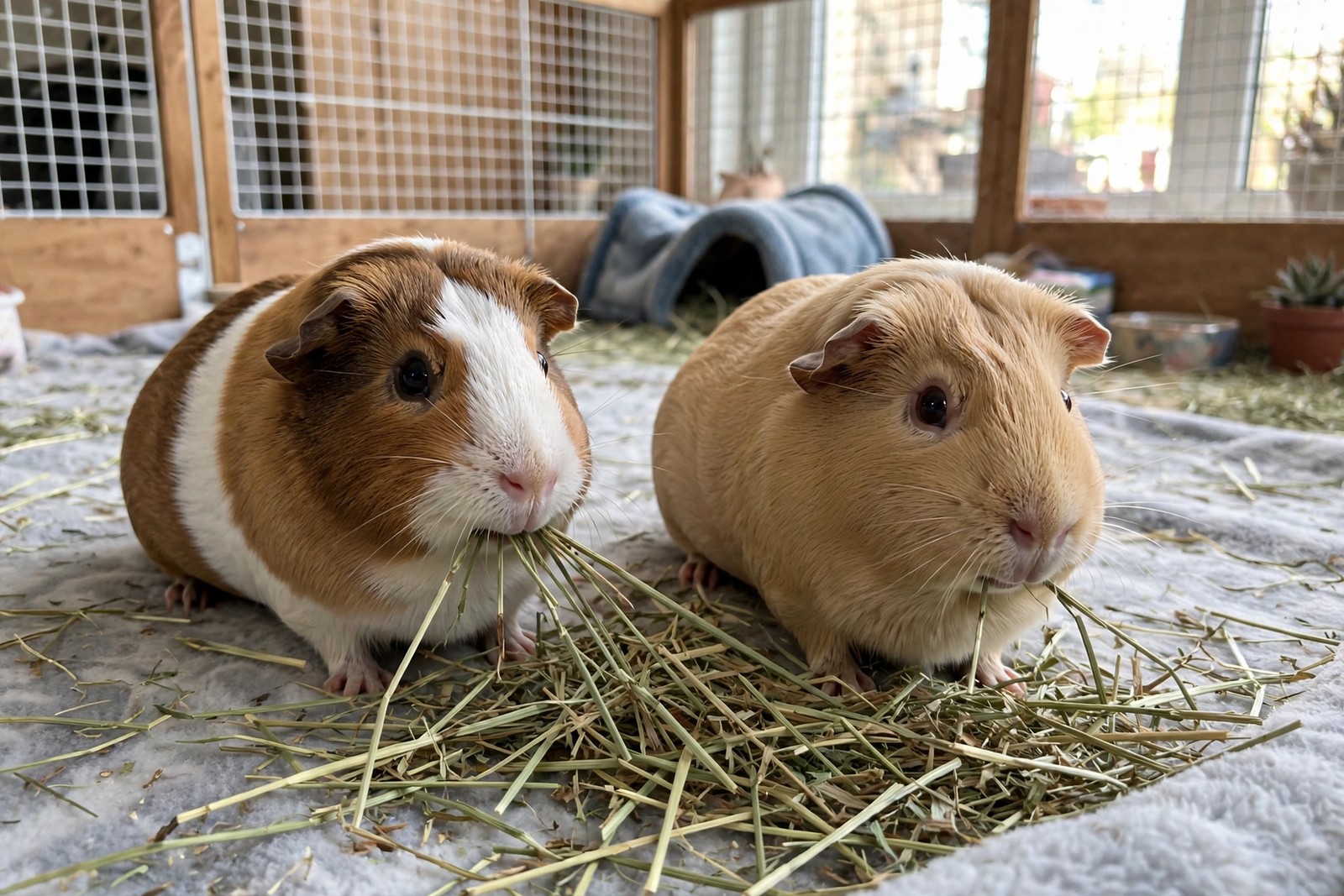
Guinea pigs typically live five to seven years, and a well-kept pig sometimes reaches eight or more. That puts them well beyond hamsters and rats in commitment, and many families are caught off guard when the 'starter pet' they bought for a young child is still going strong and entering old age as that child becomes a teenager. Guinea pigs are considered seniors from around four to five years old, so a seven-year life divides into roughly four adult years and a real senior stage that needs its own adjustments.
Hay and Vitamin C: The Lifespan Diet
Two dietary facts govern guinea pig longevity. First, their teeth grow continuously and their gut must keep moving, and both are maintained by unlimited grass hay available day and night — hay should make up the bulk of everything a pig eats, with a measured portion of pellets and a daily cup of fresh vegetables as support. Second, guinea pigs, like people, cannot make their own vitamin C, so they need it in their food every day from vegetables such as bell peppers and leafy greens, or an appropriate supplement. A pig short on vitamin C develops scurvy: rough coat, sore joints, reluctance to move, and poor healing, all of which quietly shorten life.
Space, Company, and Temperature
Guinea pigs are herd animals, and a lone pig is a stressed pig: stress suppresses appetite and immunity, so pigs do best in bonded pairs or small groups, with the space to move — a large single-level enclosure and daily floor time in a pig-proofed area. They are also poor at handling heat, becoming uncomfortable in the high seventies Fahrenheit and risking heatstroke at around 80 degrees Fahrenheit (27 degrees Celsius) and above, so their housing belongs in a cool, shaded, draft-free spot indoors rather than a sun-baked porch or garage.
Habits That Add Years
Weigh each pig weekly on a kitchen scale and write the number down, because gradual weight loss is often the first visible sign of dental trouble or illness in an animal that hides pain. Check teeth, nails, and coat during that same weekly handling. A guinea pig who stops eating, produces far fewer droppings, sits hunched, or breathes noisily needs a veterinarian the same day — a gut that stops moving becomes an emergency quickly in this species. Senior pigs benefit from lower-sided food dishes, softer bedding for stiff joints, and twice-yearly vet checks rather than yearly ones.
Five to seven years is long enough that some pigs outlast a child's interest or a family's circumstances, and a good rehome should never mean starting from zero. KinsLe's Transferrable Profiles pass a guinea pig's profile to its new owner with its hay and vegetable routine, vitamin C arrangements, bonding notes, and vet history included, so its care continues seamlessly in the new home.