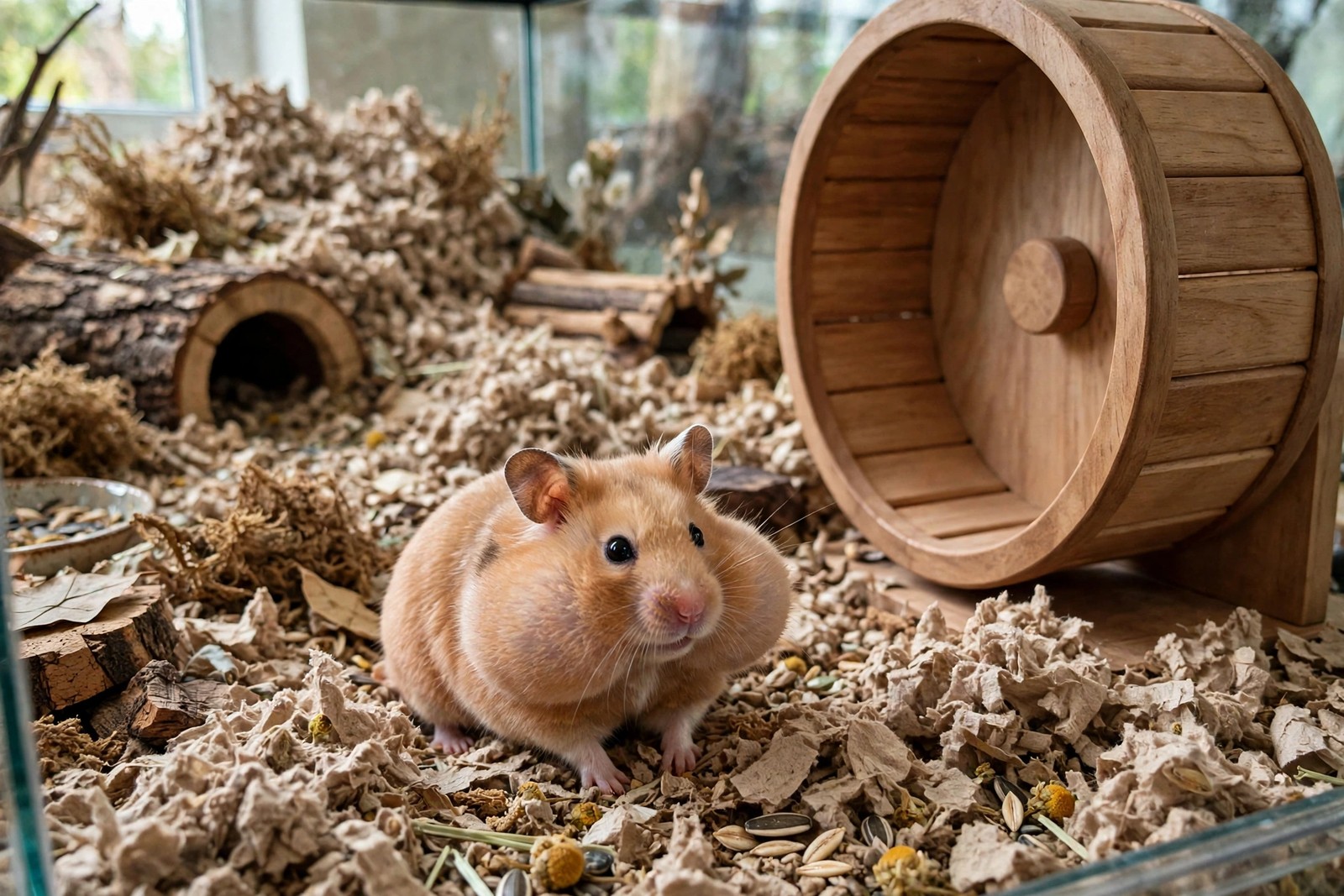
Pet hamsters live short, fast lives: two to three years is the normal range, and the species in the enclosure moves the number more than any other factor. Syrian hamsters, the large solitary kind, usually live two to three years. Campbell's and winter white dwarf hamsters typically reach one and a half to two and a half years. Roborovski dwarfs, the smallest and quickest, are often the longest-lived of the group and sometimes pass three years. Chinese hamsters fall in the dwarf range. Whichever species you choose, the whole arc from youngster to senior fits inside about thirty months.
What a Two-Year Lifespan Means in Practice
A hamster is fully adult by a few months old, settled and in its prime through its first year, and elderly by roughly eighteen months. That compressed calendar changes good care: a wheel, platform height, and food that suited a one-year-old may defeat a two-year-old with stiff joints and failing eyesight. Senior hamsters sleep more, come out later, and lose weight and fur condition; moving food, water, and a sleeping house to one level, offering slightly softer foods, and weighing weekly helps you support an old hamster and spot the point where a veterinarian's advice on comfort is needed.
Species-Specific Traps That Shorten Lives
Each common species carries its own risk. Young Syrian hamsters can develop a severe bacterial diarrhea called wet tail, often triggered by the stress of weaning and rehoming; a baby hamster with a wet, dirty bottom needs a veterinarian the same day, because it can be fatal within days. The dwarf species are prone to diabetes, so sugary treats, sweetened yogurt drops, and large amounts of fruit work against their lifespan — plain seeds, grains, and small amounts of vegetables serve them better. Syrians must live alone once mature, since adult Syrians fight fiercely, while dwarfs sometimes live in pairs bought together young, watched carefully for squabbles.
Housing That Supports the Full Span
Hamsters are burrowers and distance runners. Deep bedding they can tunnel through — deep enough to hold a real burrow — and a solid-surface wheel sized so the back stays straight, around 11 inches (28 centimeters) for a Syrian, protect joints, teeth, and sanity. A stressed hamster in a small, bare cage chews bars, loses condition, and dies younger than a hamster with space, hides, and things to shred. Keep the enclosure in a quiet room away from daytime noise, since hamsters sleep by day and run by night.
Two to three years is short, but it is still long enough for circumstances to change, and a hamster handed to a new keeper deserves to arrive with its knowledge attached. KinsLe's Transferrable Profiles do exactly that: its species, the foods it thrives on, its wheel and bedding setup, and its handling quirks move with its profile, so the new keeper continues its care instead of guessing.