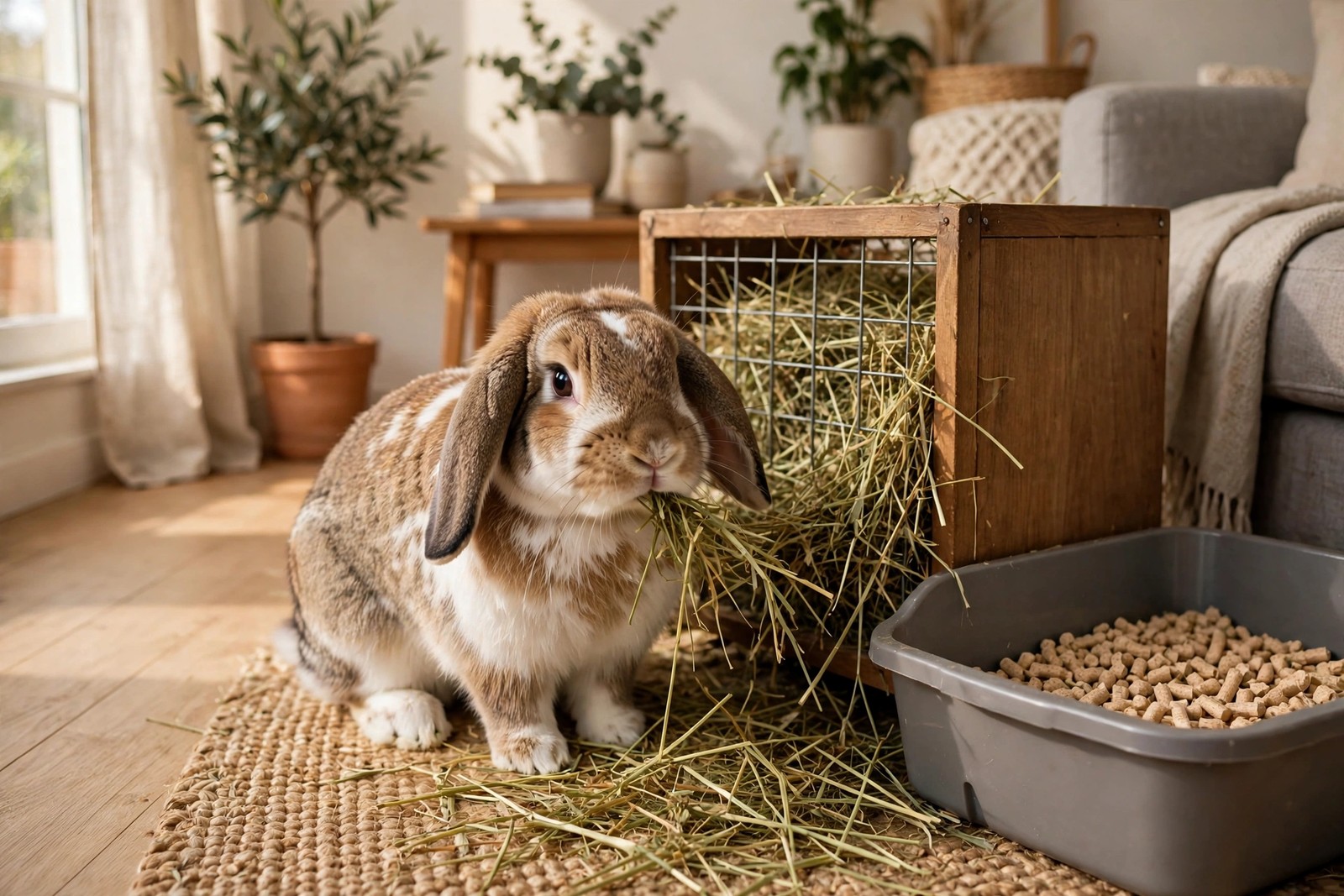
Indoor pet rabbits typically live eight to twelve years. That figure surprises people raised on the idea of rabbits as short-lived hutch animals, but it matches what vets see when rabbits live inside, eat hay-based diets, and are spayed or neutered. Breed and size nudge the number: smaller and dwarf breeds often reach the upper end of the range, while giant breeds tend to live shorter lives. Rabbits count as seniors from around six to seven years old, so a twelve-year rabbit spends nearly half its life as an older animal deserving senior adjustments.
Why Outdoor Rabbits Rarely Reach It
The eight-to-twelve figure is an indoor figure. Rabbits kept outside face predators that can frighten or reach them even through a hutch, heat they tolerate badly, cold and damp, and diseases carried by flies and mosquitoes, and many need help in fly season to avoid flystrike, a rapidly fatal condition. Some outdoor rabbits do live long lives in secure, sheltered setups with daily attention, but the statistics of a long life belong overwhelmingly to house rabbits who exercise indoors, interact with their families daily, and have changes in appetite noticed within hours rather than days.
The Hay-Based Engine of a Long Life
Rabbits are built to process coarse fiber almost constantly, and hay is what makes an eight-to-twelve-year life possible. Unlimited grass hay keeps the gut moving — a rabbit gut that slows down can stall into stasis, which is why a rabbit who stops eating or produces far fewer droppings needs a veterinarian the same day, not tomorrow. The constant chewing also grinds down teeth that grow continuously; rabbits on muesli-style mixes, picking out the sweet pieces and skipping hay, are the ones who develop painful spurs and abscesses. Fresh leafy greens daily and a small measured portion of pellets complete a lifespan diet.
Spaying, Neutering, and Senior Care
Reproductive health shapes lifespan directly: unspayed females face a high and rising risk of uterine cancer from middle age, so vets commonly recommend spaying young females, and neutering males prevents testicular disease and much hormonal aggression. In the senior years, arthritis is the common quiet problem — a rabbit who stops using a high litter box or hesitates at a step needs a low-entry box, ramps to favorite spots, and a vet conversation about comfort. Twice-yearly vet checks from age six help catch dental, kidney, and joint problems early.
A rabbit adopted by a family may be rehomed once in a decade-long life through no fault of its own, and its care knowledge should never be lost in the move. KinsLe's Transferrable Profiles send a rabbit's hay and greens routine, spay or neuter record, handling preferences, and vet history with its profile to the new owner, so a long life continues without a gap.