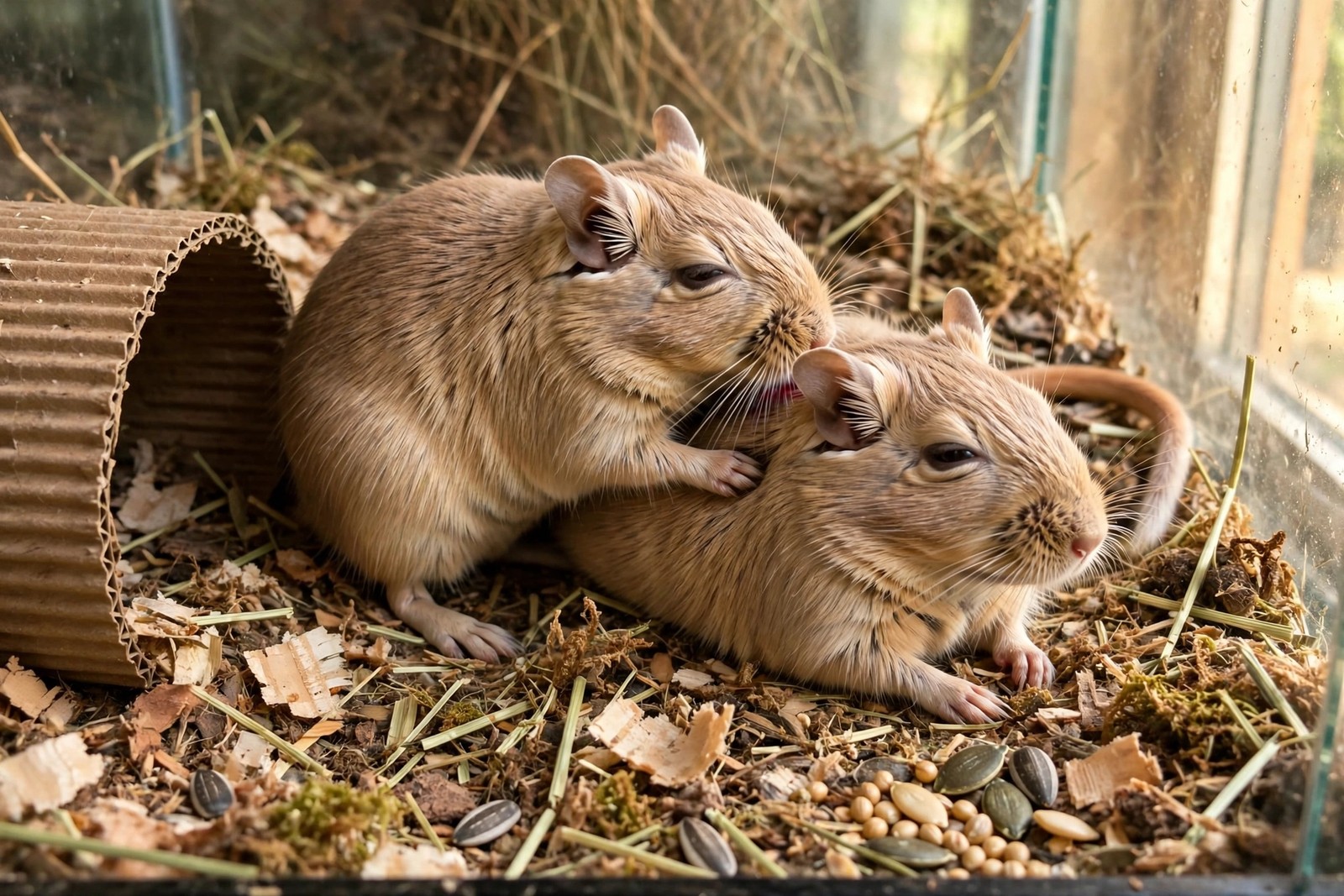
Two gerbils is the number that works. Gerbils are deeply social animals that sleep in a pile, groom each other, and suffer when kept alone, but they are also territorial, and their groups have a narrow comfort zone. A same-sex pair, ideally littermates or youngsters introduced before they are fully mature, is the combination most likely to stay peaceful for life. Almost every grouping beyond that pair trades a little extra company now for a real risk of a serious fight later.
Why Pairs Hold and Groups Break
In a pair, the hierarchy is simple and settled once, usually when the gerbils are young. In trios and larger groups, the social math changes as the animals mature. From around six months onward, and sometimes much later without warning, a group can declan: one gerbil is suddenly treated as an outsider, chased from the nest, and fought, sometimes to severe injury in a single day. Adult female groups are particularly known for this instability, and even male groups that lived peacefully for a year can split. The gerbil that loses is not being bullied in a way it can escape inside a tank, so the keeper, not the group, has to provide the safety. This is why experienced keepers plan for pairs and keep a spare tank ready, rather than building a colony they may have to dismantle in an emergency.
Sex, Breeding, and Introductions
Never solve the numbers question by mixing sexes casually. A male and female pair will breed, litters of several pups arrive about monthly, youngsters mature fast, and within a few months a home can hold more gerbils than anyone planned for, all needing sexing and separating. Same-sex pairs avoid that entirely. If you must introduce strangers, for example after one of a pair dies young, use the split-cage method: a mesh divider down the middle of the tank for a week or more, swapping the gerbils between sides daily so scents mix, then a supervised meeting on neutral terms. Adult introductions, especially of females, are the least likely to succeed, and many keepers instead keep an elderly widowed gerbil single with extra human contact rather than risk a failed introduction at that age.
Space for the Group You Choose
Group size and space are one decision, not two. A bonded pair does well in a tank-style home of around twenty gallons or more, filled with deep bedding they can tunnel through as a team; the digging is cooperative work and part of how the pair bonds. Adding animals without adding burrowing volume creates competition underground where you cannot see it. Whatever the group, provide more than one water point and scatter feeding rather than a single bowl worth guarding, and watch for the early declanning signs: one gerbil suddenly sleeping alone, weight loss in one animal, fur missing around the face, or chasing that draws blood, which means separate immediately and permanently, because a true declan does not reconcile.
Know Exactly Who Is Who
In a pair that looks nearly identical, small mix-ups matter: which gerbil is older, which one lost weight last month, which one the vet saw. Family Sharing has a simpler scope on KinsLe: it opens profile access for the pair to family members the owner names.