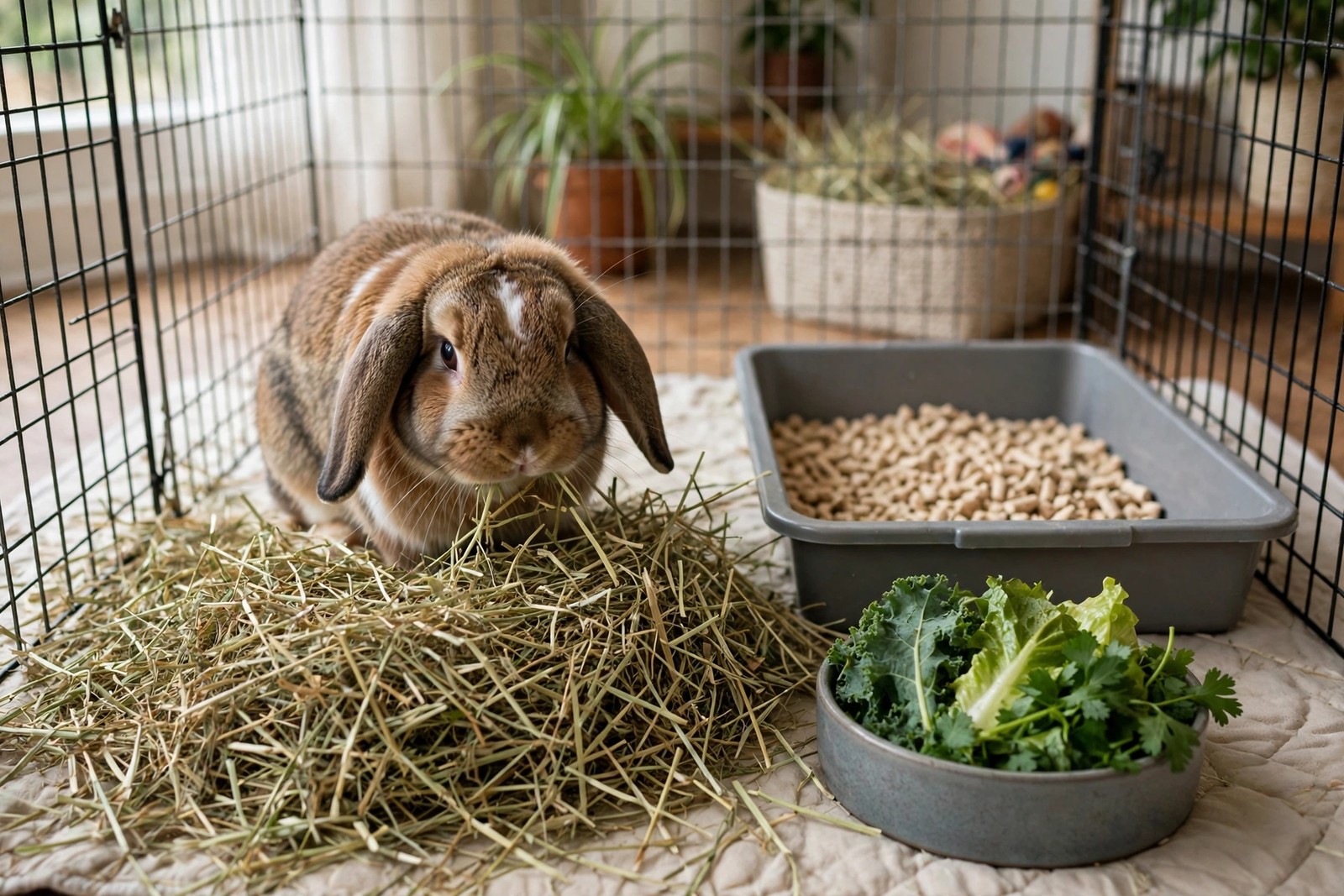
A rabbit is not a cheap pet, whatever the modest purchase price suggests. Budget roughly $75 to $123 a month for one rabbit, and understand where it goes: the costs are dominated by food a rabbit can never skip and by setting money aside for veterinary care rather than paying it in a panic.
The monthly breakdown
- Hay, $18 to $30. Grass hay is the diet, not a bedding extra. A rabbit should eat a bundle roughly its own body size every day, because constant chewing wears the teeth and keeps the gut moving. Small fancy bags are the most expensive way to buy it; a bulk bale or large box from a farm supplier costs far less per month.
- Fresh greens, $20 to $35. A daily portion of leafy greens and herbs adds up at supermarket prices. Seasonal greens, market boxes, and growing herbs on a windowsill all trim this line.
- Pellets, $5 to $8. An egg-cup-sized handful a day is plenty for most adults, so a bag lasts a long time.
- Litter, $12 to $20. A litter tray lined with paper-based litter, changed frequently, is a real recurring cost, especially for an indoor rabbit.
- Chews and toys, $5 to $10. Teeth grow continuously, so wooden chews, willow, and cardboard are consumables you replace, not one-off purchases.
- Vet reserve, $15 to $20. Put this aside every month without fail.
Why the vet reserve decides the real cost
Routine costs are predictable; rabbit medicine is not. Rabbits typically need an annual health check, and in many regions vaccination against serious viral diseases is part of normal preventive care — ask a rabbit-savvy vet what applies where you live. The bills that ambush owners are dental treatment for overgrown teeth and emergency care for a rabbit who stops eating, which is always urgent in this species. A monthly reserve turns those from a crisis into a payment. Neutering, housing, and an exercise run are start-up costs rather than monthly ones, but they land in the first months and should be saved for before the rabbit arrives, not discovered afterwards.
Ways the total moves
Two rabbits sharing hay, greens, and litter cost perhaps half as much again, not double, and rabbits are social enough that a pair is often the kinder plan. Boarding for holidays is an extra to budget separately, and a rabbit who destroys skirting boards or cables adds repair costs that rabbit-proofing prevents for free. Prices also vary a lot by region and by whether you have access to bulk hay, so treat these figures as a planning range and price them against your own shops.
The smartest first step is pricing the professional care before the rabbit comes home, and KinsLe's Pet Services Directory lets you find rabbit-savvy vets and boarding services in your area, compare what they offer, and build their real fees into the monthly number you have just worked out.