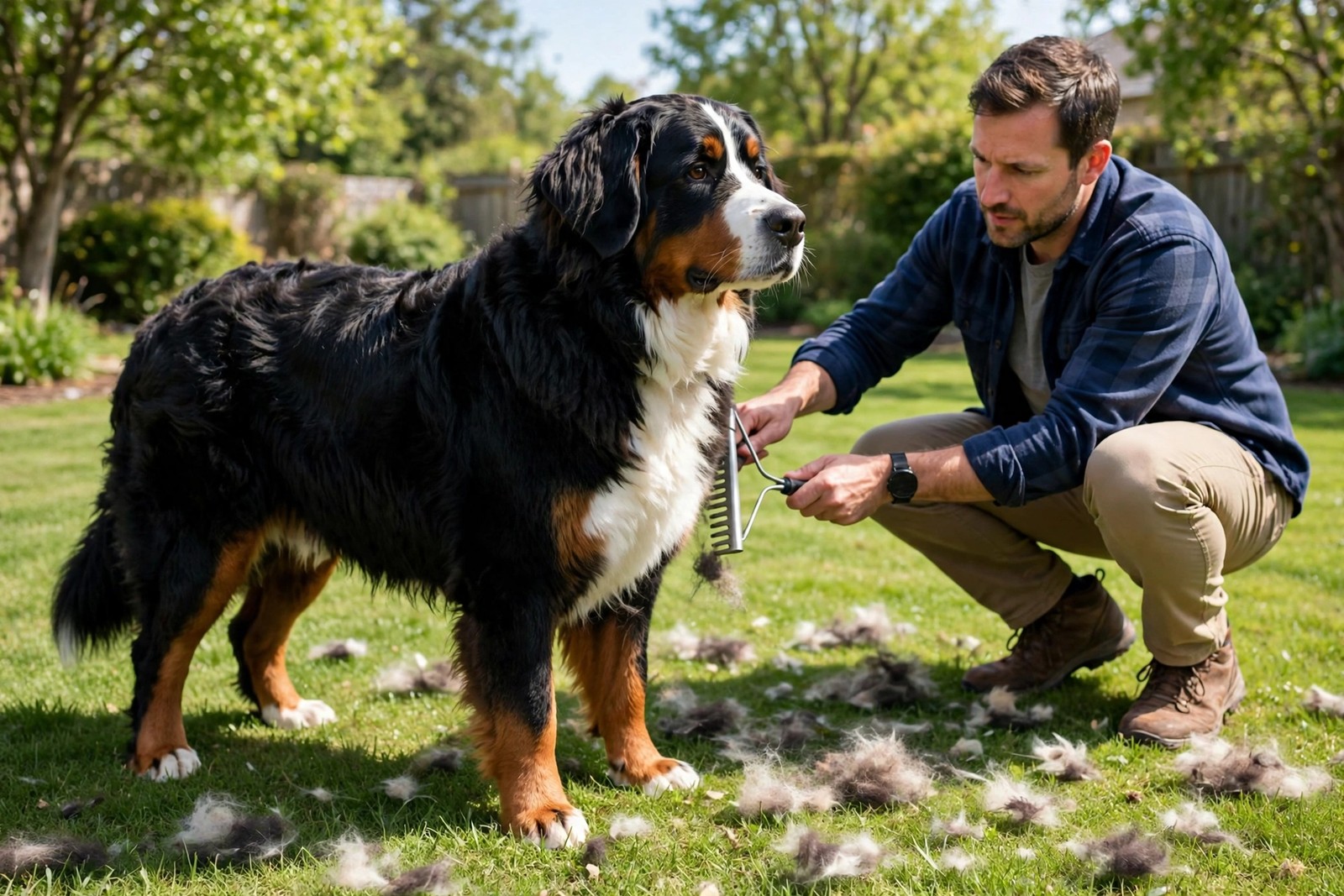
Plan on brushing a Bernese Mountain Dog two or three times a week, and treat each session as a real job of about twenty to thirty minutes rather than a quick skim. This is a thick, medium-length double coat in black, white, and rust, built for cold weather, and it sheds steadily all year. A brush that only touches the glossy topcoat leaves the soft undercoat to pack down, felt together, and hide what is happening at the skin.
Brushing to the skin, in sections
Work in sections with a slicker brush and an undercoat rake, lifting the coat and brushing down to the skin in layers so you can see clean skin at the parting before you move on. A metal comb run through afterwards is the honest test: if the comb snags, that section is not finished. Keep sessions calm and unhurried, with small treats placed beside the dog one at a time, because a Bernese is a large dog who will lean, sit, or wander off if the session drags or pulls. Two or three shorter sessions a week keep the coat open far better than one marathon session that the dog learns to dread.
Where mats form first
The soft feathering behind the ears is the classic trouble spot, and it can felt into a tight mat against the skin within days. Check also the longer hair on the backs of the front legs, the trousers on the hind legs, the underside of the tail, and the armpits, where friction and moisture help tangles start. Tease a small tangle apart with fingers and the comb; a mat that is tight to the skin, or skin that looks pink underneath, is a job for a groomer or vet rather than home pulling. Nails, ears, and teeth can share one of the weekly sessions so the handling routine stays in one place. In snowy weather, check between the toes after walks as well, because snow and ice pack into balls in the hair between a Bernese's pads and make walking sore; trimming the hair level with the pads and rinsing the feet in lukewarm water clears them.
Shedding season changes the rhythm
Twice a year, typically in spring and autumn, the undercoat lets go in volume and the normal rhythm is not enough. During those heavy shedding weeks, add short daily brushing sessions, even ten minutes outside with the rake, until the comb passes cleanly again. Expect loose hair on floors, clothing, and car seats during this period no matter how well you brush; the goal is keeping the coat open and the skin aired, not stopping the shed. Bathing stays occasional, since a Bernese coat that is brushed out sheds dirt well, and a bath without a full brush-out and complete drying can tighten tangles into mats.
Sharing the work across the household
Two or three sessions a week is a genuine commitment for a dog of this size, and it goes better shared than carried by one person. Agree who brushes on which days, keep the tools in one place, and note which areas were combed through and which were rushed, so the next session starts where the last one stopped. A young Bernese should learn the routine in short, rewarded sessions before the adult coat comes in at full thickness. KinsLe's Care Teams lets you assign each brushing session to a named person and mark it complete with a timestamp, so everyone sharing the dog can see the coat was brushed on schedule and which session is due next.