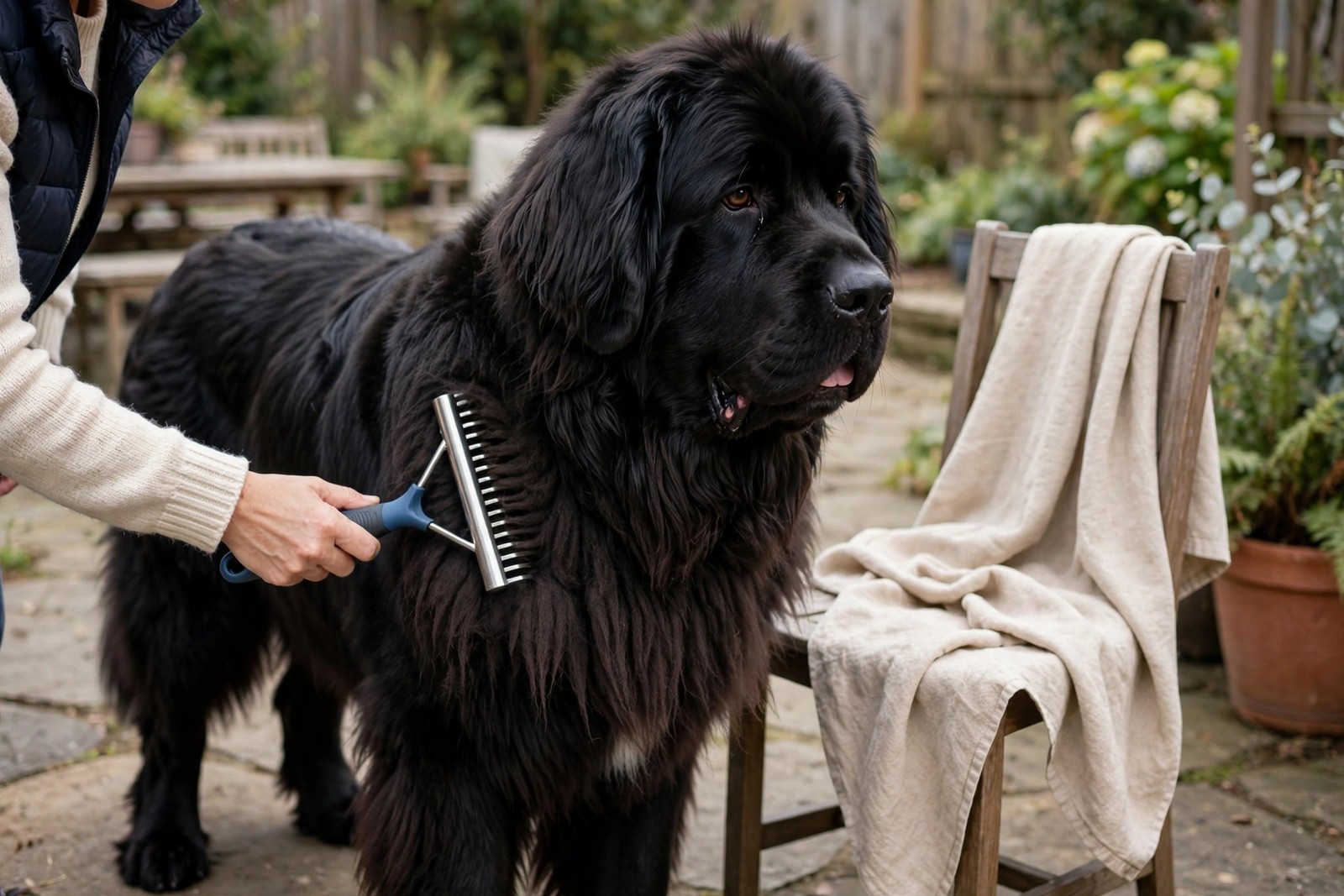
A Newfoundland's grooming week has two layers: three proper brushing sessions through a thick, water-resistant double coat, and a daily round of drool, water, and mud management that never appears on grooming charts. The coat was built for cold water work, with a coarse oily outer layer over a dense soft undercoat, and it sheds heavily. Brushing three times a week keeps that undercoat open; anything less and it packs down across the chest, behind the ears, and through the heavy feathering on the legs and tail.
Three sessions, worked in sections
A Newfoundland is too much dog to groom in one pass, so work in sections: one side, then the other, then chest, legs, and tail. Use an undercoat rake and a slicker brush, brushing down to the skin in layers, and finish with a comb that should travel cleanly through the feathering. The feathering behind the front legs, the trousers, and the underside of the tail trap burrs, mud, and moisture and felt first, so they get time at all three sessions. Keep the dog standing on a non-slip surface, take breaks, and place small treats beside the dog one at a time during pauses, because a session that feels endless teaches a giant dog to sit down mid-job and end it.
Drool, water, and mud: the daily layer
Newfoundlands drool, and they carry water everywhere in the heavy hair of the chest and beard after drinking. Wipe the mouth, chin, and chest daily, and dry the chest hair properly after a soaking, since a permanently damp chest is where skin gets sore and starts to smell. Expect drool on walls, floors, and your clothes as a standing feature of the house, and keep a towel wherever the dog drinks. After wet or muddy walks, rinse the big webbed feet and dry between the toes; those feet bring in a remarkable amount of the outdoors, and grit left between the toes rubs.
Bathing a dog built for water
A full bath is a major event: the coat resists wetting, takes a long time to wash through, and takes far longer to dry. Brush out completely before the bath, because water tightens tangles in the undercoat, and afterwards dry in sections until the undercoat at the skin is dry, not just the surface. A Newfoundland usually needs a bath only when the coat is genuinely dirty or the characteristic smell builds up; the three weekly brushing sessions do the routine cleaning in between. During the heavy seasonal shed, the three sessions may need to run longer, and loose hair will still win for a few weeks; the aim is an open coat and aired skin, not a hair-free house.
Sharing a giant workload
Three full sessions a week on a dog of this size is a household commitment, and it holds up better when the work is visibly shared. Split the sessions between people, note which sections were finished and which were rushed, and fold the daily chest wipe and foot rinse into feeding time so they happen without a separate decision. A puppy should learn standing, brushing, and foot handling in short sessions months before the adult coat and full size arrive together. KinsLe's Care Teams lets you assign each of the three weekly sessions and the daily wipes to named people, each marked complete with a timestamp, so the coat's care is a shared record rather than one person's memory.