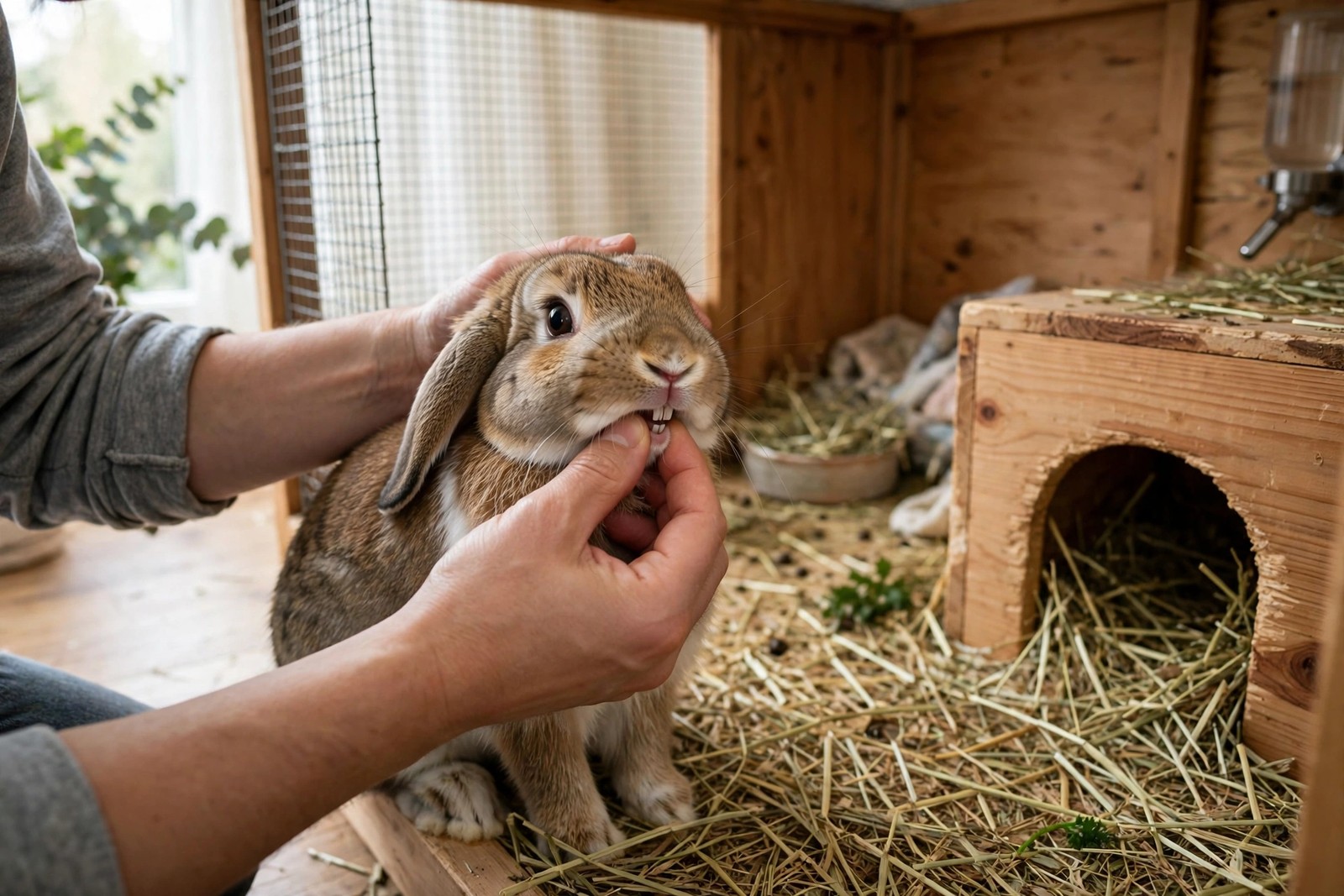
Lift your rabbit's lips once a week and look at the incisors: the uppers and lowers should meet evenly, with no overgrowth, slant or break, and no drool or damp fur beneath the chin. The cheek teeth at the back — molars and premolars — stay hidden from a home check, so a vet needs to examine them, often with a scope, at health checks once or twice a year, and sooner if eating changes. Rabbit teeth grow throughout life, which means wear has to keep pace with growth, and diet drives that wear.
Diet Is the Dental Plan
Long-stem hay or grass should be the bulk of a rabbit's diet — the side-to-side grinding motion it demands is what wears the cheek teeth correctly. Rabbits fed mostly pellets or muesli do not chew enough, and molar spurs and overgrowth follow. Watch eating behaviour as a daily dental check: taking food then dropping it, chewing slowly or on one side, preferring soft foods suddenly, smaller or fewer droppings, weight loss, wet chin ('slobbers'), weepy eyes (tooth roots sit near tear ducts), and reduced grooming all point to mouth trouble. Never attempt to trim a rabbit's teeth at home — clipping can crack teeth lengthwise and create worse problems; burring by a vet is the treatment.
Working With Your Vet
With rabbit teeth, your notes should track eating rather than impressions: the day hay intake dropped, whether droppings shrank, any wet chin or food being taken then dropped. Diagnosis belongs to a veterinarian, who can scope the cheek teeth you cannot see and judge whether spurs or overgrowth explain the change. What you bring — dates, appetite notes, a photo of the incisors — sharpens that examination rather than replacing it.
Book a vet promptly for drooling, appetite reduction, dropping food, or weight loss — dental pain is a leading reason rabbits stop eating, and a rabbit who is not eating is an urgent case in its own right. Incisor overgrowth you can see also needs a vet appointment, not home remedies.
Keep a dated note for your rabbit covering weight, hay and pellet intake, droppings, grooming and any day the chin looked wet, each with the date it started. Over a fortnight, a drift toward softer foods or smaller droppings becomes visible on the page long before it is obvious from memory, giving the vet a sequence to work from. Recheck that baseline when diet, housing or companions change, because each alters how your rabbit chews and what normal eating looks like.
For appointments, KinsLe's Pet Passport gathers your rabbit's dental checks, diet notes and vet history into a single packet that travels to the clinic, a boarder or a new keeper.