
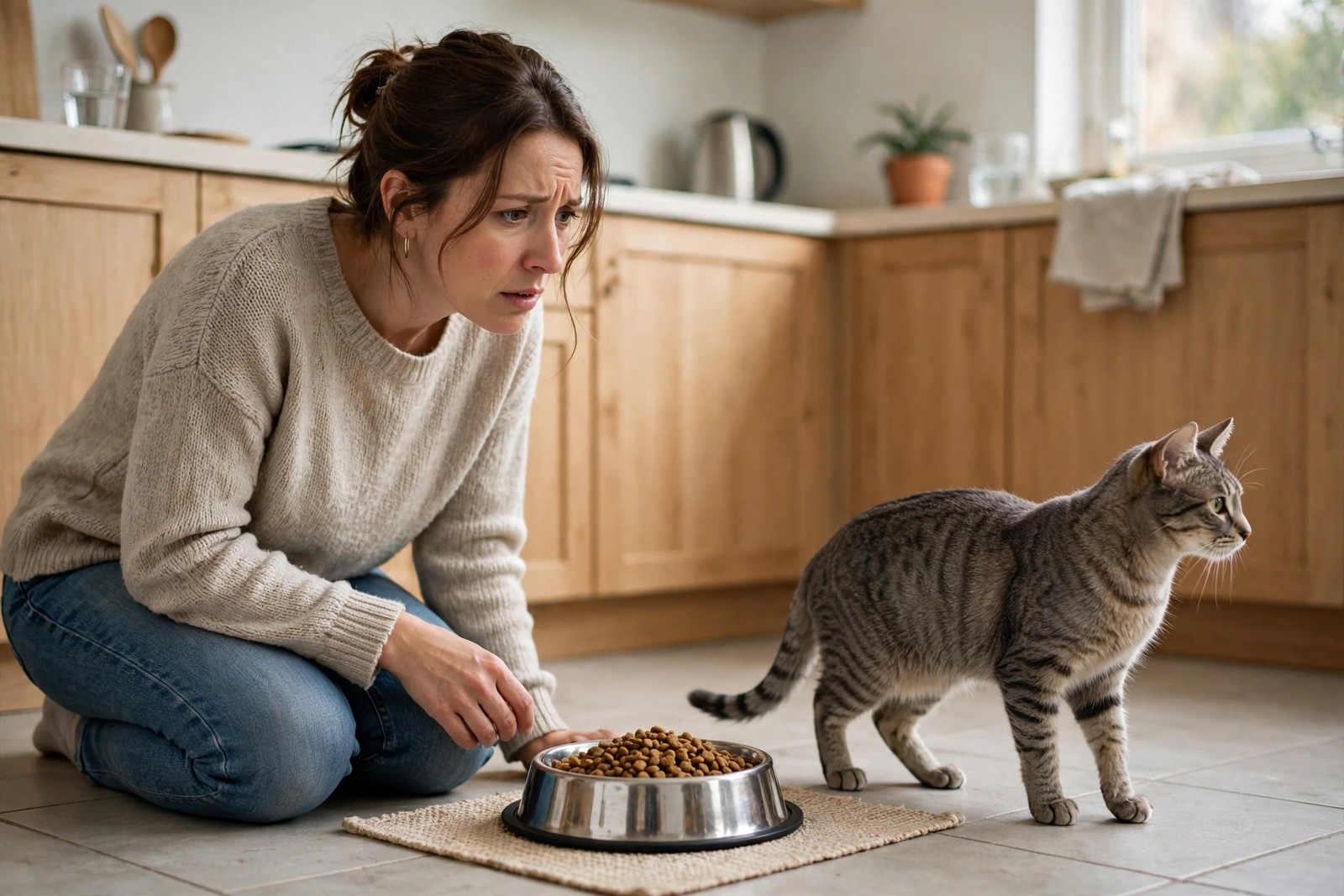
One missed meal after a move, visitors, or a new arrival can be pure stress; a full day of refused food is different, and it earns a prompt call to your veterinarian — sooner still for a kitten, a senior, or a cat who is also hiding, lethargic, or vomiting. Cats, particularly heavier ones, genuinely should not go long stretches without eating, so don't wait it out if you're unsure.
Why appetite loss matters more in cats
Dogs can skip a day with little drama; cats are built differently. When a cat stops eating, the body starts mobilizing fat reserves, and in overweight cats especially, that process can overload the liver and make them seriously unwell — a condition vets worry about precisely because it can develop after only a few days of not eating. Appetite loss is also a symptom, never a diagnosis: pain, nausea, dental problems, stress, a hairball that won't move, something swallowed that shouldn't have been, or an underlying illness can all sit behind an untouched bowl. The untouched bowl is your cat filing a report. Your job is to get it read promptly.
The first 24 hours: observe like a detective
While you monitor, gather the clues your vet will ask about:
- Has anything changed — food brand, bowl location, household members, building work, a new animal?
- Is your cat drinking, using the litter box, and moving normally?
- Any vomiting, diarrhea, drooling, hiding, or crying?
- Can you see food being approached, sniffed, then abandoned (which can suggest nausea or mouth pain)?
- Is the food fresh, and the bowl clean? Whisker-deep, smelly, or relocated bowls genuinely put some cats off.
Offer a small amount of their usual food, warmed slightly to release the aroma, in a quiet spot. Avoid the temptation to rapidly cycle through rich new foods or force-feed — both can muddy the picture or create aversions. If a full day passes with nothing eaten, make the call.
Red flags that mean don't wait until morning
Contact a vet or emergency clinic the same day if appetite loss comes with repeated vomiting, complete hiding, obvious pain, difficulty breathing, straining in the litter box, pale or yellow-tinged gums, or if your cat may have eaten something toxic or a string-like object. Kittens fade fast and seniors have less reserve, so lower your threshold for both. Trust your knowledge of your own cat, too: an owner saying "she's just not herself" is clinical information, and vets take it seriously. When in doubt, phone and describe — the clinic can tell you whether to come in now or monitor until morning.
If an unwell cat slips out: act fast
A sick, disoriented cat who gets outside is at real risk — they hide nearby, go quiet, and don't behave like their usual streetwise selves. Search close to home first (under decks, sheds, dense shrubs), ask neighbors to check garages, and go out at quiet hours with a torch to catch eye-shine. This is also where preparation pays off before an emergency ever happens.
How KinsLe's Lost Pet Alerts help an unwell cat get found fast
KinsLe's Lost Pet Alert System is free in every profile, and when you raise an alert it shows on the map, while a finder can message you directly through your cat's profile — so if an unwell cat slips out, anyone checking the map can see the alert and reach you the moment there's a sighting. Keeping your cat's KinsLe profile current means the alert goes out with accurate details when seconds matter. If that unwell cat cannot be found nearby and may have slipped outside, this is the step to turn to: her Lost Pet Alert System on KinsLe keeps her details ready for that moment, and anyone who finds her can reach you with a direct message.