
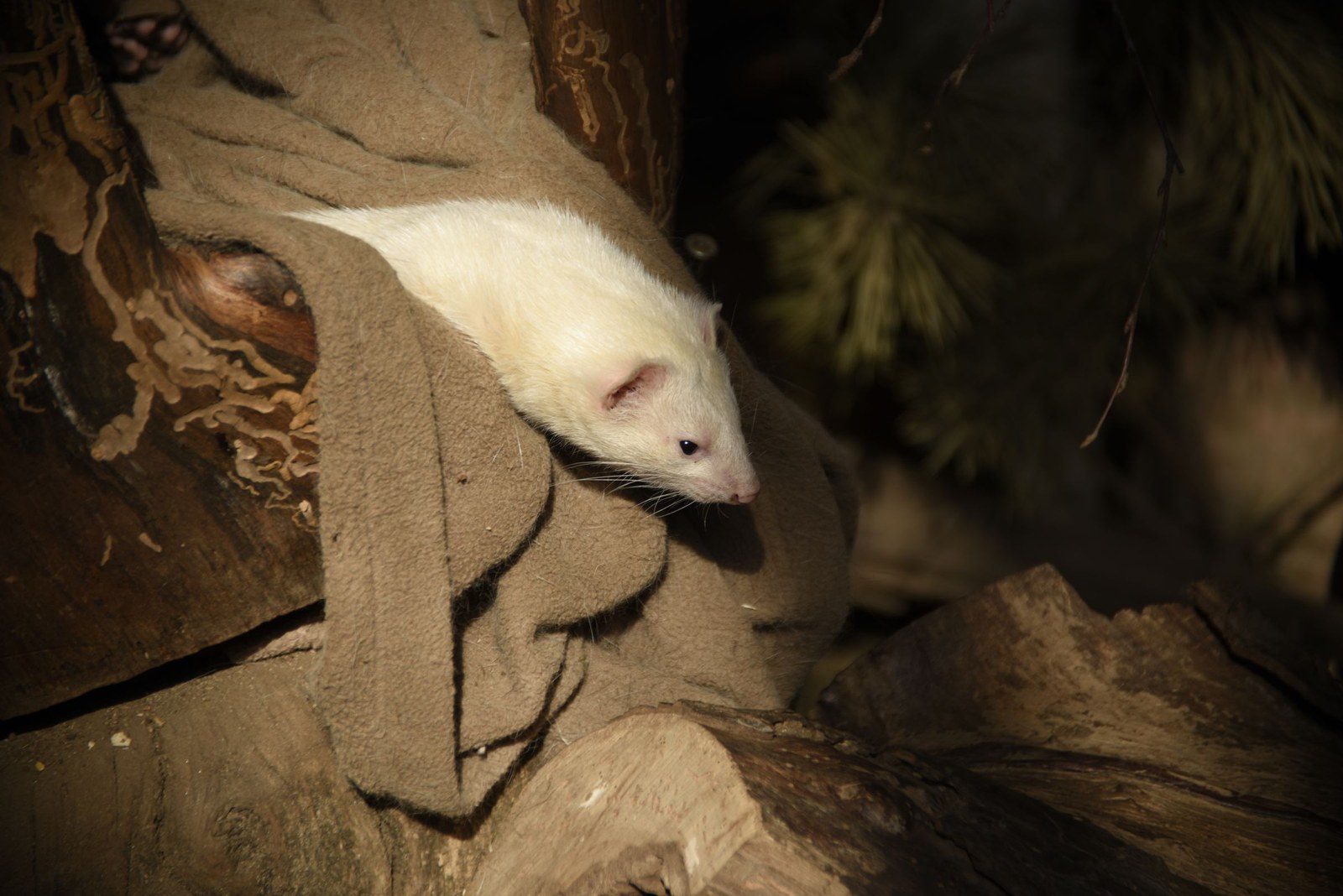
Do not wait and see for long. Ferrets sleep deeply — 18 hours a day is normal for a healthy adult — but a ferret who is hard to rouse, uninterested in food, wobbly, drooling, or pawing at the mouth is a ferret who should be seen by a veterinarian promptly, ideally the same day. Ferrets can deteriorate quickly, and several very different conditions produce the same vague "sleepy and off their food" picture, so only an exam can tell you what you are dealing with.
Normal ferret sleep vs. the sleep that worries vets
A healthy ferret's sleep is famously theatrical: limp, floppy, apparently boneless, sometimes with eyes partly open. The reassuring part is what happens on waking — a normal ferret stretches, yawns, and within minutes is bright, curious, and ready to eat or play. The worrying version looks similar at first glance but differs in the recovery. A ferret who wakes groggy and stays groggy, who needs repeated encouragement to stir, or who wakes and then fades again without eating is not just having a lazy day. Trust the pattern, not a single nap: you know your ferret's usual rhythm of explosive play and total collapse, and a clear break from that rhythm is real information.
Red flags that speed everything up
Treat these as same-day, drop-everything signs:
- Difficult or impossible to wake, or unusually limp when handled
- Refusing food and water, or showing no interest in a favorite treat
- Unsteadiness, weakness in the back legs, or staring blankly
- Drooling, nausea, or pawing at the mouth
- Vomiting, diarrhea, or straining to urinate
- Pale gums, rapid breathing, or a body that feels unusually cool
Ferrets are small, with fast metabolisms and little reserve. An illness an owner might watch overnight in a large dog can become an emergency in a ferret within the same window, which is why ferret-savvy vets consistently advise calling early rather than apologizing for calling at all.
What to do while you arrange the visit
Keep your ferret warm, quiet, and confined to a small, safe area so you can monitor output — what goes in, what comes out, and whether either happens at all. Offer food and water but do not force-feed, and do not give any human or leftover medication: ferrets are sensitive to many common drugs, and dosing is strictly a vet's job. Write down when you last saw your ferret eat, drink, play normally, and pass droppings. That timeline, unglamorous as it sounds, is one of the most useful things you can hand a vet, because "off since Tuesday" narrows the possibilities far better than "seems unwell."
Finding a ferret-savvy vet before you need one
Not every small-animal practice sees many ferrets, and ferret medicine has its own quirks — experience genuinely matters. If your regular vet does not treat ferrets, KinsLe's Pet Services Directory can help you find local vets, along with groomers, sitters, and trainers, so you can identify an exotics-capable practice and save its details before a worrying evening forces the search. The best time to line up that number is while your ferret is healthy and bouncing; the second-best time is today. Pet Services Directory in KinsLe can point you toward a veterinarian experienced with ferrets, and finding one today matters more than waiting to see whether appetite returns.