
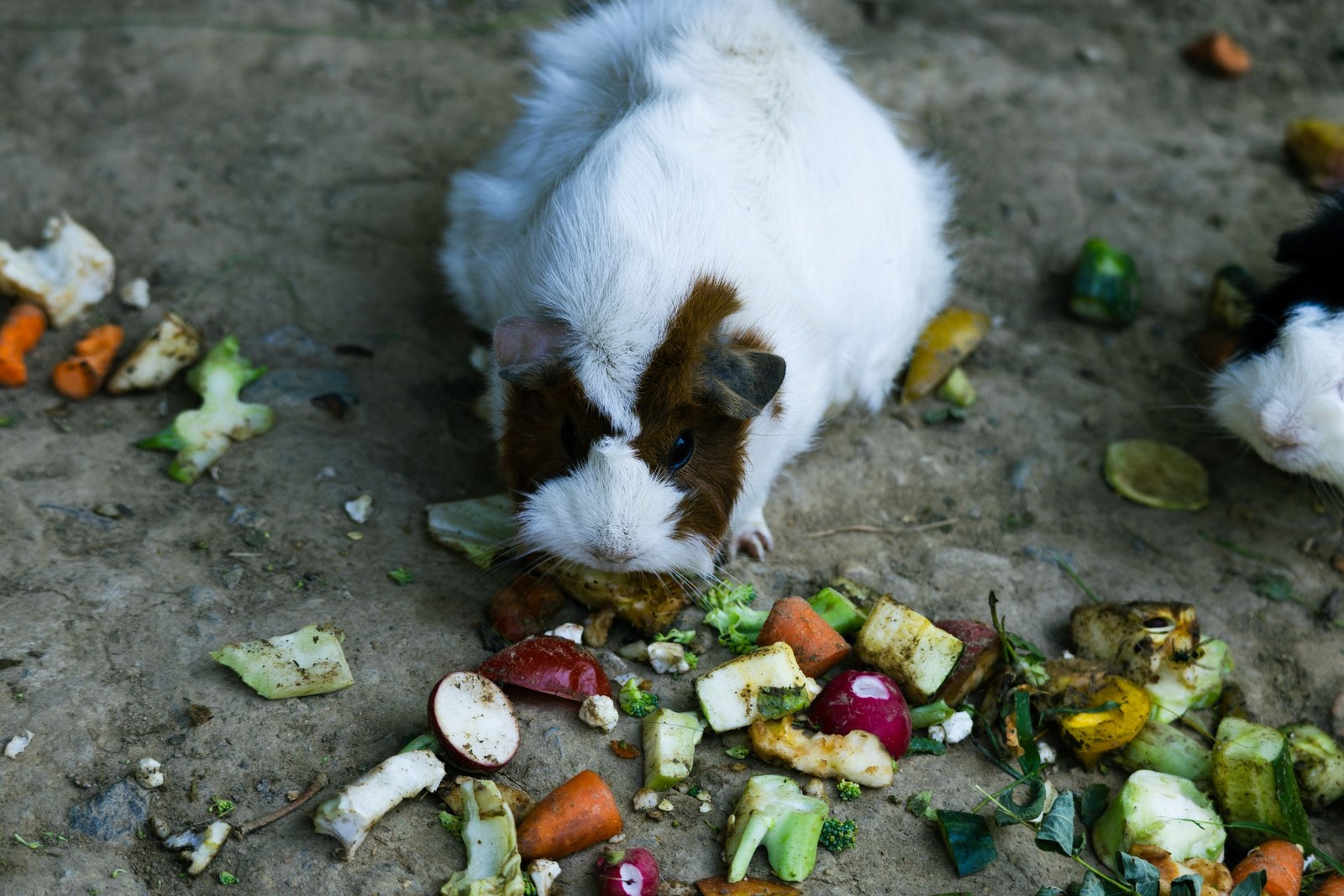
Treat a guinea pig who has stopped eating as urgent — this is one of the most serious changes a small pet can show. A guinea pig's gut needs to keep moving, they hide illness well, and they can decline quickly once food intake stops. A pig who refuses food, produces little or no droppings, or seems lethargic and hunched needs veterinary care the same day: call an exotics-savvy vet or an emergency clinic immediately rather than waiting to see if appetite returns by morning.
Why Not Eating Is So Dangerous for Guinea Pigs
Guinea pigs are grazers built around near-constant fibre intake. When eating stops, gut movement slows, and the pig feels progressively worse and less like eating — the same downward spiral seen in other small herbivores, in a body with very little reserve. There is another pig-specific twist: guinea pigs cannot make their own vitamin C, and a pig who is not eating is also not taking any in, which compounds recovery from whatever started the problem. Appetite loss is a symptom, not a diagnosis — teeth, pain, respiratory illness, digestive trouble, and stress can all sit behind it, and only a veterinarian who examines your pig can work out which.
Signs That Raise the Urgency Further
Some pigs go off food gradually; others stop abruptly. Either way, certain accompanying signs mean do not delay at all: no droppings at all, a hunched posture with a puffed coat, eyes half-closed, unusual quietness in a normally vocal pig, laboured or noisy breathing, drooling or dropped food (which points the investigation toward the mouth), or a pig who feels cold. A weekly weight history, if you have one, turns "he seems thinner" into something your vet can act on — bring the numbers.
Also think back over the last 48 hours. A new home, a lost companion, a house move, a heat spike, or a change of hay brand can all precede a pig going off food, and mentioning them helps the vet's detective work.
What to Do — and Not Do — Right Now
Keep your pig warm, quiet, and somewhere familiar, with favourite hay and tempting fresh vegetables close by, and water easy to reach. Weigh them if you can do it quickly and calmly. Then call the vet and describe what you have seen and for how long.
Just as important: do not force-feed unless a veterinarian has shown you how and told you to. Syringe-feeding a pig whose problem has not been assessed — or doing it with poor technique — risks food entering the airway. Do not offer leftover medication from another illness or another animal, and do not let a well-meaning internet remedy substitute for the phone call. Your job in this hour is warmth, observation, and speed.
If You Spot It While You Are Away
Appetite loss is often first noticed by whoever is feeding that day — a family member, a sitter — which makes fast communication part of the treatment. With KinsLe, KinsLe Messenger is the per-pet communications hub, so you can message your sitter or family instantly through that hub if the change is spotted while you are away, agree who is calling the vet, and keep every update in one thread attached to the right pig. A sitter who notices untouched hay can post in the KinsLe Messenger hub for this pig, and the household sees the update together and settles who drives to the exotics clinic without delay.