
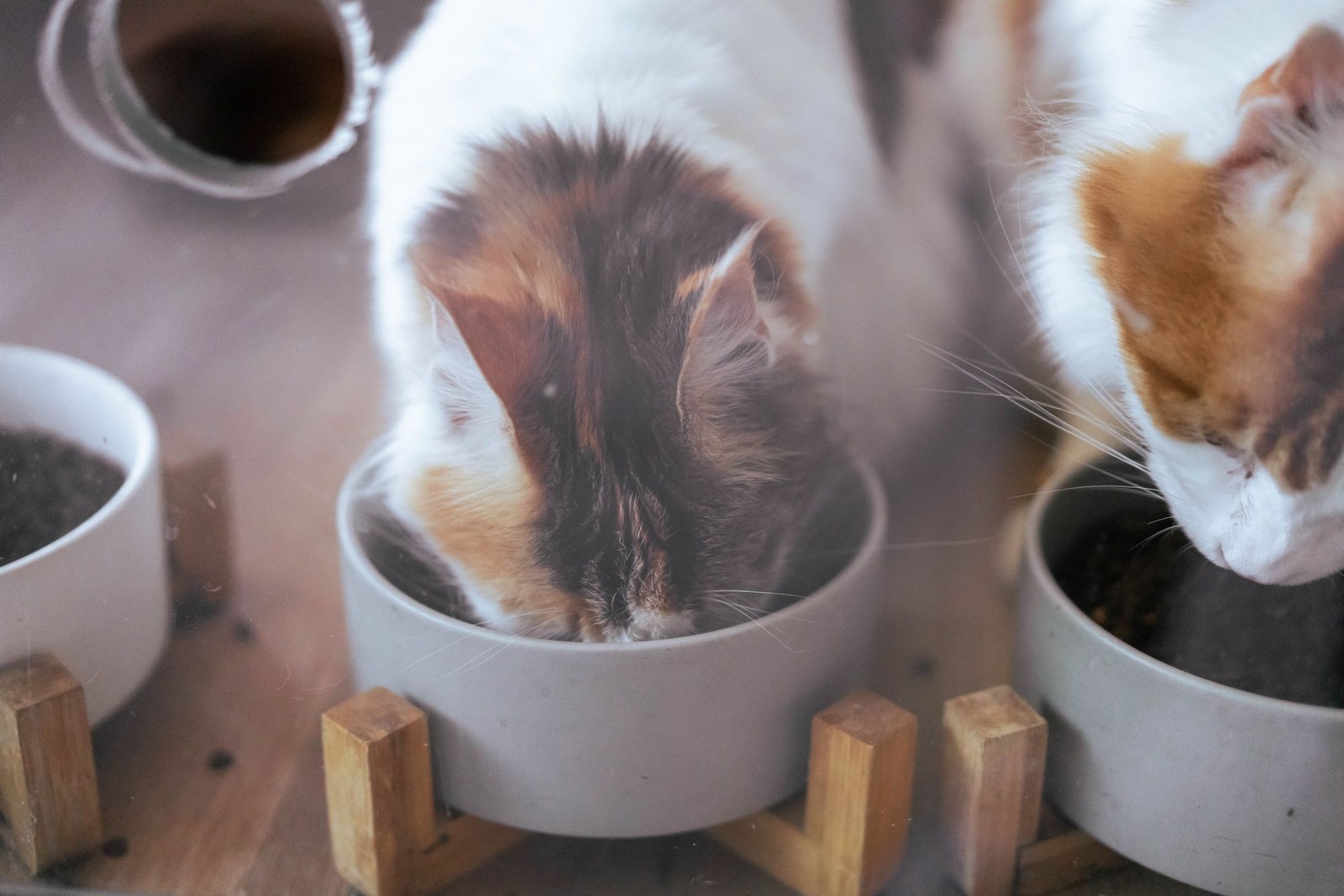
Most cats eat more calmly with their own bowl in their own spot, so in a multi-cat home, feeding separately is usually the kinder and smarter default. Eating shoulder-to-shoulder can feel like competition even between friendly cats, and separate feeding has a hidden superpower: it makes appetite changes in an individual cat obvious within a day instead of invisible for weeks.
Why shared feeding stresses cats
Cats are solitary hunters by design. In the wild, a cat catches a mouse and eats it alone — sharing a food source is not part of their social wiring the way it is for dogs. When two cats eat nose-to-nose from adjacent bowls, the bolder cat often eats fast and then angles for the other's food, while the quieter cat eats less than she needs or gulps anxiously. You may see no fighting at all; the stress shows up as one cat hovering while the other eats, waiting for leftovers, or eating at odd hours to avoid company. Over months, that pattern quietly produces one overweight cat and one underweight one.
What separate feeding looks like in practice
Separate does not have to mean different rooms — though that is ideal for tense pairs. It can be opposite ends of the kitchen, one cat on the floor and one on a counter or mat, or a baby gate between them. What matters is that each cat has her own bowl, some personal space, and the ability to eat without being watched or rushed. Keep each cat's spot consistent; cats are creatures of routine and will head to "their" place, which makes mealtimes calmer for everyone.
Bonded littermates who have eaten together happily since kittenhood are the exception — if both maintain healthy weights, eat at a relaxed pace, and never guard, there is no rule that says you must change what works. Let behavior, not dogma, decide.
Separate feeding is an early-warning system
This is the benefit owners underestimate. When each cat eats a measured portion alone, you notice immediately when someone leaves half a bowl — and appetite change is one of the earliest signs of illness in cats, from dental pain to kidney trouble. In a shared-bowl home, the other cat happily finishes the portion and the clue vanishes. Separate feeding also ends diet chaos: the cat on a kidney or weight-loss diet actually eats her prescription food, and the kitten stops stealing calorie-dense or inappropriate meals. A microchip feeder takes this further for households with determined food thieves.
Practical tips for the switch
- Move bowls apart gradually over a few days rather than relocating everything at once.
- Feed on a schedule rather than free-feeding from a communal bowl; scheduled meals make monitoring effortless.
- Weigh cats monthly during the transition to confirm each is eating her share.
- Mention any appetite change you spot to your veterinarian — catching it early matters.
Assign each cat's routine with Care Teams
Separate feeding only works if everyone in the household follows the same plan — the right cat, the right food, the right spot, every time. KinsLe's Care Teams let you assign each cat's feeding routine as a named duty, including who feeds and which bowl is whose, with timestamped completions so a cat is never fed twice or missed. The whole household can see at a glance that both dinners landed correctly. Care Teams on KinsLe assign each cat her own feeder, food, and feeding spot as named duties, so separate bowls survive even when a different person serves dinner.