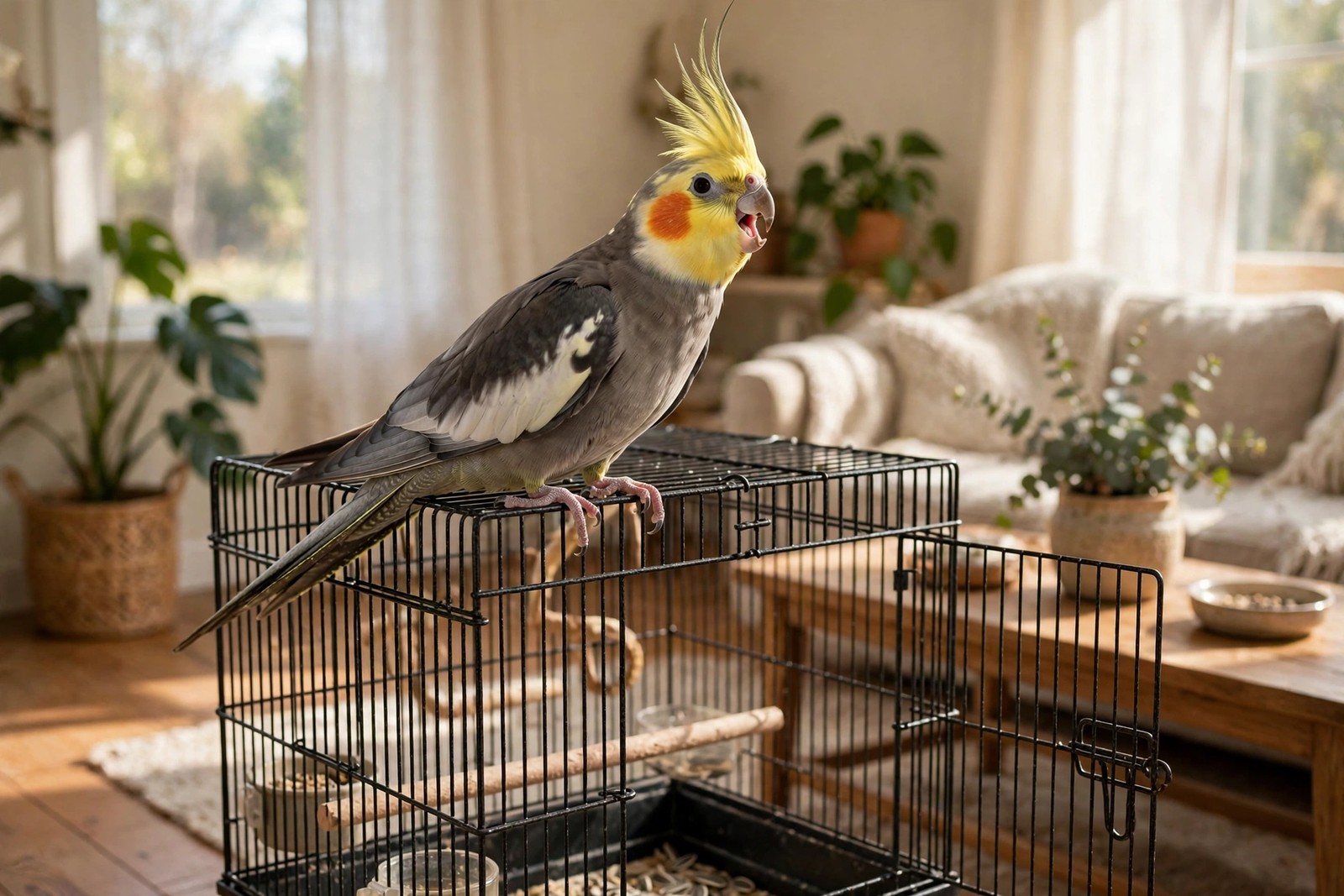
Unlike the cat question, this one has real answers: cockatiel sexes genuinely differ, most noticeably in your ears and, for females, in one medical risk worth understanding before you decide. Temperament overlaps more than the stereotypes suggest — a hand-raised bird of either sex can be devoted and tame — but if you go in hoping for whistled tunes or hoping for quiet, the odds are firmly stacked by sex.
Sound: The Difference You Will Live With
Male cockatiels are songbirds in the household sense. A young male typically learns to whistle whole tunes, copies the phone, the kettle, and your whistle back at you, and performs: heart-shaped wings held out, beak tapping on surfaces, strutting and chattering at his favourite person or his own reflection. It is charming and, at dawn, occasionally loud. Females have the same contact calls and flock chatter — no cockatiel is silent — but they rarely whistle tunes or mimic, and their default volume across a day is lower. If the bird will live in a flat with thin walls or near someone working nights, that difference alone may decide it; if you dream of teaching a bird your football chant, only a male is likely to take the lesson.
The Female Consideration: Eggs
A female cockatiel does not need a male, a nest box, or anyone's permission to lay eggs. Chronic or repeated laying drains calcium and energy, and the serious complication is egg binding, where an egg cannot pass — a fluffed, straining bird sitting on the cage floor is an emergency needing an avian vet the same day. Owners of females manage the risk by keeping daylight hours moderate, removing anything that reads as a nest, not stroking the bird's back, and rearranging the cage when hormonal behaviour starts. None of this is a reason to rule a female out — thousands live long, healthy lives — but it is ongoing management a male simply never asks of you, and a first-time owner should weigh it honestly.
Taming, Bonding, and Telling Them Apart
Both sexes hand-tame well when raised and handled properly, and males are not automatically friendlier — they are more theatrical, which reads as friendliness, while a female's quieter devotion can be just as strong. One practical hurdle: young cockatiels of the common colour forms look identical until the first moult at around six to nine months, when males of the normal grey form gain the bright yellow face and lose the barring under the tail that females keep. In colour mutations those clues vanish, so a breeder's word or a simple DNA test is the reliable route if the sex truly matters to you — and it should, given the egg question above. Buy from someone who can tell you the sex with confidence and show you the bird's parents and rearing.
Making the Choice
Decide by your household's noise tolerance and your appetite for the egg-management routine, then choose the individual bird — alert, bright-eyed, and confidently handled — within that sex. Whichever you bring home, get its details in writing at handover: sex and how it was determined, hatch date, current diet, and handling history. KinsLe's Transferrable Profiles keeps exactly that record attached to your cockatiel's profile and passes it on intact if the bird is ever rehomed, so the knowledge you gathered choosing so carefully is never lost.