
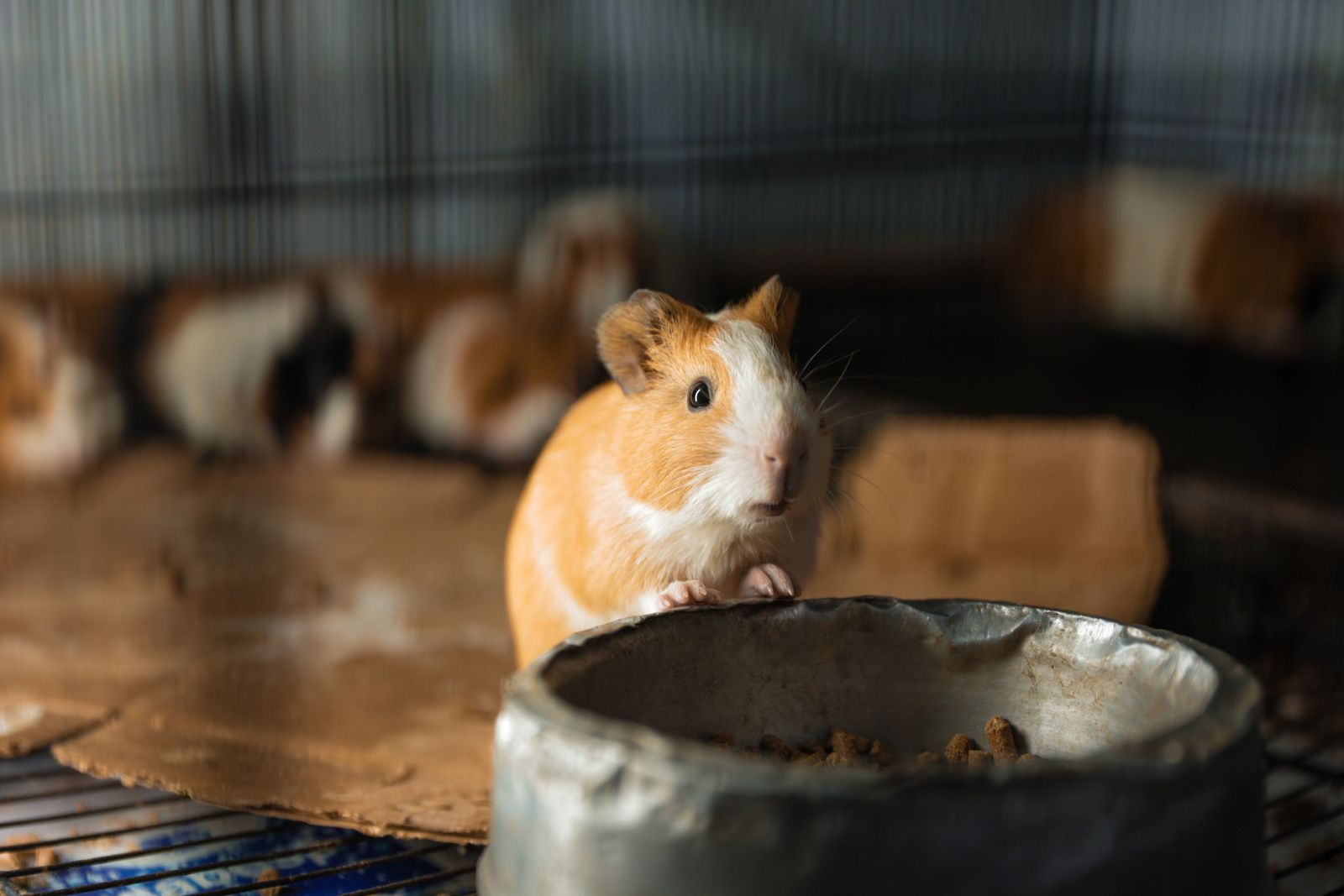
Popcorning — sudden joyful hops, twists, and mid-air kicks — is a sign of a happy, excited guinea pig, while a loud wheek is usually a call meaning "I heard food and I want in." Together they are two of the clearest windows into how your pig is feeling, and learning them makes everything from playtime timing to veggie o'clock more responsive.
Popcorning: joy with all four feet
A popcorning pig looks like a kernel going off: a hop straight up, a twist mid-air, a kick of the back legs, sometimes a short dash and then another hop. It appears most often in young pigs, during floor time, when fresh hay lands in the enclosure, after a cage clean, or when a favorite person arrives with obvious intent to feed.
Not every hop is a popcorn — context is the giveaway. Popcorning comes with loose, bouncy movement, bright eyes, and a pig who keeps eating, exploring, and interacting afterward. Stiff, frantic darting with hiding and chattering is different; that is startle, not celebration, and the pig needs calm and cover rather than cheering on.
Older pigs popcorn less dramatically — a small hop, a head toss, or a happy scamper may be the senior version of the same feeling. It is a good sign, not a lost one.
Wheeking: the refrigerator-door call
Wheeking is the loud, rising whistle guinea pigs aim at their humans, and it is overwhelmingly about food. Pigs learn the soundtrack of dinner with astonishing precision: the refrigerator door, a crinkling produce bag, a knife on a chopping board, footsteps at the usual feeding hour. A chorus of wheeks at those sounds means your pigs have trained you beautifully and intend to keep it that way.
Young pigs wheek at almost any hopeful noise; experienced pigs refine it to the specific sounds that have actually paid off. A wheek when you enter the room empty-handed usually fades fast — they were checking, and the answer was no.
Wheeking also has a practical use for you: a pig who normally wheeks loudly and suddenly does not, especially alongside hiding or refusing food, may be feeling unwell, and that change in soundtrack is worth a vet call.
The wider happy vocabulary
Once you tune in, guinea pigs are remarkably expressive:
- Purring varies — a low, relaxed purr during lap time is contentment, while a higher, tense purr with a stiff body can mean annoyance, so read the posture too.
- Chutting and whining are the muttering sounds of pigs exploring or mildly protesting.
- Happy teeth chattering is soft and brief; loud, sustained chattering with raised hackles between pigs is a warning.
- Lap-time stretching out, with feet kicked back and eyes half closed, is deep relaxation — the pig equivalent of a sigh.
Matching sounds to the body language around them turns guesswork into genuine conversation.
Building your routine around the signals
Feed vegetables at a consistent time and your pigs will remind you — loudly — if you are late. Schedule floor time when your pigs are naturally active, often morning and evening, and use popcorning as your green light that the setup, space, and company are right. If floor time produces only hiding, change one thing at a time: more cover, a companion pig nearby, a quieter room.
Ask Kimmy What That Sound Means
Your pigs have clearly learned exactly when vegetables arrive — KinsLe's Kimmy, the built-in AI assistant, is where to bring the questions that routine raises, from why the wheeking chorus erupts at a crinkling bag that is not theirs to what a popcorn hop paired with a happy purr during floor time is saying. It is a small thing, but consistent timing is what happy routines — and happy pigs — are built on. When a wheek or a popcorn hop leaves you guessing, ask Kimmy in KinsLe about guinea pig body language, drawing on KinsLe Answers for the reply.