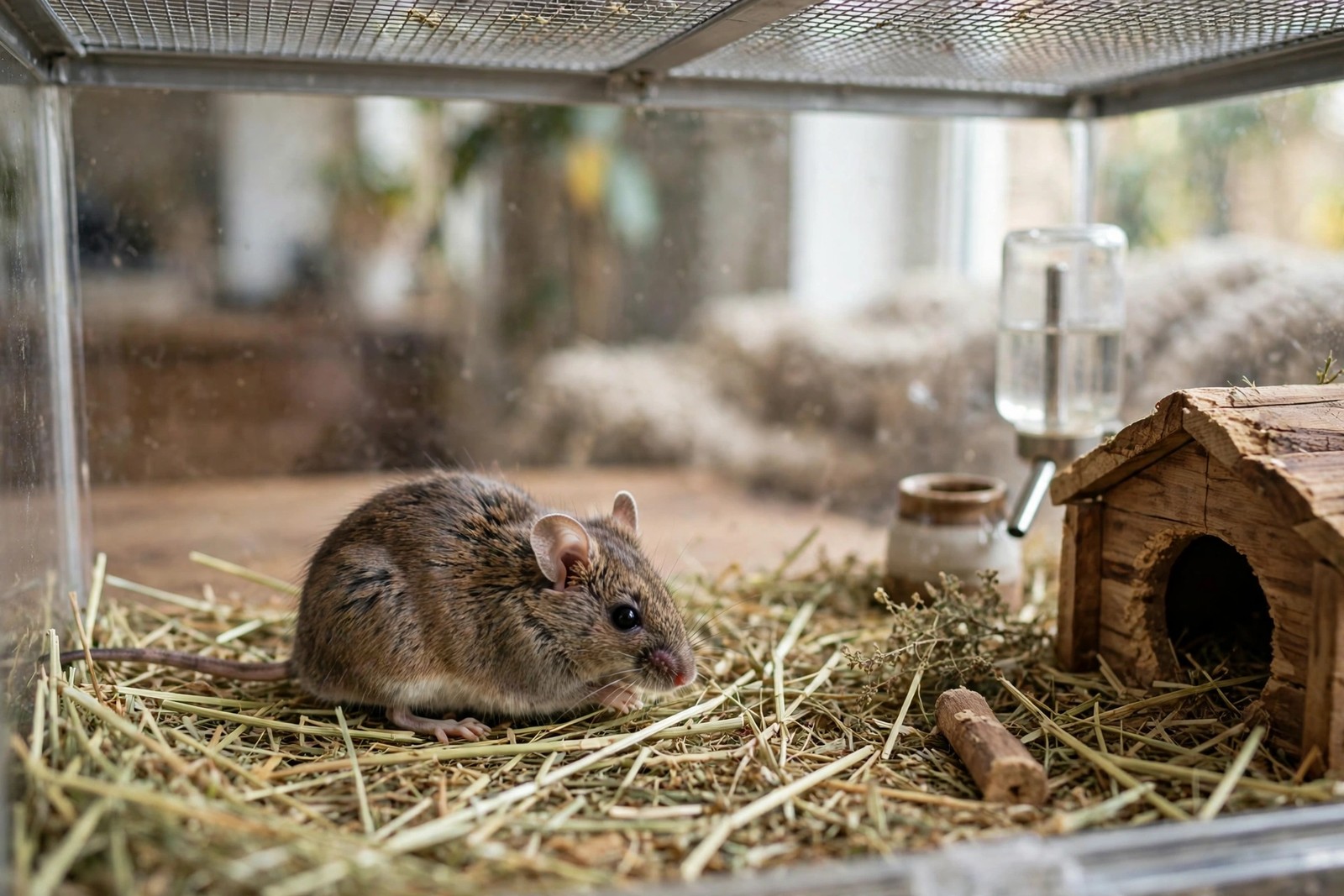
Watch for a cluster rather than a single sign in a mouse: a rough or puffed coat, a hunched shape with the head carried low and ears flattened back, and breathing that looks laboured or sounds noisy. Any one of these alone earns close watching; two together justify moving the mouse to a warm, quiet hospital cage today, because mice are prey animals who mask illness until they are quite sick. A mouse who also keeps apart from her cage mates, squints, or moves less than usual has moved from watch to act.
How To Run the Hospital Cage Properly
Set the observation cage up with the mouse's own bedding and a nest from the home cage (familiar smells reduce stress), food and water low and easy to reach, warmth, and quiet — and handle the sick mouse last, after the healthy ones, with hand-washing between, in case the problem is infectious. Watch and note the measurable things twice a day: is she eating and drinking, what do droppings look like, is weight falling (weigh on a gram scale if you can), and is breathing smoother or worse. Separation is observation, not treatment: mice decline extremely fast, and a mouse who is not eating, is losing weight, or is breathing with effort needs a small-mammal vet within the day, not a longer observation window. Group living cuts both ways — cage mates can bully a weak mouse away from food, which is another reason early separation protects her.
Working With Your Vet
For a mouse, the order that helps a vet most is specific: note the day the coat, posture or breathing changed, record weight in grams where you can, and save a short video of the breathing or movement that worried you. Bring that timeline, plus what she has eaten and drunk and how her droppings look, rather than a general summary, because a mouse examination is brief and the history often carries the diagnosis discussion. General information can help you judge urgency and decide what to track, but only an examination can say what is wrong with this mouse.
A mouse who stops eating, loses weight visibly, breathes with effort or noise, or is hunched and unresponsive needs a vet the same day — mice have almost no reserves.
Keep that observation log dated and specific to this mouse: gram weights, appetite, water intake, droppings, energy, and each symptom with the day it started. In a mouse, a few grams lost across three days is a clear signal that memory alone would blur, and those figures give a vet far more to work with than a worried recollection. Recheck what normal looks like for her whenever housing, cage mates, medication or life stage changes, because her baseline shifts with each one. For the appointment, carry a Pet Passport from KinsLe — one packet holding her notes, dates and vet history, ready to hand over.