
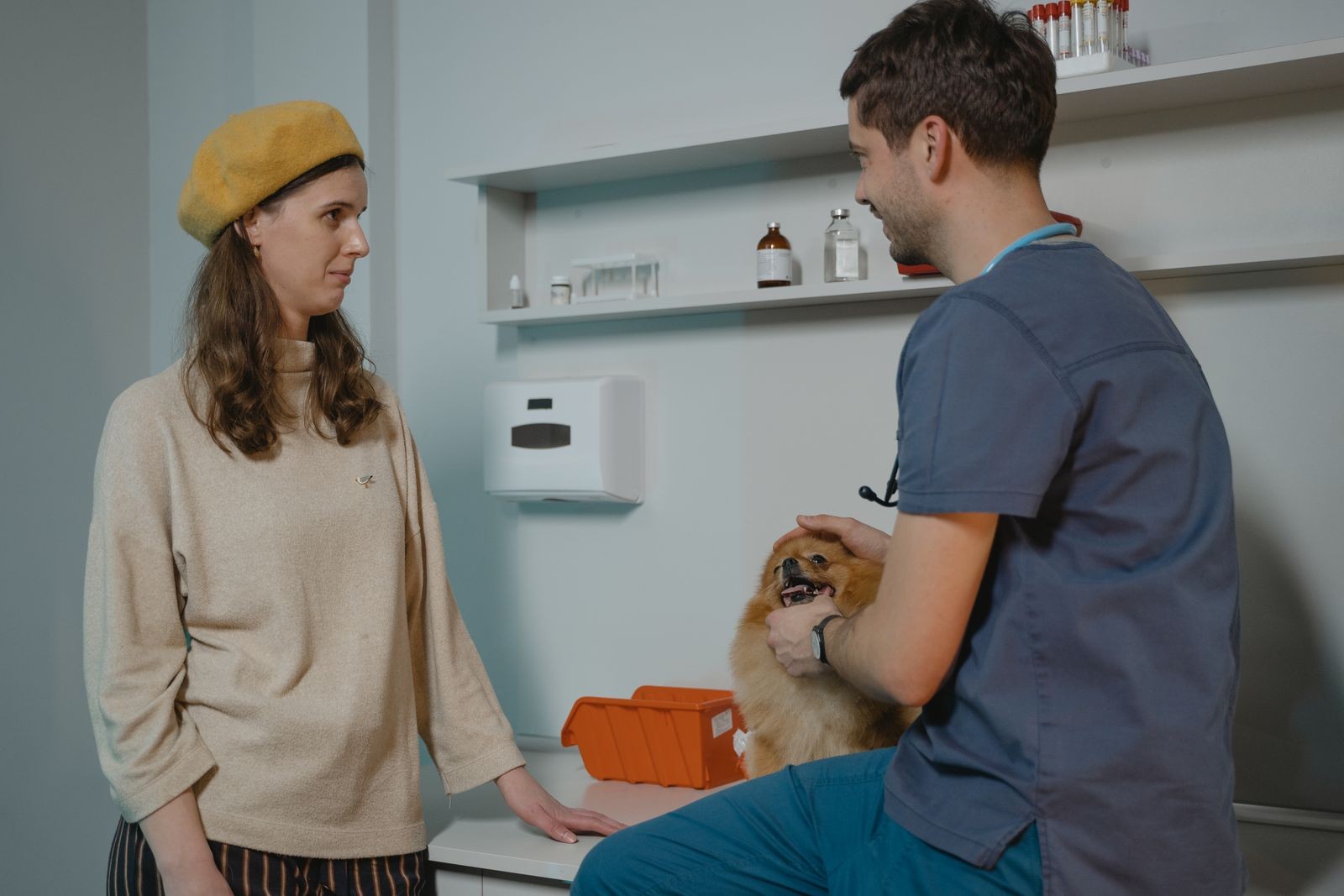
At a puppy's first vet visit, expect a full nose-to-tail health check, a weigh-in, and a conversation about vaccines, deworming, flea prevention, food, and spay or neuter timing — plus plenty of time for your new-owner questions. It is as much an introduction as an examination: your puppy meets the practice, the team learns your puppy's baseline health, and you leave with a clear plan for the next visits in the vaccine series.
What the examination usually covers
The veterinarian will typically listen to your puppy's heart and lungs, check eyes, ears, teeth and gums, feel the tummy and joints, look at skin and coat, and check temperature if needed. They will weigh your puppy and note growth, look for hernias or retained baby teeth, and in male puppies check that both testicles are descending. None of this should hurt, and a good first visit includes treats, gentle handling, and pauses if your puppy needs a moment.
Bring any records you received from the breeder or shelter — previous vaccinations, deworming dates, microchip details if already placed, and the food your puppy has been eating. A fresh stool sample, collected the same day if you can, helps the team check for intestinal parasites, which are common in puppies.
The questions worth asking
This appointment is the place to build your prevention calendar. Ask about:
- Which vaccines are recommended in your area and when each booster is due
- Deworming and flea and tick prevention appropriate for your puppy's age and weight — your veterinarian will advise what fits your puppy
- What and how much to feed, and how to switch foods gradually
- Spay or neuter timing for your puppy's breed and size
- Microchipping, if not already done, and keeping its registration details current
- What counts as an emergency, and which number to call out of hours
Write questions down before you go; in the excitement of a wriggling puppy, everyone forgets at least one. If anything from the exam needs follow-up, ask when to recheck and what changes at home should prompt an earlier call.
Making the visit a good experience
Feed a light meal before you go unless the practice advises otherwise, so treats at the clinic are welcome but your puppy is not queasy. Bring a few of their favorite tiny treats, keep them on a secure leash or in a carrier, and let them sniff the waiting area if it is calm. Short, happy visits — even stopping by for a weigh-in and a treat when the practice allows it — build a dog who does not dread the vet for life.
If your puppy seems unwell before a routine visit — not eating, repeated vomiting or diarrhea, coughing, or unusual tiredness — call ahead; the team may want to see them sooner or take precautions in the waiting room.
Keeping every record in one packet
KinsLe's Pet Passport is your puppy's records packet — vaccines, meds, allergies, and documents kept together and shareable with vets and sitters. Starting it at the first visit means vaccine dates and documents never live in three different drawers and an old email thread, and anyone caring for your puppy can see the same up-to-date information.
Keep the breeder papers and first-visit vaccine dates in the Pet Passport packet on KinsLe, ready for the next appointment.