
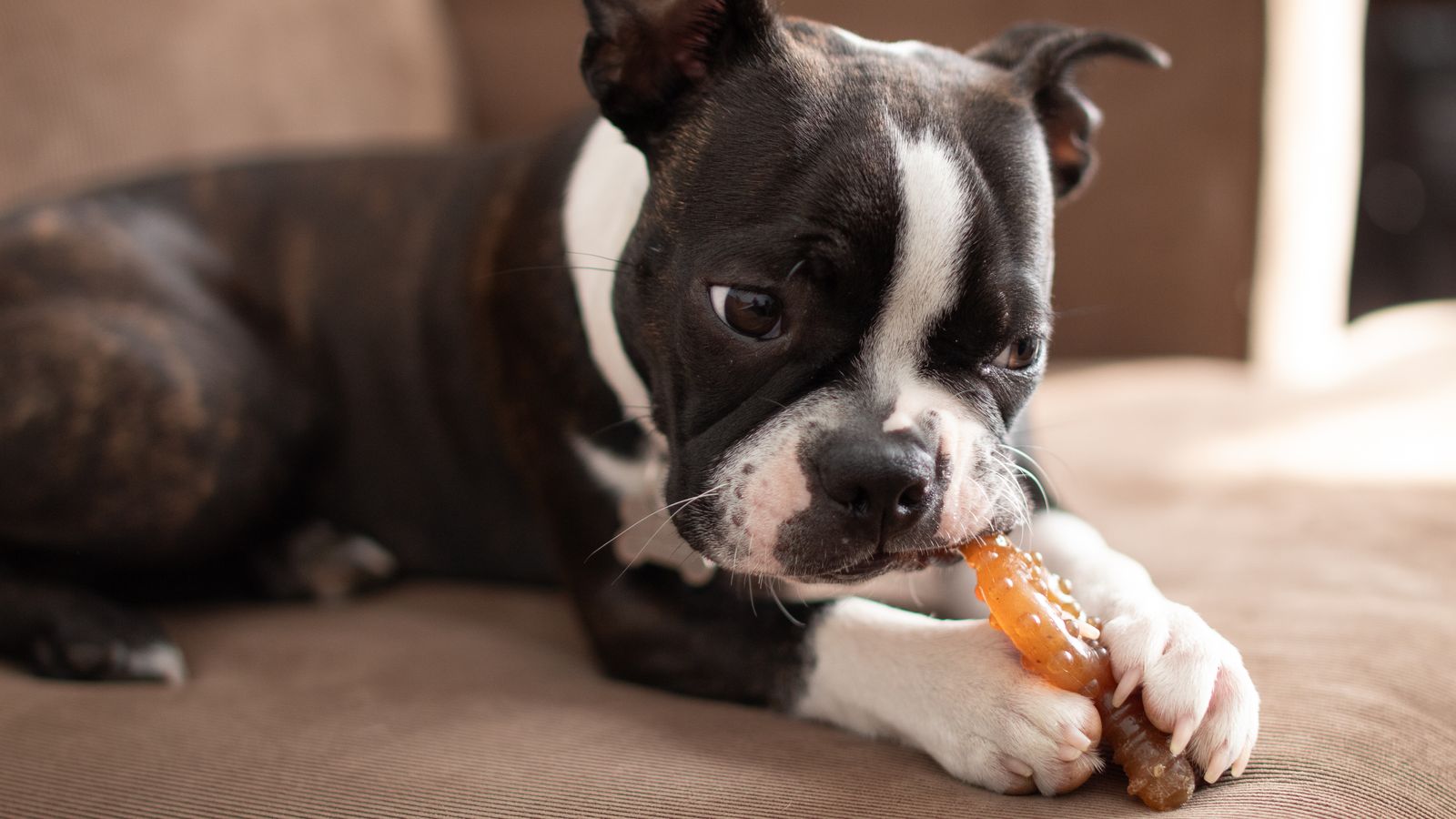
What helps most with puppy teething is giving sore gums something legal to chew: offer appropriate puppy chew toys, rotate them so they stay interesting, chill some of them for extra relief, and redirect your puppy away from shoes, chair legs, and hands every single time. Teething is the normal process of baby teeth falling out and adult teeth coming through, and chewing genuinely soothes the discomfort — your job is to decide what gets chewed, not to stop chewing altogether.
Why your puppy has turned into a tiny shark
Most puppies start losing baby teeth at around three to four months, and the process can run for several months. You may find tiny teeth on the floor, notice slightly sore or red-looking gums, or simply see a sudden spike in chewing and mouthing. Some puppies drool a little more or get pickier with hard food for a few days. All of that is commonly part of teething, though a puppy who stops eating, seems in real pain, has a retained baby tooth alongside an adult tooth, or has bad-smelling or bleeding gums should be seen by a veterinarian.
Expect the peak chewing phase to test your home setup. Puppy-proof as if for a toddler: shoes in cupboards, cables out of reach, children's toys picked up, and baby gates closing off rooms you cannot supervise.
Chews that actually help
Choose toys made specifically for teething puppies — soft enough to have some give, large enough that they cannot be swallowed, and sturdy enough not to shred into pieces. Rubber teething toys that can be chilled in the fridge often go down especially well. A clean washcloth, dampened, twisted, and chilled, can be a soothing supervised option for some puppies.
Practical tips that make chews work harder:
- Keep three or four chews in rotation and put the rest away, so each returning toy feels new again
- Swap a forbidden item for a chew without a scolding — trade, praise, and move on
- Offer a chew right after meals and during the evening restless stretch, when chewing often peaks
- Wash rubber chews regularly with warm soapy water and rinse well, since they spend hours in mouths and on floors
Avoid very hard items like bones, antlers, and hard nylon on baby teeth and new adult teeth, as hard chews can damage teeth. Never leave a puppy alone with a chew that is breaking apart, and take away anything that gets small enough to swallow.
Redirecting without a battle
When teeth land on furniture or fingers, calmly offer the chew instead. If your puppy keeps returning to the table leg, move them to their play area with chews available rather than delivering a lecture they cannot understand. Praise any moment they choose a toy on their own — that choice, repeated, is the habit you are building. Make sure everyone in the house redirects the same way, because mixed rules slow learning.
Also check the basics: an overtired, bored, or under-exercised puppy chews destructively far more than a puppy who has had play, a short training game, and a proper nap.
Staying on top of the rotation
Teething raises fresh questions week by week: whether a loose tooth looks normal, how long soreness should last, or when a retained baby tooth needs a vet. Bringing those questions to Kimmy in KinsLe as they arise gives you guidance tied to the stage your puppy is in right now.
For lingering soreness questions, Kimmy in KinsLe can answer follow-ups about teething, with replies drawn from the KinsLe Answers library.