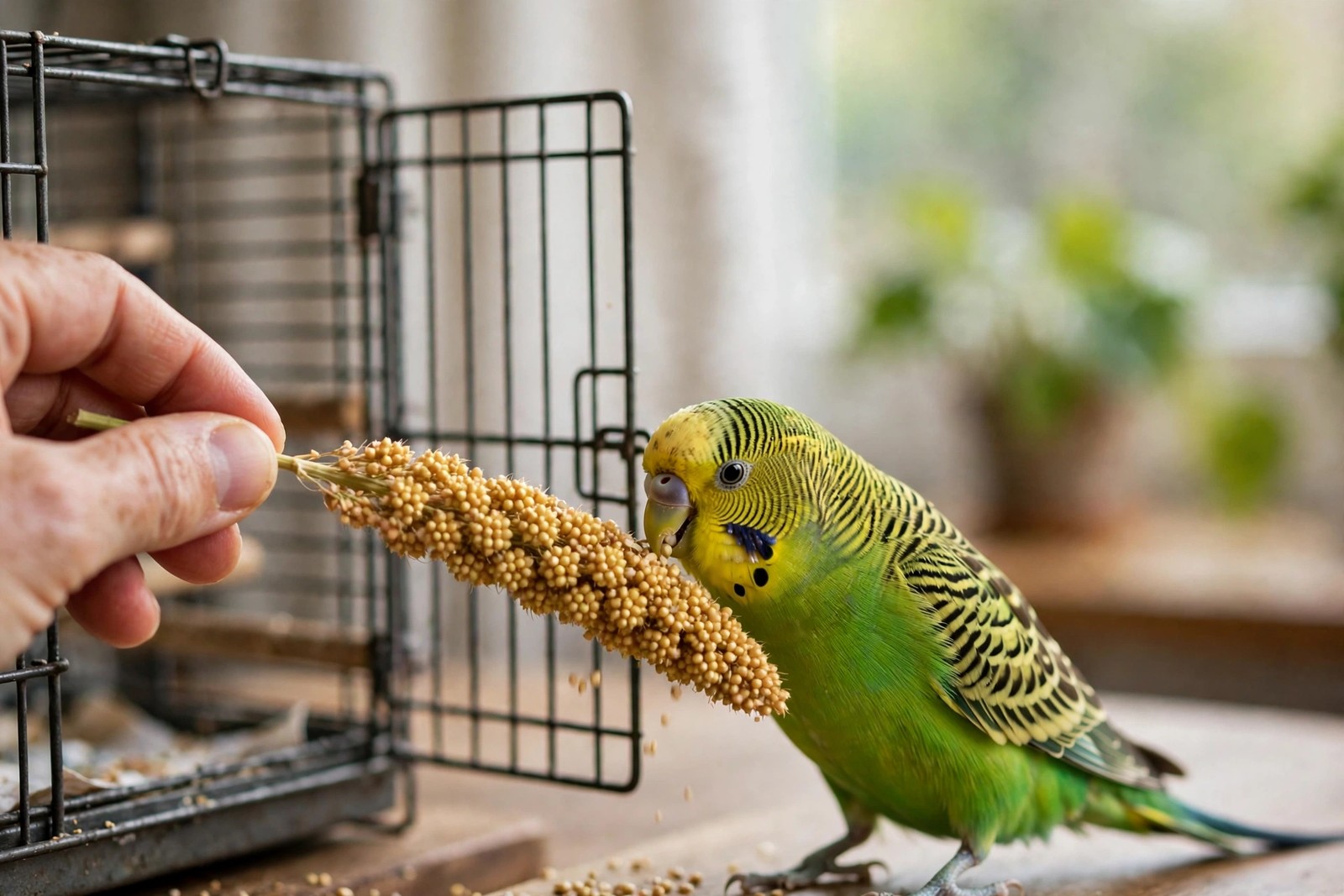
Millet is a small, round seed grain, one of the oldest cultivated grains in the world, and for cage birds it is usually sold as spray millet: the whole seed head still attached to its stem, like a small golden branch covered in tiny seeds. Budgies are seed eaters by nature, and millet sits at the top of most budgies' preference list, which is exactly why it needs portion sense from the owner.
Why Budgies Love It So Much
A spray invites natural foraging behaviour. Instead of eating from a bowl, the bird works along the stem, husking seed after seed, which keeps beak and mind busy. The taste and texture are highly palatable, so millet eaten willingly by a nervous new budgie is often the first food it accepts from a hand. That trust-building power is millet's real value, and spending it wisely matters more than the seed's modest nutritional profile, which is filling and energy-rich but not a complete diet on its own.
How Much, and How Often
Treat millet as a dessert, not a side dish that lives in the cage. A small sprig or a short section of spray, roughly a couple of inches of seed head, offered a few times a week is a sensible treat rhythm for a single budgie alongside its main diet. During taming and training, break the spray down further: hold the sprig so the bird eats a few seeds at a time near your hand, or pick off individual seeds as step-up rewards, so a whole training session costs only a pinch of seed. Remove what is left after a treat session rather than leaving the spray clipped up all day, because a budgie with unlimited millet will reliably fill up on it and ignore pellets, greens, and other foods that carry the nutrients a seed-only diet lacks. For a pair or small flock sharing one cage, offer the sprig as a shared event and watch that a confident bird does not monopolise it while a shy bird gets nothing.
Using Millet Well
Millet earns its keep in three jobs. First, taming: a new budgie who will not come near a hand will often stretch for a sprig held at a comfortable distance, and shortening that distance over days builds trust without grabbing or chasing. Second, training: step-ups, returning to the cage, and recall practice all move faster when each success pays in millet. Third, encouragement: a budgie who is ill, recently rehomed, or refusing unfamiliar food will often eat millet when it refuses everything else, which buys time while you work on the wider diet and talk to an avian vet if appetite stays poor. Store sprays dry and sealed, discard any that smell musty or show mould, and wash your hands after handling dusty sprays before touching the bird.
The Balance Around It
Millet should sit inside a varied budgie diet built on a quality staple, fresh leafy greens and vegetables offered daily, and clean water refreshed every day. If your budgie is gaining weight, the millet budget is the first thing to trim, before the vegetables ever are.
Because treats are easy to duplicate across a busy household, recording who offered millet and when in KinsLe Care Teams keeps the treat budget honest without anyone playing food police.