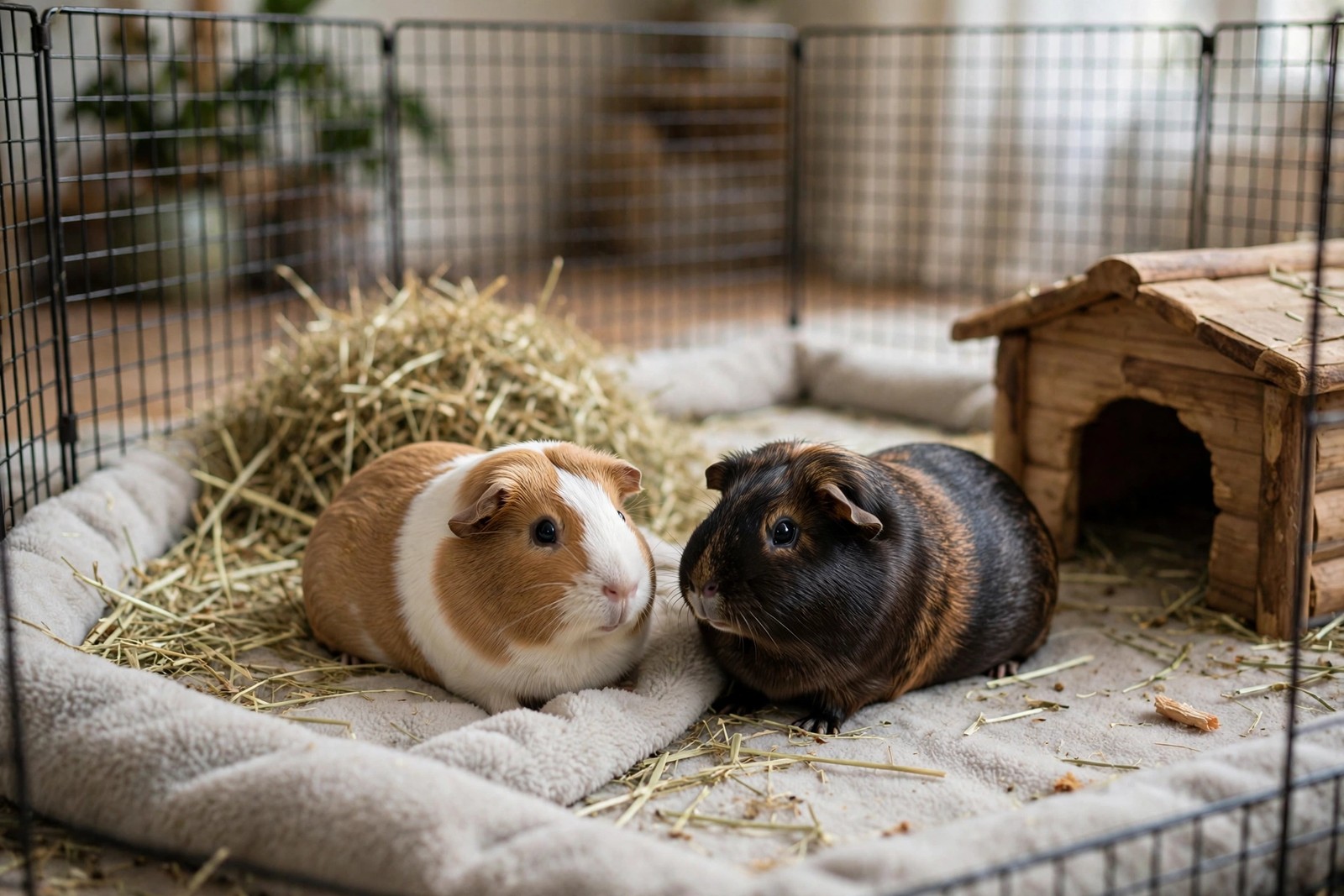
A boarding service that is excellent for dogs can still fail guinea pigs quietly, because pigs need unlimited hay, daily fresh food, gentle handling, and housing that respects how easily prey animals stress. The questions below separate a service that genuinely keeps small herbivores from one that simply accepts them. Ask before you pay a deposit, visit if you can, and treat hesitant answers about food or vet access as the answer itself.
Food: Hay, Vegetables, and Vitamin C
Ask whether hay is available around the clock, not rationed in handfuls, because guinea pigs graze almost constantly and their teeth and gut depend on it. Ask what fresh vegetables are offered daily, whether you can supply your pigs' usual selection to avoid a sudden change, and how vitamin C is covered, since guinea pigs cannot make their own and rely on their diet for it. Confirm your own pellets can be fed in the amount you specify, that water bottles or bowls are checked and refilled daily, and that uneaten fresh food is removed before it wilts into the bedding.
Housing, Company, and Neighbours
Ask the actual floor size of the pen, whether the floor is solid rather than mesh, what bedding is used, and whether there is a hide each pig can retreat into. A bonded pair should stay together in that space; separating settled companions for a week adds stress neither pig needs. Ask what animals will be nearby. Guinea pigs should be housed away from the sight, sound, and smell of dogs and cats, and kept apart from rabbits, whose size and kicks can injure a pig and whose company is not the company pigs need. Ask about room temperature too: pigs cope badly with heat and with draughty, damp corners.
Handling, Health Checks, and the Vet Plan
Ask who will handle your pigs, how often, and how — scooped and supported with two hands, never lifted by the scruff. Ask what daily checks are done: appetite, droppings, activity, and breathing are the early warning signs in an animal that hides illness well, and a pig that stops eating is an emergency, not a wait-and-see. Ask which veterinarian the service uses, whether that practice treats guinea pigs, how quickly they would go, and who authorises and pays for emergency care while you are away. Leave written permission and your exotics vet's number, and ask how you will be told — same-day, not in a summary at collection.
Finally, ask about cleaning frequency, how sick animals are separated, whether you can bring familiar bedding or a worn fleece that smells of home, and whether photo or message updates are included. When you book, KinsLe's Care Pass hands the chosen boarder temporary access to your pigs' exact feeding amounts, vegetable list, handling quirks, and vet contacts, and that access ends when the stay does.