
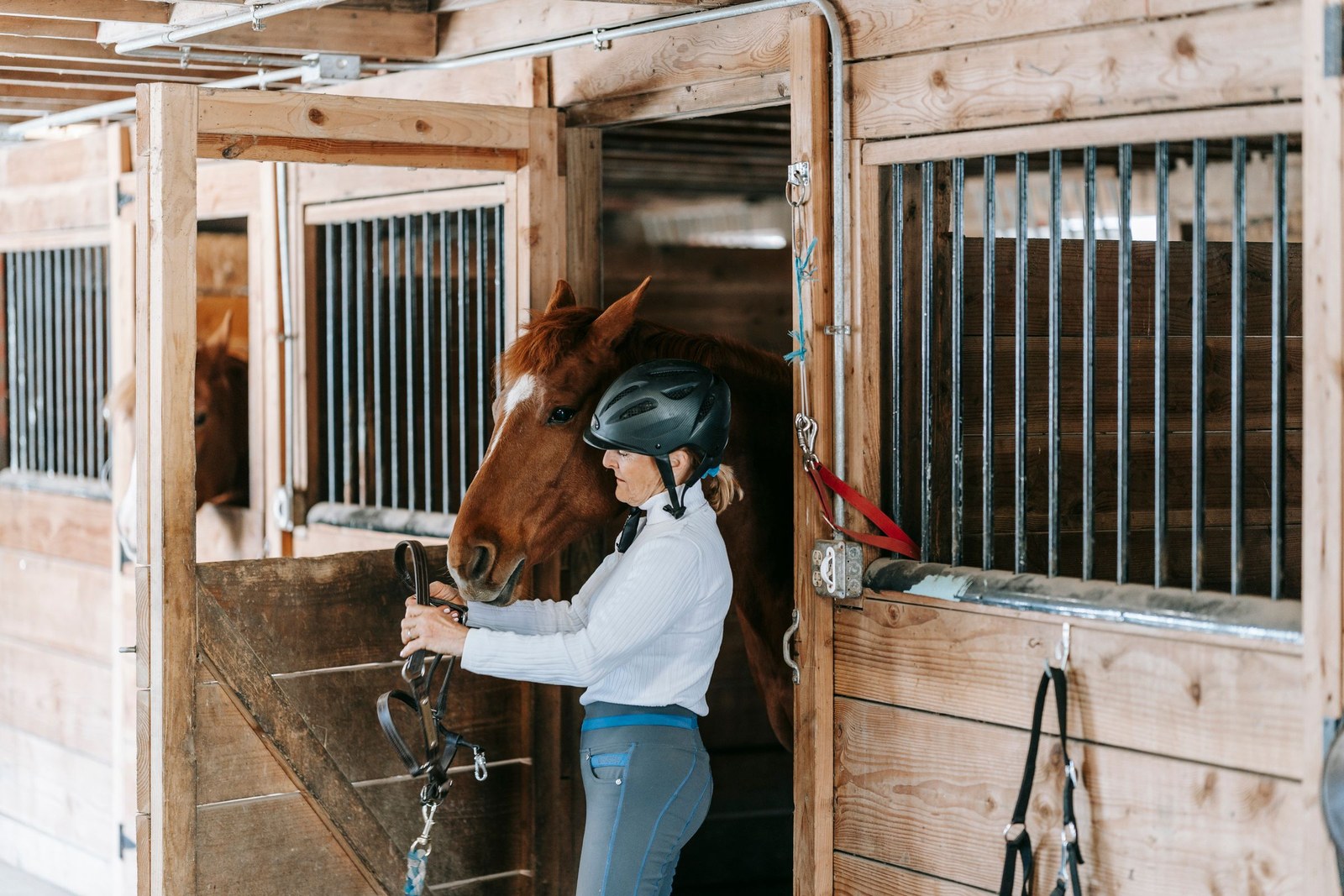
A good daily stable routine covers fresh water, forage first, any scheduled feeds, a hands-on health and leg check, mucking out or shelter cleaning, and turnout or exercise — in a rhythm your horse can predict. Horses are creatures of habit, and a steady routine is not just tidy barn management; it genuinely helps them settle, eat calmly, and rest. The exact order can flex around your life, but the core jobs should happen every day.
Start With Water, Forage, and a Look-Over
Begin each visit by checking water: buckets scrubbed and refilled, troughs free of ice in winter and algae in summer, and automatic waterers actually flowing. A horse that has stopped drinking is an early warning sign worth noticing the same day, not the same week. Next, forage. Most horses do best with hay or grazing spread across the day rather than long empty stretches, which suits both their stomachs and their minds.
While your horse eats, run your hands over him. Check legs for heat, swelling, cuts, or filled tendons, pick up each foot briefly, and notice his appetite, manure, breathing, and general brightness. This two-minute once-over catches small problems — a loose shoe, a brewing rub, a quiet horse who is normally first at the gate — while they are still small.
Feeding, Turnout, and Movement
Concentrate feeds, if your horse gets them, should follow your vet or feed advisor's plan and stay consistent in timing and amount; sudden feed changes are hard on the gut. Turnout is not a luxury in the routine — time to move, graze, roll, and socialize supports digestion, joints, hooves, and mental health. Even on days you cannot ride, most horses benefit from getting out of the stall, whether that is pasture time, a dry lot, or a hand-walk and grooming session.
Plan exercise around feeding sensibly, and build in grooming as part of the day rather than an extra: currying lifts dirt, lets you spot skin issues, and gives you that daily hands-on contact.
The Cleaning Jobs That Keep a Barn Healthy
Muck out stalls daily, removing droppings and wet bedding, and top up with fresh bedding so your horse has a dry place to lie. In the field, clear manure around hay feeders, gates, and water troughs where horses gather, and check fencing, gates, and shelter on a regular pass. Weekly and monthly jobs — deep-cleaning buckets, washing feed tubs, rotating pastures, checking first-aid supplies — deserve a place on the calendar too, so they do not get perpetually postponed.
A Sample Day at the Barn
- Morning: water check, hay, health and leg check, feed if scheduled, muck out, turnout
- Midday (if possible): water top-up, hay refill, quick visual check
- Evening: bring in or check in the field, feet picked, feed and hay for the night, final water check, rugs adjusted for overnight weather
Your version will differ — a horse living out 24/7 swaps stall jobs for shelter and field checks — but the categories stay the same.
Making the Routine Stick When Life Gets Busy
The routine only protects your horse if it survives busy weeks, travel, and helpers covering for you. KinsLe's Care Teams let you lay out that whole daily checklist — feeding, walks and turnout, medications, and grooming duties — with timestamped completions, so you can see at a glance what has actually been done rather than relying on a barn whiteboard or memory. Nothing quietly gets missed, and a new helper can follow the same steps you would. In the Care Teams plan on KinsLe, write each stable job beside a named person — morning hay and water to one, evening checks and rugs to another — and mark every job done as it is finished, so tomorrow starts from a record everyone trusts.