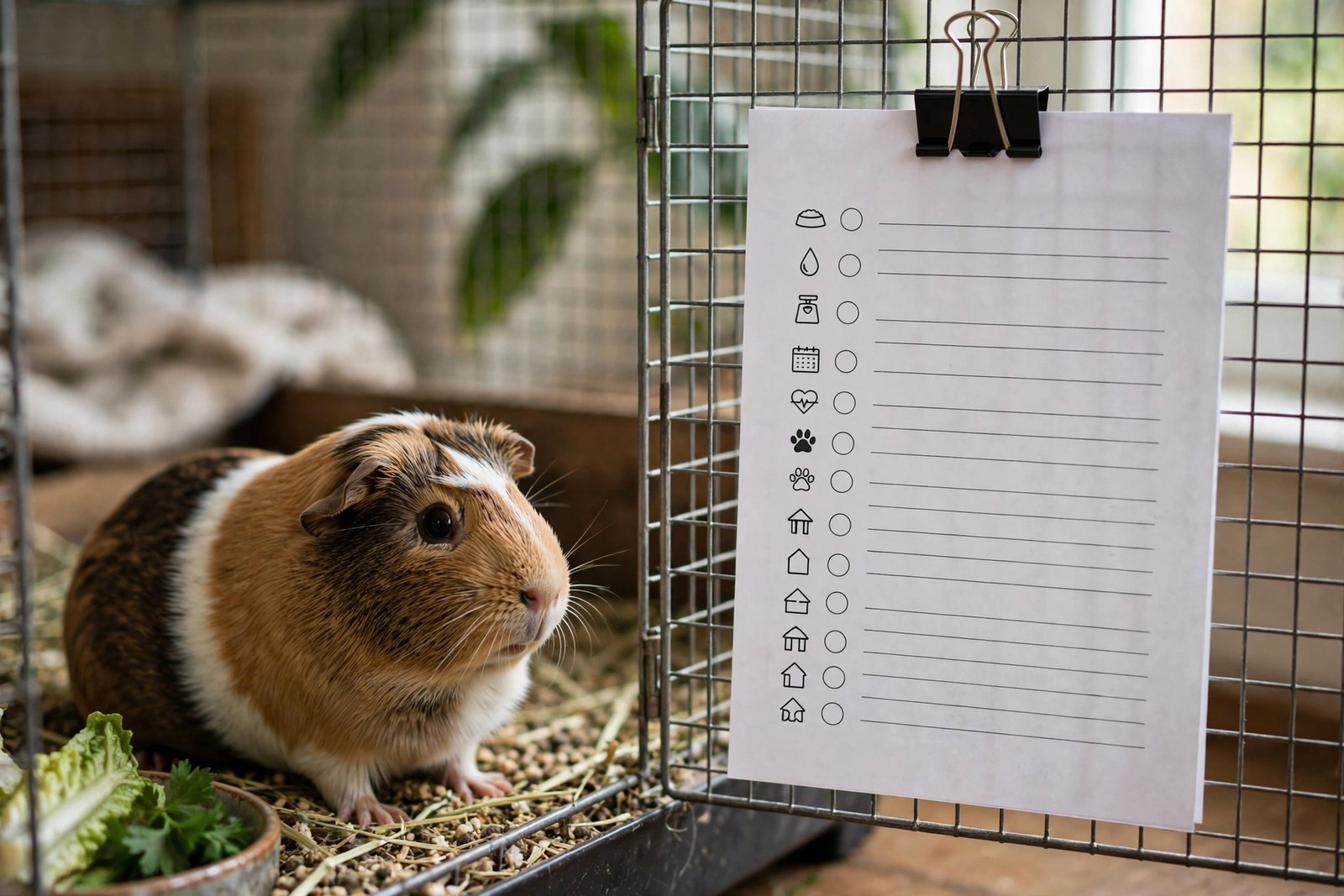
Picture a sitter meeting your guinea pig for the first time, bowl in hand, with ten minutes before you leave. The one page in front of them has to answer, in order: who is this pig, who does he live with, what does he eat today, and what change should make them phone you. A profile built around those four questions works at a glance; one built as a life story does not.
Identity and Companions at the Top
Open with name, age or best estimate, sex, colour and markings, and typical weight, then name the bonded companion in the same block — guinea pigs are social animals, and a profile that treats the pair as one household prevents the classic sitter error of separating, singling out, or feeding the wrong pig. Add a clear photo of each pig, your vet's details, and an emergency contact who can collect or authorise care.
Food: Hay First, Vitamin C in Writing
Write the diet as a sitter will shop and serve it. Hay is the foundation and should be available without limit, so say where the hay is stored and how the rack or pile is topped up. Guinea pigs cannot make their own vitamin C, so list the exact daily vegetables or other vitamin C foods this pig usually eats, in the amounts he is used to, plus the measured pellet portion and the treats to avoid improvising with. Note the water bottle, how often it is refreshed, and any vegetable this pig refuses or reacts badly to.
Housing, Handling, and the Daily Pattern
Describe the home in a few lines: cage or pen setup, fleece or bedding routine, hide houses, and floor time — where it happens, behind which barrier, and for roughly how long. Guinea pigs are prey animals who startle at hands descending from above, so state the handling method that works here: approach at floor level, scoop with both hands supporting the whole body, and let a nervous pig sit in a hide or towel rather than being held aloft. Add favourite foods, usual active and wheeking times, and favourite hiding places.
Health Watch Points for Guinea Pigs
Close with what to watch: teeth, weight, appetite, droppings, and breathing, plus any known history. A guinea pig who stops eating, loses weight, breathes audibly, or goes quiet in a corner is showing changes a veterinarian should hear about promptly — this page offers general information for observing, not a diagnosis. Hand the sitter the packet, not a tour from memory: through KinsLe, this guinea pig's Pet Passport presents his identity, companions, and feeding rules in a single portable packet a new reader can follow.