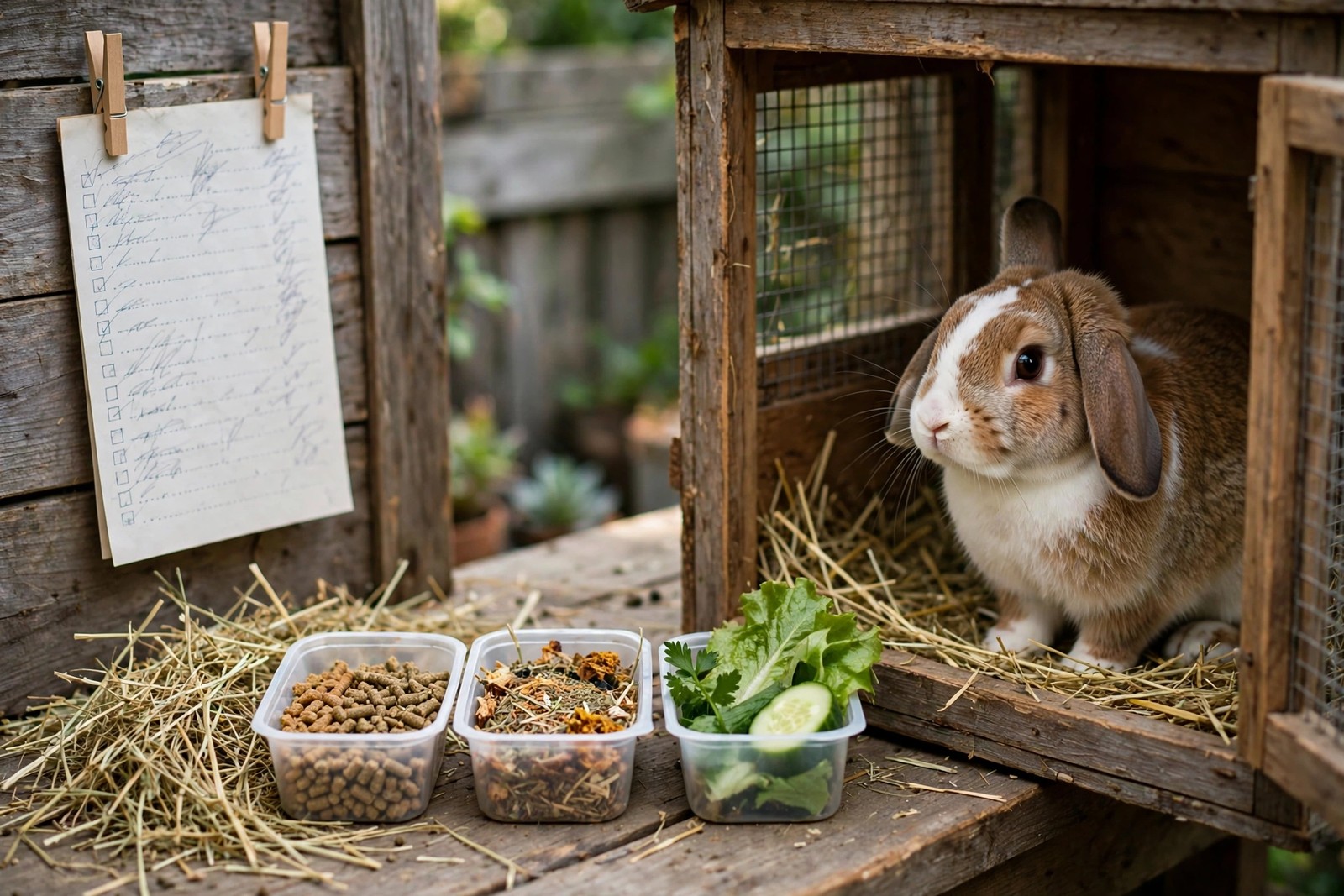
Give your sitter species-by-species feeding instructions in writing, and make them specific enough that a kind person who does not keep small pets cannot improvise. Feeding rabbits, guinea pigs, hamsters, rats and ferrets from one vague note is where sitter care goes wrong, because a food that is routine for one species may be unsuitable for another, and portion mistakes are easy when pellets all look alike.
Write hay, water and the daily rhythm first
For rabbits and guinea pigs, state plainly that hay must be available at all times, topped up morning and evening, and never rationed as a treat. Name the hay you use, where the spare bale or bag is stored, and how much loose hay a day's top-up usually takes, so the sitter does not offer a token handful. For other species, write the equivalent staple exactly as you feed it, rather than assuming the sitter will know.
Cover water in working detail: which animals use a bottle, which use a bowl, how often to refresh it, and how to test a bottle by tapping the spout so a drop appears and the ball moves. A bottle hung at the wrong angle or blocked by bedding can look full while delivering nothing. Ask the sitter to check water at every visit and to note if a bottle has not gone down at all.
Portions the sitter cannot misread
Pre-measure daily pellets and dry food into labelled tubs or bags for each animal before you leave, marked with the animal's name and the day. Then write the same portions in the instructions, so a spilled tub can be replaced correctly. Do the same, in words, for fresh food: which vegetables or other fresh items, roughly how much per animal, how often, and what to remove uneaten after a few hours so it does not spoil in bedding.
Keep treats explicit and limited: name the treat, the amount, and how often, and say clearly that extra treats from the sitter's own kitchen are not part of the plan. Sudden rich food, a large new portion of vegetables, or a diet change made from generosity can upset a small digestive system quickly.
Foods never to offer, and kitchen traps
List never-feed foods for the species in the house, in plain words, and place the list on the enclosure as well as in the main instructions. Include household traps a visitor may not suspect, such as food dropped by children, houseplants within reach during handling, and bowls of another pet's food left where a free-roaming rabbit could reach them. Tell the sitter never to feed anything that is not written down, however healthy it looks for people.
Also state where food is stored, what must be kept sealed from wild mice or insects, and whether any animal guards food, needs feeding separately from a companion, or must be watched to ensure a bolder cage mate does not take both portions.
What appetite loss means, and what to do
Ask the sitter to look, at every visit, at appetite, droppings, water use and activity, and to tell you the same day about a change rather than waiting until you return. For rabbits and guinea pigs especially, eating noticeably less, producing far fewer droppings, sitting hunched and quiet, or refusing a favourite food is a reason to contact you and your vet promptly, not a wait-and-see problem, because their gut needs a steady flow of food. For any small pet, a full day of not eating, laboured breathing, diarrhoea or collapse needs urgent veterinary advice.
Leave your vet's number, an emergency contact who can authorise care, and permission arrangements in the same place as the feeding notes, so the sitter is not searching while worried.
Through KinsLe's Care Pass, you can give your sitter temporary access to exactly those feeding portions, never-feed lists and vet contacts for the dates you are away, without handing over your whole account.