
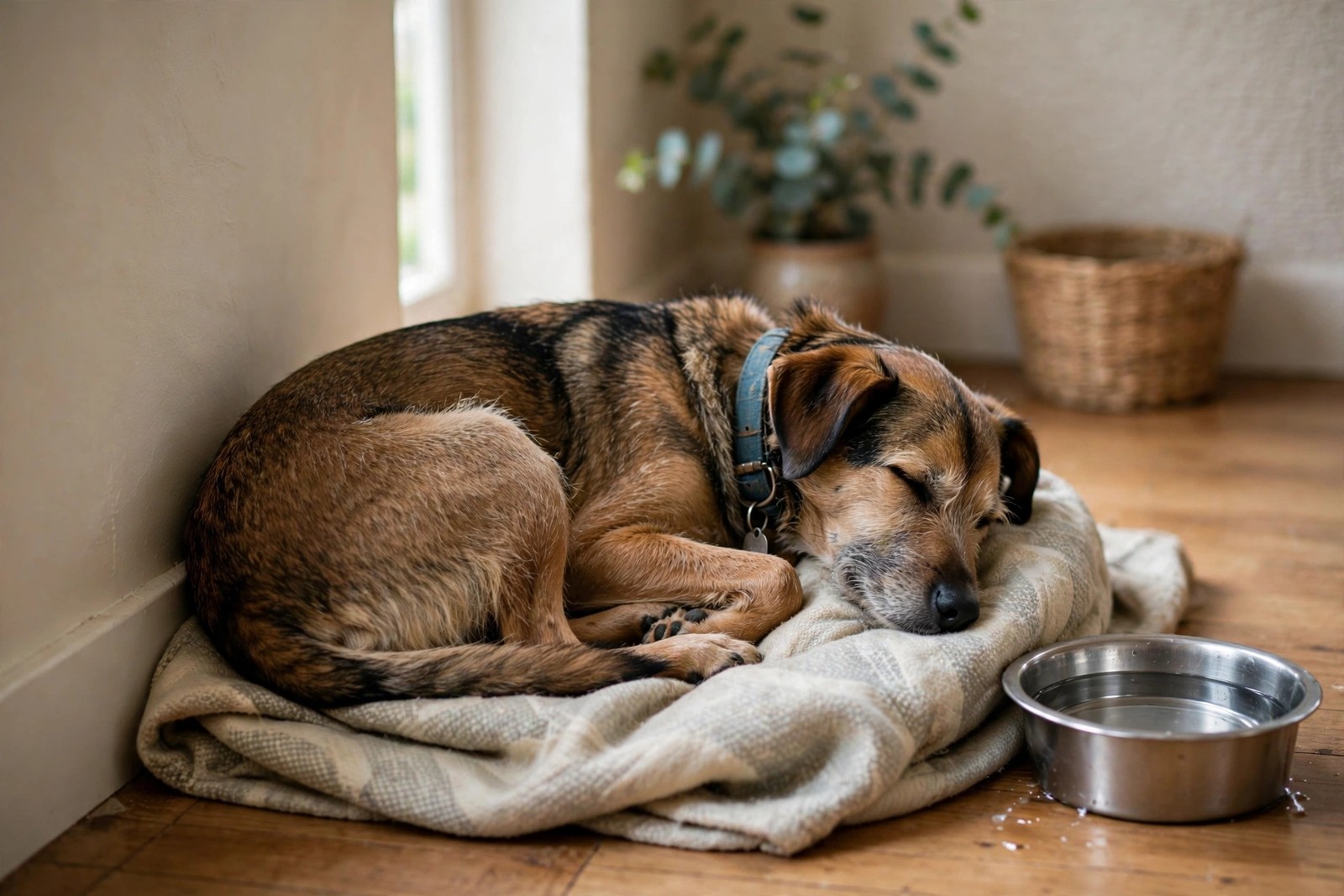
The first three days with a rescue dog should look deliberately boring: one calm room or corner, short leash trips outside to the same toilet spot, meals at set times, and a great deal of sleep. Resist the urge to show your new dog off — this quiet start is what helps them feel safe enough to eat, toilet, and rest normally.
Set up one small, calm base
Before your dog comes home, prepare a single area: a bed or crate with the door open, water, a chew, and a worn t-shirt that smells like you if you like. A kitchen corner, a gated hallway, or a quiet bedroom all work. Limiting space is not a punishment — for a dog coming from a kennel, a whole house is overwhelming, while one predictable room is understandable. Let them investigate that space thoroughly, then expand access room by room over the coming days as they relax.
Keep outings short and identical
Take your dog out on a leash to the same patch of grass, wait quietly, praise and treat when they go, and come back in. Repeat the same loop after meals, after naps, and before bed. Long neighborhood walks can wait; right now the goal is a reliable toilet routine and short, successful trips. Keep your dog leashed even in a fenced yard at first — a startled new dog can clear or dig under a fence faster than you would believe.
Expect a lot of sleep — and a light appetite
Many rescue dogs are running on a sleep deficit. Shelter life is noisy and stressful, and some dogs more or less collapse for the first day or two, sleeping deeply between meals. A reduced appetite is also common for the first 24 to 48 hours. Offer the food the shelter was feeding, at calm regular times, and pick up what is not eaten rather than hovering or hand-feeding a buffet. A dog who has not eaten or drunk anything at all after a full day, or who seems unwell, deserves a call to your veterinarian.
What to skip for now
Postpone visitors, especially groups and excited children. Postpone dog parks, pet stores, baths (unless truly needed), and introductions to resident pets beyond calm, separated sniffing through a door or gate. Postpone the full house tour and the photo shoot with the whole extended family. None of these are forbidden forever — they are simply easier and safer once your dog is eating, toileting, and resting on a predictable rhythm, usually within the first week or so.
Share the load without adding chaos
Early care involves a lot of small, repeated tasks: feeding, toilet trips, water checks, and quiet settling time. KinsLe's Care Teams let your household assign those feeding, walk, and settle duties to specific people, with each completed task marked off with a timestamp, so your new dog gets consistency instead of five people doing things five different ways. Care Teams on KinsLe hold that written plan — feeding, toilet trips, and settle time assigned to specific household members, each job marked off with its completion time, so the routine stays steady.