
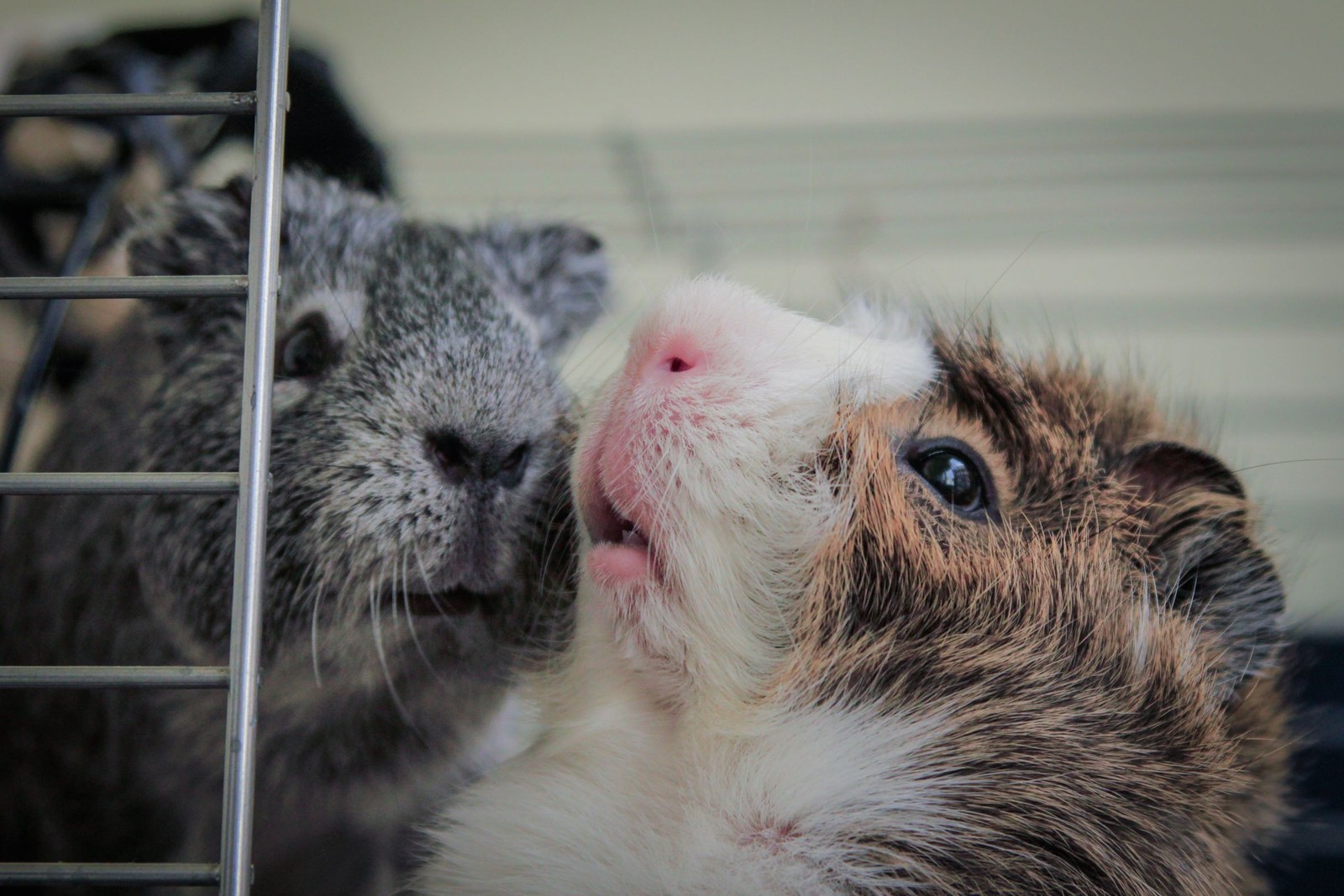
Two guinea pigs need a wide, single-level cage with generous floor space — as a widely used minimum, about 10.5 square feet for a pair, with bigger always better. In practical terms, think of a cage roughly 2 feet by 4 feet at the smallest, and step up from there if you can, because floor space is where guinea pigs actually live: running laps, popcorning, eating, and resting.
Floor Space Is What Counts
Guinea pigs are ground dwellers. Unlike rats or ferrets, they are not climbers, and ramps between levels do not count toward their living space. A steep ramp can even be a hazard for a short-legged pig. When you compare cages, measure only the main floor's interior length and width, and be skeptical of tall, narrow cages marketed with impressive-sounding level counts.
Grid-and-coroplast cages, often called C&C cages, are popular precisely because they deliver big, affordable floor plans — a 2-by-4 grid layout is a common starting point for two pigs, and a 2-by-5 gives a noticeably calmer pair. Midwest-style habitats and large single-level enclosures can also work if the interior measurements hold up.
Why Pairs Need More Than Double Room
Two pigs do not simply share — they negotiate. Bonded guinea pigs, especially boars, need space to move away from each other, claim separate hideaways, and eat without guarding. Cramped quarters are one of the most common triggers for chattering, chasing, and squabbles in an otherwise friendly pair. A good layout rule: provide at least two of everything important.
- Two hideaways, each with more than one exit, so no pig gets cornered
- Two water bottles or a bottle and a bowl, at opposite ends
- Hay in more than one spot, or a wide hay area both pigs can use side by side
- Two food bowls, so meals do not become a competition
Run a clear lap lane around the perimeter. Guinea pigs love a morning zoom, and a cage so stuffed with accessories that no running loop remains is functionally smaller than its measurements suggest.
Fitting a Big Cage Into Your Home
Place the enclosure in a room where the family spends time — guinea pigs are social and enjoy household bustle — but away from drafts, direct sun, and loud speakers. Keep it at a comfortable room temperature and off cold floors. If footprint is tight, a slightly L-shaped C&C build or a cage on a low stand with storage underneath often fits better than shrinking the pigs' space. Never solve a space problem with an exercise ball or wheel; both are unsafe for guinea pig spines and feet.
Also plan the cage for the pigs they will become: babies grow fast, and older pigs with stiff joints appreciate wide, single-level living with soft fleece underfoot.
Asking Kinny in KinsLe About the Pair's Cage
A larger cage stays cleaner longer day to day, but it still needs a weekly deep clean — fleece shaken out and washed, coroplast or the base wiped down, bottles scrubbed. It is exactly the kind of recurring job that slips when life gets busy. KinsLe's Kinny, the built-in AI assistant, can answer questions about the weekly deep-clean routine, about hay, pellet, and bedding restocks, and about layout choices, so you can keep the shared cage fresh for both pigs on a routine you run yourself. Kinny on KinsLe will field follow-up questions about sizing or laying out the pair's cage, with answers the KinsLe Answers library supplies, whenever you want a second look at the floor plan.