
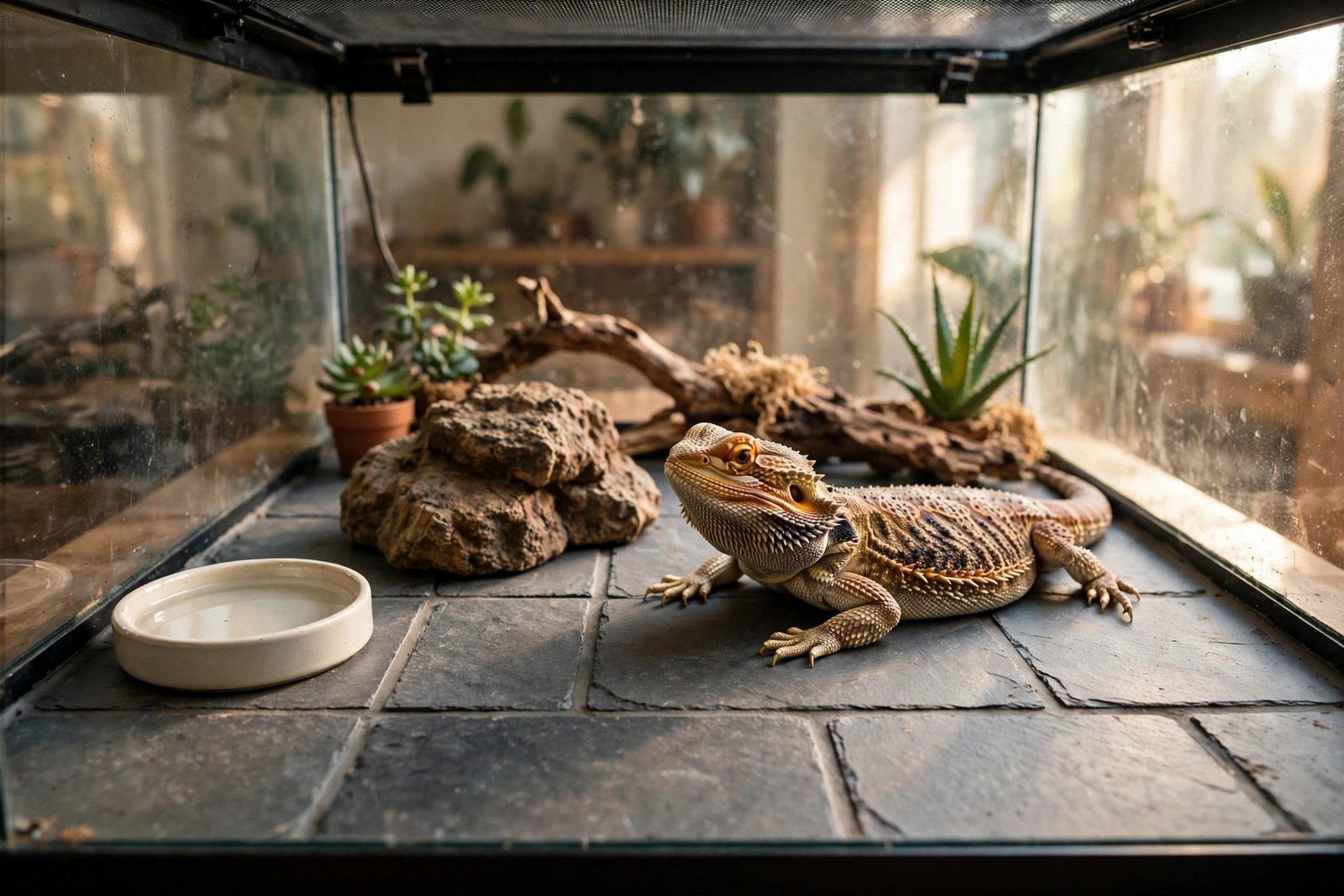
The safest substrate choices for many bearded dragons are solid, easy-to-clean surfaces such as tile, non-adhesive shelf liner, or paper-based flooring, especially for babies, juveniles, and any dragon that is unwell. These options cannot be swallowed, wipe clean in minutes, and make it easy to spot changes in droppings. Loose substrates are a more debated choice that some experienced keepers use successfully for healthy adults, but they demand more research and care.
Why solid floors are the beginner-friendly default
Young bearded dragons lunge at food with enthusiasm and poor aim, and every missed strike at a loose floor is a mouthful of something that is not food. Solid flooring removes that risk entirely. Tile has extra advantages: it holds warmth pleasantly, helps keep nails worn down as your dragon walks, and can be lifted out for deep cleaning. Textured tile is better than glossy, which can be slippery and stressful for an animal that cannot get purchase.
Shelf liner and paper-based options are cheaper and lighter, ideal for quarantine setups or a dragon recovering from illness, when you want to monitor droppings closely and replace the floor frequently without fuss.
The loose substrate conversation, fairly stated
You will find confident keepers on both sides of this debate, and it helps to understand the real argument. Supporters of suitable loose mixes for healthy adult dragons point to digging behaviour: many dragons clearly enjoy excavating, and a dig area can enrich their lives. Critics point to impaction risk, which is most serious when husbandry is already off, for example when temperatures are too low, hydration is poor, or the dragon is very young. In other words, loose substrate is rarely the only problem, but it can become the final problem in a shaky setup.
If you go loose, research the specific product and mix for your dragon's age and health, avoid pure calcium sand, feed insects from a dish or tongs to reduce accidental ingestion, and keep a solid basking and feeding zone.
What to avoid outright
Steer clear of walnut shell, pure calcium or vitamin sands marketed as digestible, and anything with sharp, indigestible particles. Avoid cedar and strongly scented woods for any reptile. Also skip very fine, dusty products that coat food and irritate eyes. If a substrate's main selling point is a bright colour, it is being sold to you, not designed for your dragon.
Whatever you choose, spot-clean waste daily, because dragons often defecate in warm areas where bacteria multiply quickly, and do a full substrate refresh or deep clean on a regular schedule.
Match the floor to the dragon in front of you
Age, health, and behaviour should drive the decision. A robust adult with perfect temperatures, good hydration, and a love of digging is a different case from a six-week-old baby or a rescue dragon with a history of poor appetite. When in doubt, start solid, stabilise everything else, and revisit the question later with better data about your individual animal. There is no prize for making the decision on day one.
Getting a local, reptile-savvy second opinion
Substrate advice improves when it accounts for your actual dragon, and that is a good reason to talk to someone who examines reptiles regularly. KinsLe's Pet Services Directory helps you find local groomers, vets, sitters, and trainers, and you can use it to locate reptile-savvy veterinarians and specialists near you to ask about the best setup for your dragon's age and health. Bring photos of your enclosure and your temperature readings to that conversation. The Pet Services Directory listings on KinsLe point to reptile veterinarians in your area, and a visit armed with enclosure photos and temperature readings turns generic substrate opinions into advice fitted to your dragon.