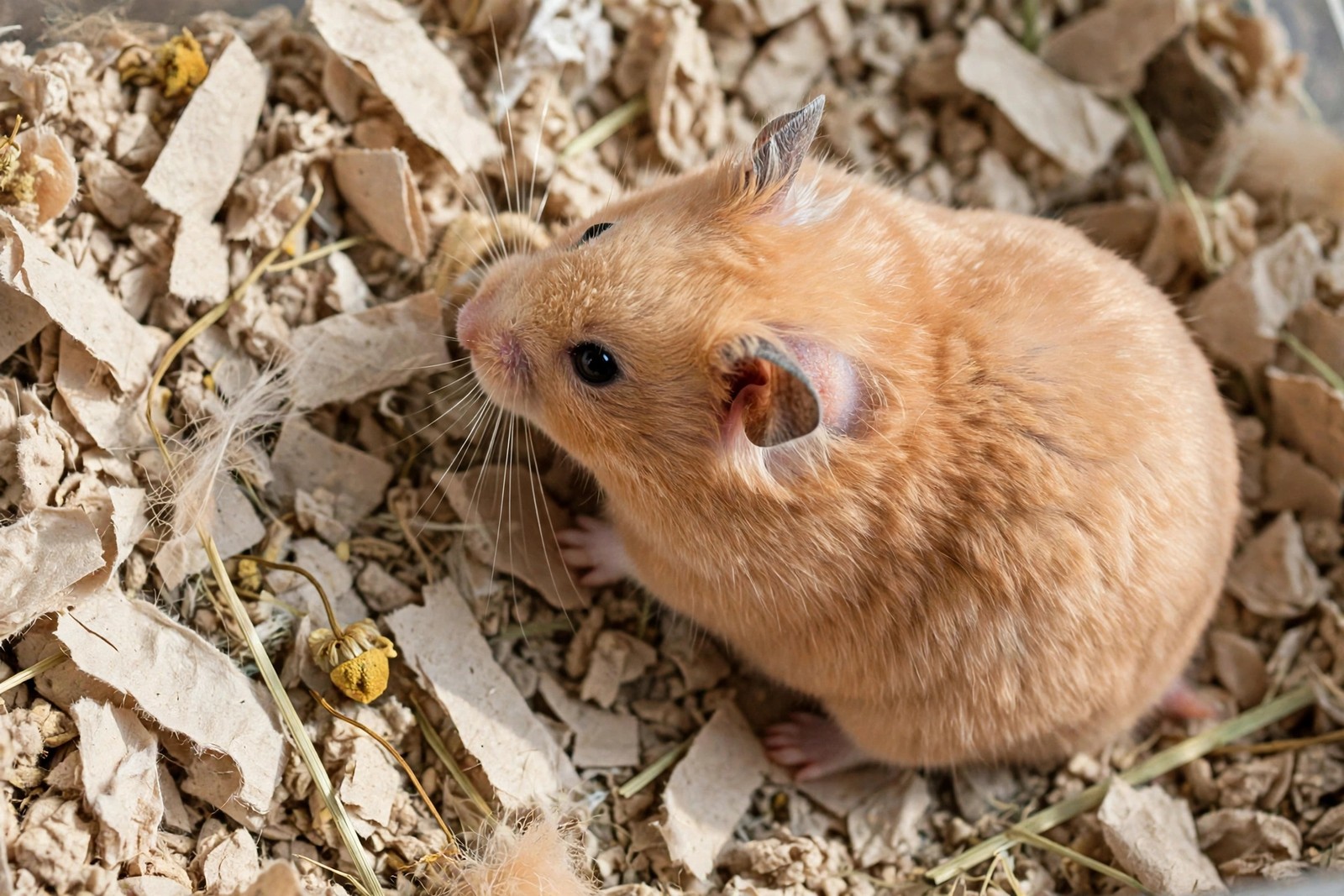
Look closely at a hamster from above and the area just behind each ear often looks surprisingly bare, pink skin showing through where the fur parts. In a great many hamsters this is anatomy, not illness. The coat behind the ears grows thinner and shorter than the fur on the back and flanks, and the thin coverage is most visible when the ears fold back or your hamster stretches up to sniff the air. It is especially noticeable in older hamsters, whose coats thin generally with age, in pale-coated animals where the pink skin shows through, and in some coat types that simply carry less density there.
What Normal Looks Like
Normal behind-ear thinning has a reassuring checklist. The two patches roughly match, one behind each ear. The skin is smooth, pale, and unbroken, with no crusts, flakes, scabs, or redness. Your hamster is not scratching at the area, shaking her head, or behaving any differently, and the patches stay the same size week after week. Fur may also look thinner along the spine in a senior hamster for the same reason: an ageing coat distributes less hair everywhere, and the naturally sparse places show it first.
Friction can add a local contribution. A hamster who squeezes through a favourite tube, sleeps wedged in one tight corner, or rubs one spot repeatedly may wear that patch a little thinner, which is worth a quick check of cage fittings for rough edges, but it does not by itself suggest disease.
The Patches That Need a Veterinarian
A different picture deserves an appointment with a veterinarian who treats small mammals. Warning signs include patches that spread or multiply, flaky, crusty, or thickened skin, redness or sores, scratching and biting at the skin, head shaking, a musty smell, fur coming out in clumps elsewhere, or any change in appetite, weight, or energy alongside. Mites and fungal skin infections are among the causes a vet will consider, and stress-related over-grooming, sometimes called barbering when a cage mate chews another's fur down, is another; Syrian hamsters are solitary and should live alone, so barbering usually means a housing problem to solve as well.
Please do not apply creams, oils, or treatments made for other species, and do not treat on guesswork: hamsters are tiny, absorb substances through skin they then groom and swallow, and the correct response depends entirely on which cause the vet finds. Until the appointment, keep bedding clean and unscented, remove anything newly introduced that might be irritating the skin, and handle her gently and briefly so you do not add stress to sore skin.
Monitoring Between Now and Then
Photograph the patches weekly in similar light, next to a coin for scale, and note scratching, appetite, and weight trend if you weigh her. Slow, symmetrical, unchanged patches with calm skin usually get monitored at home; anything moving fast moves the vet visit up. Those dated photos and notes are exactly what a vet works from, because a hamster's history often says more than a single examination can. KinsLe's Pet Passport keeps those photos, visit summaries, and weight notes together in her own records packet, so everything about the patches is ready to share at her next appointment.