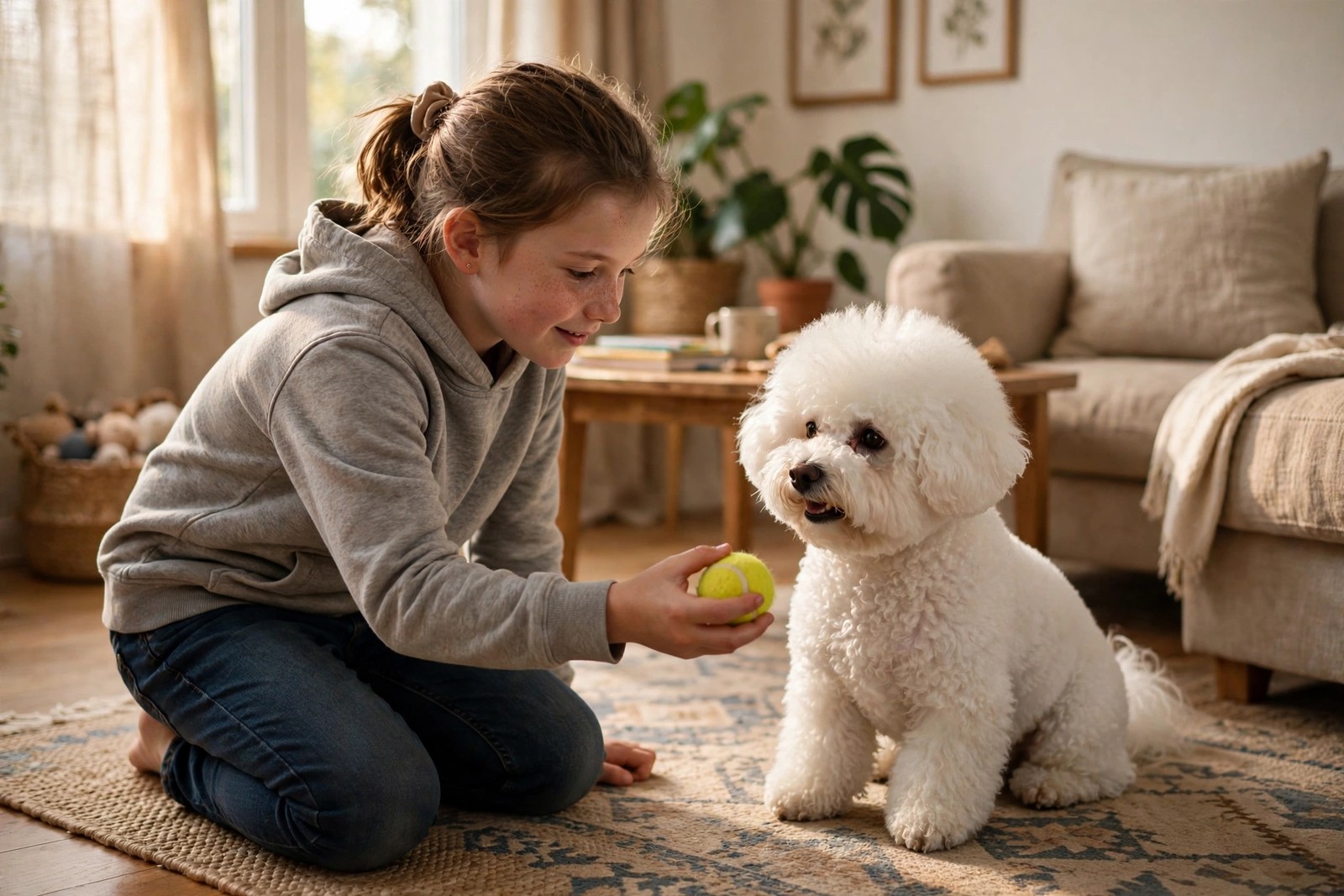
In most families, yes. The Bichon Frise is a playful, sociable little dog that actively seeks out company, joins in games, and usually adores the attention children give. Unlike many toy breeds, a well-bred Bichon is reasonably sturdy and not typically snappy or fragile-tempered, which is why the breed is so often recommended for family life. The limits come from size, not temperament.
Where the Pairing Works Best
School-age children who can follow handling rules are the sweet spot. A Bichon will chase a ball, learn tricks a child teaches with treats, and curl up nearby afterwards. Teach children to stroke the chest and sides rather than patting the top of the head, to let the dog approach first, and never to pick the dog up — a dropped small dog can be seriously injured, and even a gentle Bichon may wriggle free mid-lift.
The Risks to Manage Honestly
Toddlers are the hard case. A toddler falls heavily, grabs fistfuls of coat, and cannot read a dog backing away. A Bichon's curly coat tangles around small fingers and pulling hurts, and a frightened dog that cannot escape may snap despite a kind nature. Supervise every interaction with children under about six, separate them with a gate when you cannot watch, and never leave a small dog to manage a child's enthusiasm alone.
Rules That Keep Both Sides Happy
Give the Bichon a retreat — a crate with the door open, or a bed in a quiet room — and teach children that a dog in that spot is left completely alone. No disturbing a sleeping or eating dog, no dressing the dog up unless the dog clearly enjoys it, and play stops the moment either side gets overexcited. Let children help with safe jobs like holding the treat pouch during training or filling the water bowl, which builds a respectful bond.
Coat, Allergies, and Daily Reality
Families often choose a Bichon hoping the coat will suit an allergy-sensitive child. No dog is truly hypoallergenic, so spend time with the breed before committing if allergies are the deciding factor. The coat also needs frequent brushing; involve older children in gentle brushing sessions and the dog learns that child handling predicts good things.
Clear, written house rules stop the mixed messages that confuse both dog and children. In KinsLe, Family Sharing gives the adults in the family access to the Bichon's profile, so a parent or grandparent on duty can find the little dog there for themselves.