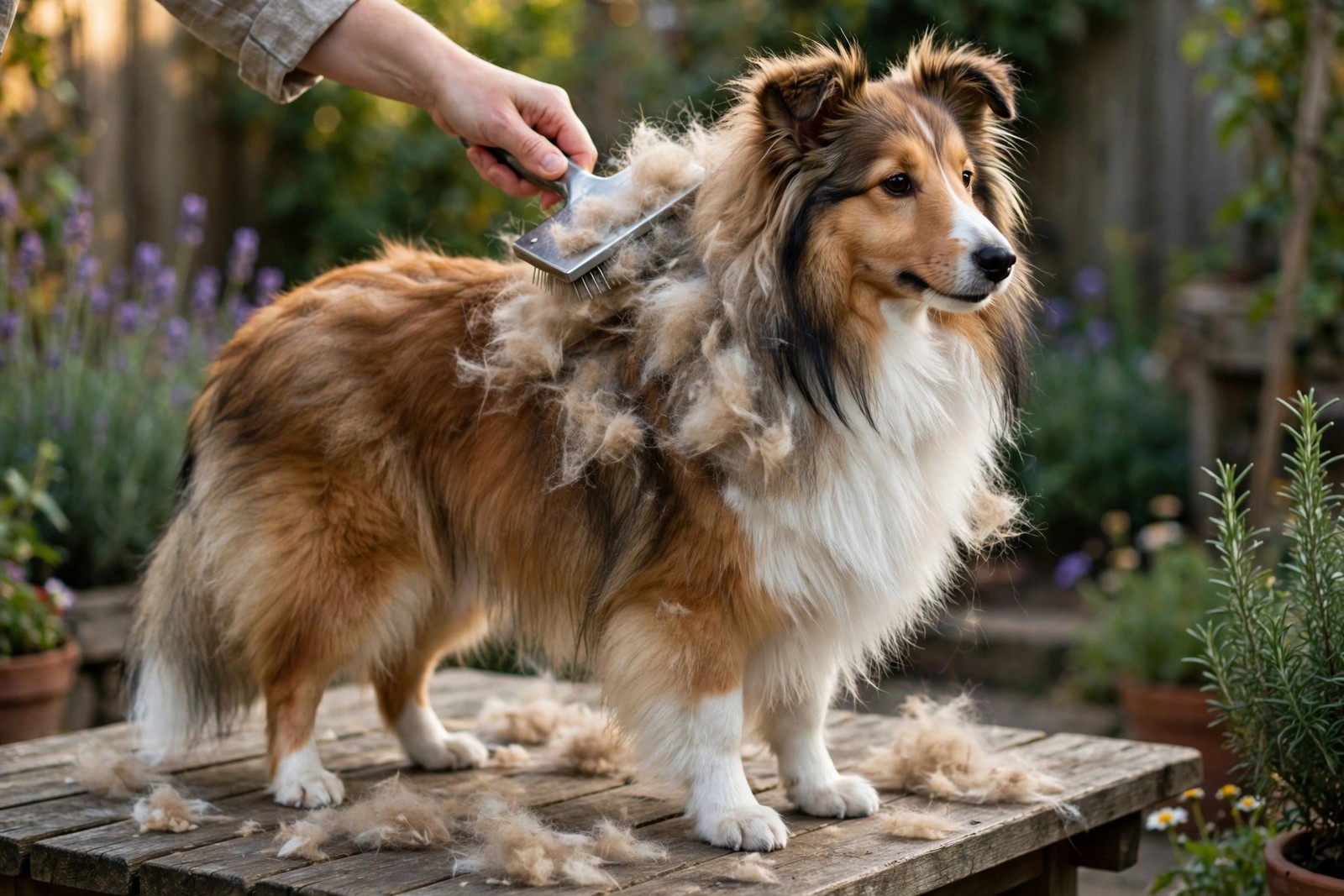
Shetland Sheepdogs shed a lot, seasonally and unapologetically. The Sheltie's crowning glory — that full, stand-off double coat with its abundant mane or ruff around the neck — is built from a dense undercoat beneath long, straight guard hairs, and both layers turn over. Hair releases steadily through the year and then increases sharply during the spring and autumn coat changes, when the undercoat comes out in earnest and long hairs appear on every surface the dog brushes past.
Where This Coat Needs the Work: Ruff, Ears and Trousers
Brushing a Sheltie well is about geography. The ruff is the thickest territory on the dog and mats from the inside out; part it in layers and brush from the skin outward, then comb through to prove the section is clear. Behind the ears the hair is finer and softer than anywhere else on the body, and it felts into tight little mats remarkably fast, especially on dogs who swim or get wet ears in the rain — check behind the ears with your fingers at every session, not just the brush. The trousers at the back of the thighs and the feathering on the front legs collect debris, seeds and tangles outdoors, and the armpits felt where the legs move. Brush once or twice a week in normal times to keep all of these zones clear, and step up to every other day during a heavy seasonal shed, when leaving the undercoat to pack for a fortnight creates a dematting job nobody enjoys.
Technique for a Double Coat on a Sensitive Dog
Shelties are often sensitive, mannerly dogs who dislike being hauled about, so technique carries a social element here:
- Use a slicker brush in layers (line brushing), then a comb to the skin, working in the direction of growth on the body and carefully outward through the ruff.
- Mist the coat lightly with water before brushing rather than brushing it bone-dry, which reduces breakage of the long guard hairs.
- Trim the hair between the pads and tidy the feet so the dog grips floors well and brings less mud into the coat.
- Never shave the double coat down for summer: it insulates against heat as well as cold, protects the skin from sun, and can regrow unevenly, with the undercoat outpacing the guard hairs.
- Bathing loosens shed undercoat usefully, but only once the coat is brushed clear first — water plus packed undercoat sets like felt.
Seasonal Peaks and the Household Routine
During the spring and autumn peaks, expect the vacuum to work as hard as the brush: long Sheltie hairs show on hard floors, gather along skirting boards and weave into upholstery more persistently than short hair does. Washable covers on the dog's favourite chair, a quick daily sweep of the main room during the peak weeks, and grooming outdoors on a calm day all reduce the indoor fallout. Outside the peaks the routine relaxes to the standard once-or-twice-a-week brushing, and many owners find the in-between months surprisingly manageable for such a profuse coat. Note how your own dog's peaks fall across the year, since heated indoor living blurs the outdoor calendar.
Keeping the Routine Alive for a Long-Lived Breed
Shelties commonly live well into their teens, so the grooming routine you build is a long-term commitment, and it needs to survive busy owners, house moves and helping hands. Write down the zones in order — ruff, behind the ears, armpits, trousers, tail — so a family member or sitter grooms the same dog you do, rather than smoothing the surface. Households that assign the weekly brushing and the stepped-up seasonal sessions to a named person, and record when the last full comb-through happened, keep this beautiful coat out of salvage territory, and KinsLe Care Teams supports exactly that by letting you set grooming duties as recurring tasks for a specific person, each marked complete with a timestamp.