
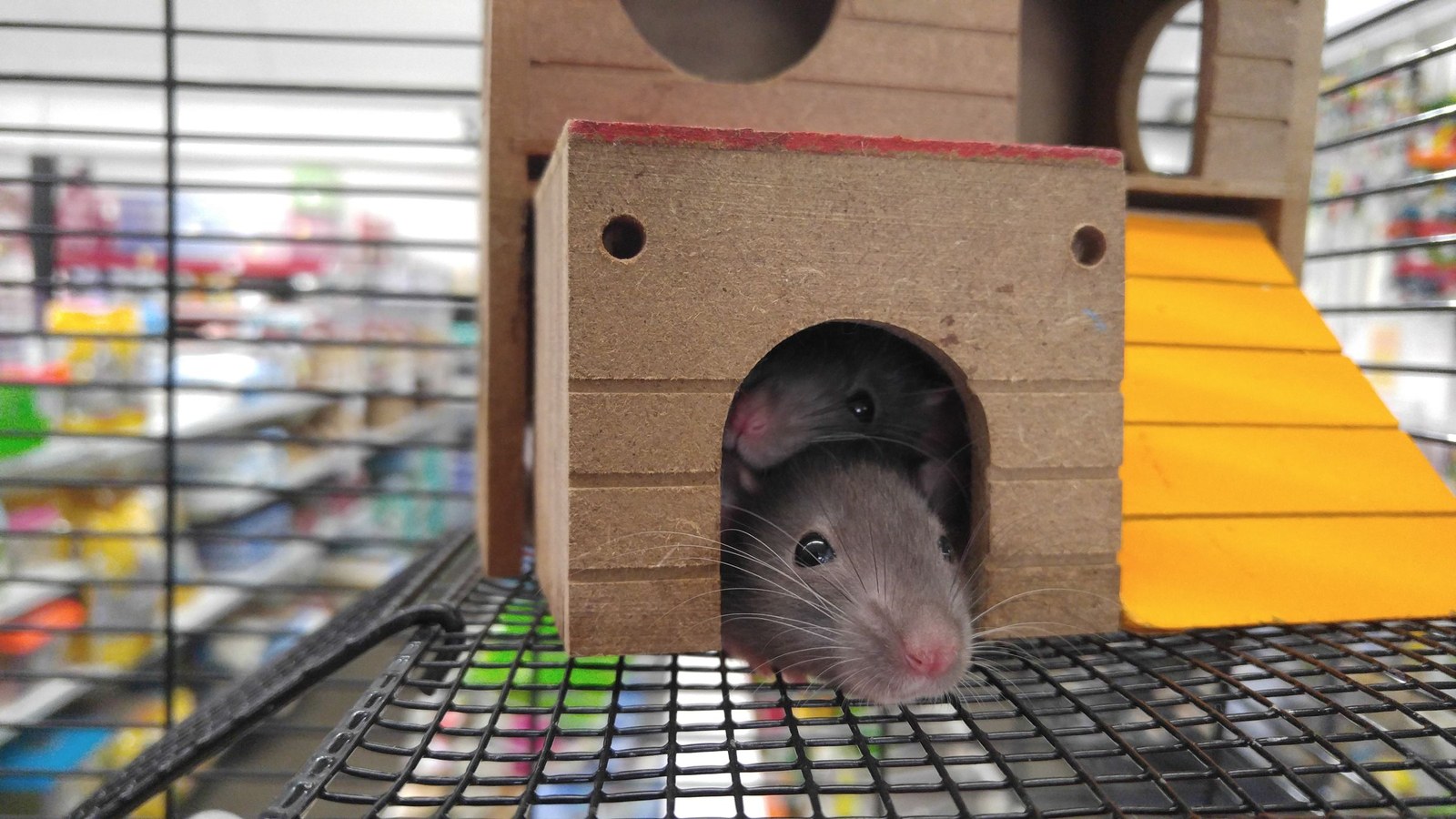
Mice and many rats do benefit from a running wheel, and plenty of them genuinely love one — but it should be offered as one enrichment option among several, not treated as essential equipment or their only exercise. A solid-surfaced wheel, large enough that the animal's back and tail stay straight while running, is a safe and popular addition to most mouse and rat setups.
Mice: Small Wheels, Big Enthusiasm
Mice are tireless runners, and in the wild they cover surprising distances each night. Most pet mice take to a wheel quickly and use it for hours. Because mice are small, their wheel can be smaller than a hamster's, but the same straight-back rule applies: watch your mouse run and make sure their spine is not bending into an arc. Mice are also social animals usually kept in groups, so expect the wheel to become shared property — two mice sprinting side by side is a common and entertaining sight.
Choose a solid surface rather than wire, since tiny mouse feet and tails can be caught in bars or mesh at speed. Position the wheel so it cannot tip onto a cage mate if it gets knocked during a busy group session.
Rats: Bigger Wheels, Mixed Opinions
Rats are a different story. Some rats adore a wheel; others ignore it completely in favor of climbing, wrestling, and exploring. A rat wheel has to be much larger — big enough that a fully grown rat can run without curving their back or holding their long tail in an unnatural position. Undersized wheels are a real risk for rats precisely because their tails extend their spine, so if you cannot fit a genuinely large wheel in the cage, skip it and invest in other enrichment instead.
Never force the issue. A rat who prefers hammocks, ropes, and free-roam time is getting plenty of exercise in other ways.
A Wheel Is Never the Whole Enrichment Plan
Whether you keep mice or rats, rotation keeps life interesting:
- Climbing ropes, ladders, and hammocks for rats
- Dig boxes filled with pet-safe substrate for burrowing and foraging
- Cardboard tunnels and chew toys that can be destroyed and replaced
- Scatter-fed treats hidden around the enclosure
- Supervised free-roam time in a pet-proofed area
Swapping items in and out every few days prevents boredom far better than a cage crammed permanently with everything at once.
Wheel Safety Basics
Check wheels weekly for cracks, wobble, and stuck bedding. Clean solid surfaces regularly, since wheels get dirty fast. Remove any wheel that develops sharp edges, and watch group-housed animals for squabbles over a single popular wheel — adding a second wheel or extra activities usually settles it.
Sharing the Enrichment Rotation With KinsLe Care Teams
When more than one person cares for your mice or rats, enrichment can easily become repetitive — the same wheel, the same tunnel, every day. KinsLe's Care Teams let you assign and rotate enrichment jobs, wheels one day and an obstacle course the next, with timestamped completions so everyone can see what has already been done and play never gets stale. Care Teams on KinsLe assigns the dig box swap to one keeper and free-roam supervision to another, with each finished task timestamped for everyone sharing the cage duties.