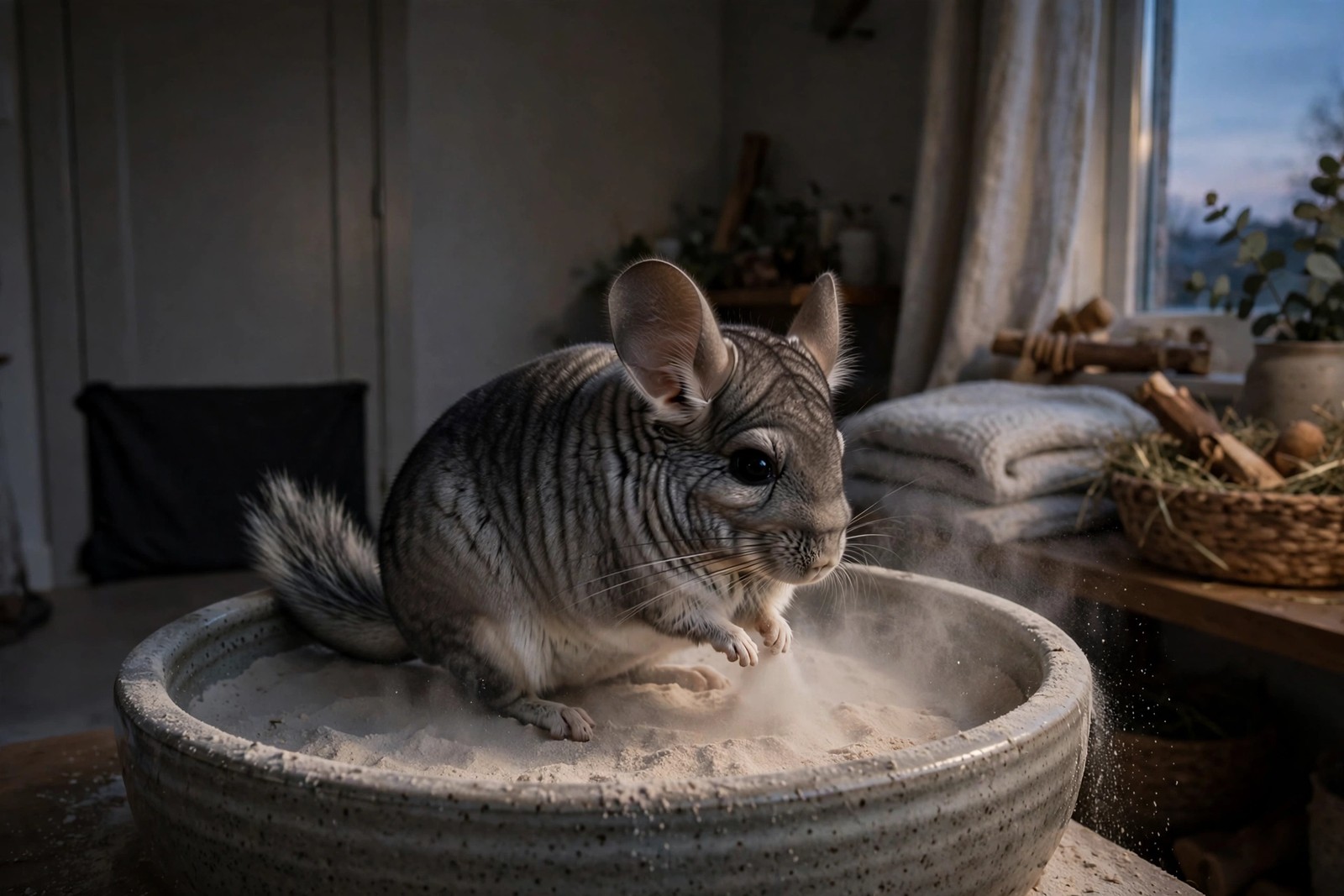
A chinchilla keeps evening hours by nature. The animal sleeps through the working day, stirs toward dusk, and is awake and athletic when a working household is cooking, unwinding, and losing track of time. Playtime is not optional enrichment for this species — it is the exercise and exploration a chinchilla's body and temper need — so the routine must survive busy evenings rather than compete with them. Timers, a fixed order, and a room made safe in advance make it survive.
Anchor the Start With a Timer
Fix the start time and let a timer hold it. Choose the evening hour the household can protect most nights — after dinner is a common anchor — and set a timer for it, so the session begins on a signal rather than on memory. A chinchilla learns the household's rhythm and will be awake, waiting at the cage front, and increasingly vocal if the start drifts by an hour. Sessions commonly run about an hour, and a second timer for the end matters as much as the first: a known finishing cue stops playtime expiring into the whole evening.
Make the Room Safe Before the Door Opens
The safety pass happens before the chinchilla comes out, in the same order. Cables are the first check: chinchillas chew fast and deep, so cords get lifted, covered, or the room's items get unplugged and moved. Gaps come next — behind furniture, under doors, into any space a compressible chinchilla body could pour into — blocked with boards or cushions. Doors to the rest of the home stay shut, other pets stay out, and anything chewable and precious leaves the room. Two minutes of this, done nightly in the same sequence, becomes automatic, and automatic is the point: a check that depends on remembering fails on the tired evening. Set out hiding places and chew toys before the door opens, so the chinchilla has refuges and something proper to gnaw.
The Dust Bath Belongs Inside Playtime
Offer the dust bath during playtime, in a bath house or a heavy bowl the chinchilla can roll in without tipping. About 10 to 15 minutes of access is the usual session: long enough for a roll that keeps the dense coat clean and dry, short enough that the bath comes away before the dust fills the room and the animal's eyes. Use proper chinchilla dust, never sand — sand is too coarse for that coat and skin. Many households put the bath down at the same point in the session each night, because a chinchilla that knows the bath arrives mid-play stops demanding it.
Keep the Room Cool, and End on a Cue
Chinchillas suffer in heat, with no tolerance for warm rooms: they are comfortable in the low 60s °F and in danger above the mid-70s °F. Run playtime in the coolest room, skip the session's most frantic games on a hot evening, and never trade the cool room for a warmer one with better furniture. Stop the session at once if ears turn red and hot, the chinchilla stretches out flat, or goes lethargic and refuses to move: cool the room, and contact a vet if the chinchilla does not recover promptly. End the session the same way nightly: lights dimmed on the same cue, a familiar treat waiting in the cage, and a calm scoop or a hop-in carrier rather than a chase. A chinchilla returned by routine goes home willingly; a chinchilla returned by pursuit learns to make the ending the best game of the night.
A Routine the Whole Household Can Run
The routine holds if more than one person can run it identically on a late-working night. Keep that routine written down as the household's own shared note — the fixed start, the safety order, the bath timing, and the dimming cue — so a partner or housemate runs the same session the chinchilla expects, and the timer, the checks, and the ending survive swapped shifts and late meetings.
For an animal most active at dusk, relatives you select can be granted profile access under KinsLe Family Sharing.