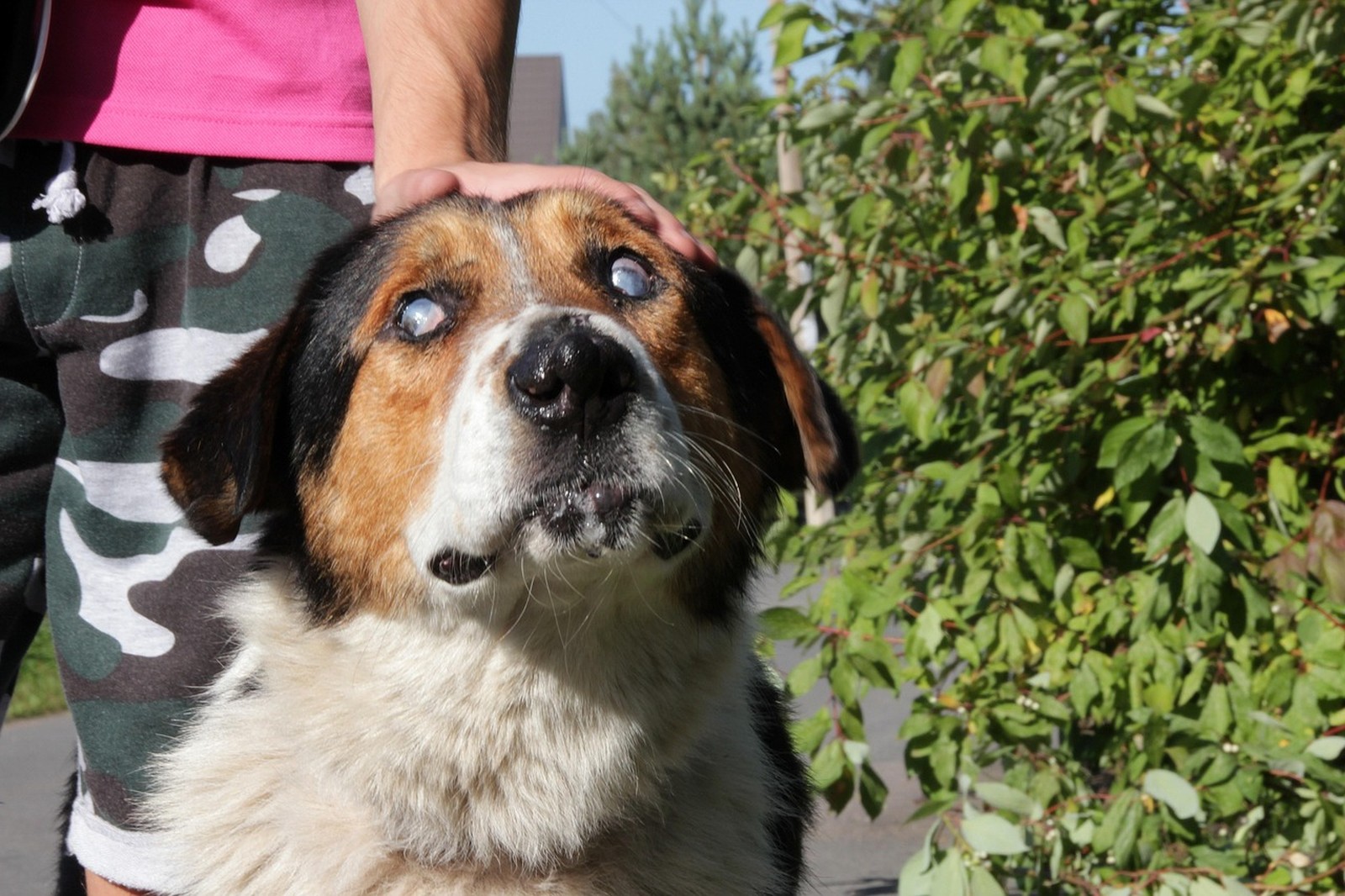
A blind dog navigates from a mental map built from memory, scent, and what his feet and whiskers tell him. A furniture rearrangement quietly redraws that map, so the confident dog of last week may suddenly hesitate, bump chair legs that used to be elsewhere, or lose the doorway he has used for years. The fix is not sympathy and carrying; it is a careful re-survey of his own home.
Tour the New Layout Deliberately
Reintroduce each changed room on a lead, one room at a time, letting your dog set a slow sniffing pace. Walk the routes he actually uses: bed to water bowl, bowl to back door, back door to his toilet spot in the garden. Pause at each piece of moved furniture and let him investigate it thoroughly rather than steering him around it, because he needs its new position recorded, not avoided. Repeat each tour a few times a day for several days, rewarding calm exploration, and finish sessions while he is succeeding.
Resist picking him up and depositing him where you want him. A carried dog learns nothing about the journey, and being set down in an unexpected place is disorienting in a way walking there never is.
Make the House Legible by Scent and Touch
Give key places consistent signatures he can read without eyes. A textured runner on a hard floor marks the main route through a room, a mat at the top and bottom of steps warns of a level change, and the same safe scent dabbed at doorway height for his nose can label entrances, always in the same places so the code stays reliable. Keep his true anchors, bed, water bowl, and feeding spot, in their original positions whenever the new layout allows; every anchor that survives the rearrangement is one less thing to relearn.
Then protect the map ruthlessly. Chairs go back to the same spots after meals, doors are kept fully open or fully closed rather than ajar at nose-trapping angles, and floors stay clear of shoes, bags, and laundry baskets. Block stairs and other drop-offs with a gate until routes around them are relearned, and pad the sharpest corners at his head height in the first days if he is bumping hard.
Relearn the Garden as Its Own Map
Treat the garden as a separate territory with its own hazards. Walk its boundary with him on a lead, let him map fences, trees, and beds again, and pay particular attention to steps, raised edges, ponds, and the gate, which should be checked as carefully as ever before he is loose near it. A wind chime or bell near the back door gives him an audible landmark to navigate home by, and a bell on the collar of another pet in the house warns him where they are resting so he does not trip over them.
Supervise garden time until his routes look automatic again, and keep your voice available: talk before you touch him, name steps and turns as you guide him, and use the same words in the same places so language becomes part of the map.
Confidence Comes Back in Layers
Most blind dogs regain their ease within days to a couple of weeks, moving first carefully, then at their old pace, often with a proud, sweeping head carriage as they scent-check. Hesitation at one doorway or a renewed caution in one room simply marks where another few tours are needed. If confidence is shrinking instead, or he seems uncomfortable, withdrawn, or in pain, ask your vet to check him, because new behaviour around navigation can reflect more than a moved sofa.
The system only works if everyone maintains it, which is where KinsLe's Care Teams fits a blind dog's household: family and helpers can be assigned the daily layout tours and walkway checks, each completed task timestamped, and anything that has to be moved gets noted for the whole team at once.